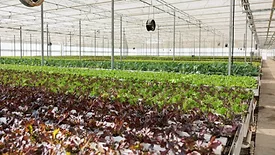
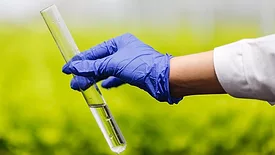
The researchers conducted environmental sampling throughout a controlled environment agriculture (CEA) operation and tested swabs for L. monocytogenes. Boot covers proved to be a useful tool for evaluating the effectiveness of cleaning and sanitation.
Taking place June 5–9 in Columbus, Ohio, the Association of Food and Drug Officials (AFDO) 130th Annual Education Conference offers sessions focused on manufactured food safety, retail food safety, and produce safety.
The National Academies of Sciences, Engineering, and Medicine (NASEM) has published a report on PFAS in agricultural systems to help guide USDA's response to the impacts of agricultural lands polluted by these “forever chemicals.”
The researchers found that advanced, multi-step disinfection treatment significantly reduces the antibiotic resistance (AMR)-related food safety risks of wastewater reused for irrigation, while biological treated water remains a potential source of resistant bacteria contamination.
FoodChain ID recently announced two global developments: a partnership with the Center of Excellence for Life Sciences, Agriculture, and Bioingenuity to support recovery of the Ukrainian agri-food sector and the acquisition of Brazilian certification body Sbcert.
With the hope of developing a user-friendly model, a Center for Produce Safety-funded study is investigating factors that influence Escherichia coli contamination risks posed by concentrated animal feeding operations (CAFO) near produce growing fields.
A paper from the year 2000 suggesting the safety of glyphosate (the active ingredient in herbicide Roundup), which has been cited for decades in regulatory decisions and pesticide approvals, has been retracted after litigation revealed undisclosed conflicts of interest undermining the study’s integrity.
FAO and WHO recently published a report identifying and prioritizing chemical contaminants that pose a food safety risk due to their presence in sources of water used in agri-food systems.
A two-year study of Southeastern U.S. watersheds confirmed that surface water harbors complex, clinically relevant Salmonella populations that differ from food animal datasets—revealing critical gaps in understanding environmental Salmonella transmission and the need for robust One Health surveillance systems.
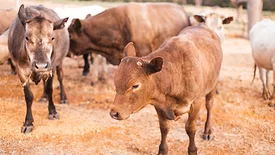
University of Georgia researchers conducted a review to compile and communicate best practices for reducing the spread of foodborne pathogens among beef cattle herds prior to processing, with a focus on Shiga toxin-producing Escherichia coli.
 RSS
RSS