Study Finds Adding Iron-Fortified Biochar to Soil can Nearly Halve PFAS Uptake by Radishes
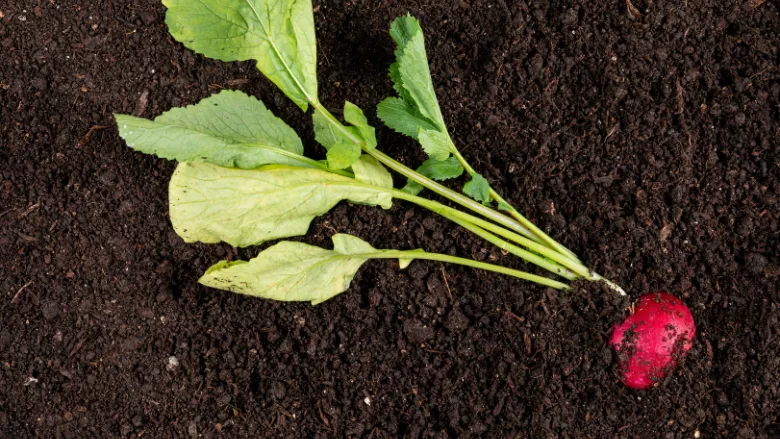
A new study conducted by researchers with the Connecticut Agricultural Experiment Station (CAES) has demonstrated that iron-fortified hemp biochar made from agricultural waste can nearly halve the amount of per-and polyfluoroalkyl substances (PFAS) that are taken up by food crops grown in contaminated soil.
Based on their findings, the researchers believe that iron-fortified hemp biochar presents a practical soil management strategy for reducing dietary PFAS exposure through crops grown on polluted land.
The study, published in Environmental and Biogeochemical Processes, was led by Trung Huu Bui, Ph.D. and was funded by an award from the U.S. Food and Drug Administration (FDA).
The Food Safety Risk of “Forever Chemicals”
PFAS are known as “forever chemicals” due to their inability to break down over time, causing their accumulation and persistence in soil, water, food, animals, and humans. These chemicals, which have been introduced to the environment through their use by industry and in consumer products like food packaging, are known for their harm to human health, such as increased risk of cancers, liver and heart damage, immune and developmental damage in infants and children, and other effects. Dietary exposure to PFAS through contaminated food and water is an important public health concern.
Discovering the Efficacy of Iron-Fortified Hemp Biochar
The recent CAES study suggests the potential of a new strategy for keeping PFAS out of food crops.
In a greenhouse experiment, the researchers tested whether biochar made from hemp plants and enhanced with iron could stop PFAS in polluted soil from transferring into edible radish bulbs. The results showed that iron-fortified hemp biochar lowered PFAS levels in radish tissues and reduced overall plant uptake compared with unamended soil and with plain biochar.
Specifically, the team collected PFAS-contaminated sandy loam soil from a former firefighting training area in Connecticut, where long-term use of firefighting foams had left high concentrations of PFOS (an important PFAS of concern) and related PFAS in the environment. Soil collected from the field site contained about 576 nanograms (ng) of total PFAS per gram (g), dominated by PFOS which contributed roughly 60 percent of the total burden.
Looking for quick answers on food safety topics?
Try Ask FSM, our new smart AI search tool.
Ask FSM →
The researchers produced biochar by subjecting hemp stems and leaves to pyrolysis at temperatures between 500 °C and 800 °C. Some biochar samples were fortified by soaking the biomass in an iron sulfate solution before pyrolysis to create iron-rich sorption sites.
After characterizing biochar surface area, pore structure, and mineral content, the researchers mixed selected samples into the contaminated soil at low application rates of 2 or 5 percent by weight. The mixtures were incubated for 90 days to allow PFAS to interact with the sorbents.
Radish seedlings were then grown for four weeks in biochar-amended and unamended soils, and PFAS were measured in soil leachates, shoots, and edible bulbs using high-sensitivity liquid chromatography-mass spectrometry.
The researchers found that biochar made at the lowest temperature (500 °C) had the highest specific surface area and more oxygen containing functional groups, which favored PFAS retention compared with material made at higher temperatures. Fortifying biochar with iron further increased surface area and pore volume and introduced iron oxide and hydroxide sites that can attract anionic PFAS molecules.
Across all treatments, radishes grown in the contaminated soil without amendments showed strong accumulation of short-chain PFAS, with bioaccumulation factors greater than 1 (indicating accumulation in the radishes was greater than that of the soil) and particularly high values for short-chain carboxylic and sulfonic acids.
When the soil was amended with iron-fortified hemp biochar produced at 500 °C, total PFAS in whole radish plants dropped by approximately 37 percent compared with unamended soil, and by nearly 46 percent relative to plants grown with non-fortified biochar. In the edible bulb, iron-fortified biochar cut PFAS bioaccumulation by about 25.7 percent and produced especially large reductions for several short-chain sulfonic and carboxylic acids.
The Science Behind the Solution
Analyses showed that increasing pyrolysis temperature shrank the biochar’s surface area and pore volume and reduced the abundance of reactive surface functional groups, all of which limited PFAS sorption. In contrast, iron fortification boosted porosity and created positively charged and hydrophilic sites that support electrostatic attraction, ligand exchange, hydrogen bonding, and complex formation with PFAS head groups while maintaining a hydrophobic carbon backbone that interacts with the fluorinated chains. The authors conclude that this combination of physical and chemical mechanisms allows iron-fortified hemp biochar to hold PFAS more strongly in soil pore spaces, lowering the freely dissolved fraction available for plant uptake.
A Practical Soil Management Solution for PFAS with Potential
The study highlights that even root vegetables like radish can accumulate substantial amounts of short-chain PFAS when grown in contaminated fields, raising concerns for food safety in affected farming regions. By demonstrating that a relatively low dose of iron-enriched biochar made from an agricultural residue can both improve soil properties and reduce PFAS transfer into edible tissues, the work points to a practical soil management strategy for reducing dietary PFAS exposure.
The authors note that future research should examine long-term field performance, potential effects on soil microbes and PFAS transformation, and whether similar approaches can protect other crop species and soils with different PFAS mixtures.