As it stands, the bill would mandate that USDA provide guidance on HACCP plans to small and very small meat processors, require USDA and FDA to define “honey” and establish honey authenticity testing standards, and initiate other directives.
Citing concerns about antibiotic overuse in food-producing animals contributing to the spread of antimicrobial resistance (AMR), the petition calls for FDA to withdraw approvals for the routine use of medically important drugs for disease prevention.
The accreditation from COFRAC, France’s sole national accreditation body, covers inspections to assess food safety and quality practices at food retail establishments.
The EU has implemented increased checks on certain food imports at the border, and has also introduced new certificate requirements for shipments of oysters, clams, mussels, scallops, and other aquaculture products from the U.S. due to veterinary drug use restrictions.
As the agency continues to delay enforcement of Salmonella verification testing for not-ready-to-eat, breaded and stuffed chicken products, Consumer Reports is asking for evidence to support USDA-FSIS’ assertion that currently available test methods are not suitable, which contradicts the agency’s previous stance.
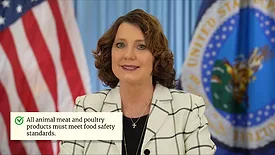
USDA Under Secretary for Food Safety Dr. Mindy Brashears, in collaboration with the Partnership for Food Safety Education, is calling on food safety educators nationwide to help dispel misinformation about the safety of the food supply amid the current New World Screwworm infestation.
Following the adoption of EU regulations in 2021 that set food safety culture requirements for food business operators, a European Commission survey conducted in 2025 showed that countries’ progress and approach toward culture official controls are varied, with significant difficulties reported.
The WHO Advisory Group on Pesticide Specifications supports the evaluation of scientific dossiers to inform the development of WHO specifications for public health pesticides.
A series of tabletop exercises led by FDA and involving food companies across the supply chain revealed industry’s progress and challenges in meeting the requirements of the Food Traceability Rule/FSMA 204.
 RSS
RSS