A History of Food Safety Failures at ByHeart, the Formula Company Behind Infant Botulism Outbreak
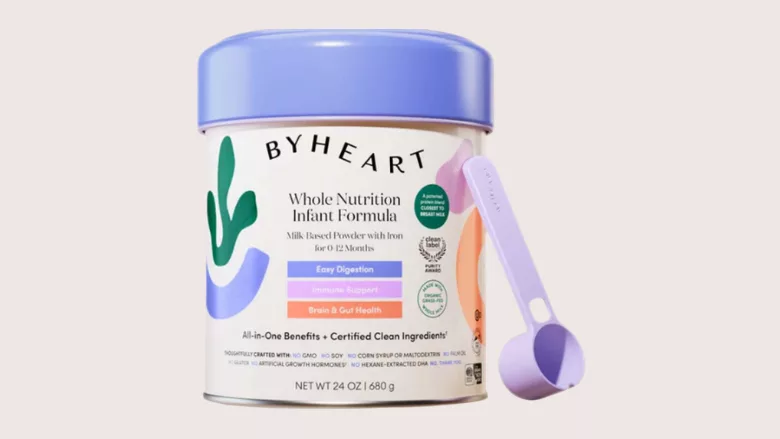
ByHeart Inc., the infant formula manufacturer implicated in an ongoing botulism outbreak that has sickened dozens of babies nationwide, was flagged by federal inspectors for food safety violations at their production facilities ahead of the outbreak. The company has also been reprimanded by FDA for an inadequate root cause analysis following a previous incident.
Outbreak Data and Evidence Implicating ByHeart
A spike in infant botulism cases was first noticed by the California Department of Public Health’s (CDPH’s) Infant Botulism Treatment and Prevention Program (IBTPP), which operates the only global source of infant botulism treatment worldwide. Specifically, 84 cases across 12 states were reported between August 1,2025 and November 10, 2025. CDPH reported this spike in cases to the U.S. Food and Drug Administration (FDA) and the U.S. Centers for Disease Control and Prevention (CDC). A federal investigation is underway.
Of the 84 infants who fell ill, 36 were formula-fed, and 15 (40 percent) of these formula-fed babies were confirmed consumers of ByHeart infant formula. Given that ByHeart only produces approximately 1 percent of the U.S. infant formula supply, the firm is disproportionately represented in the outbreak.
Additionally, CDPH reported that a can of ByHeart infant formula (lot 206VABP/251131P2), which was fed to an infant with botulism and was taken from the home of a consumer, tested positive for the outbreak strain of Clostridium botulinum.
Aside from ByHeart, no other infant formula brands or shared exposures that pose a risk to infants have been identified.
On November 11, ByHeart recalled all of its infant formula products sold across the U.S. At the same time, the company asserted that “neither [ByHeart], nor FDA or CDC, have found Clostridium botulinum spores or toxins in any unopened can of ByHeart formula.” ByHeart also said in a November 9 statement that, as CDPH’s C. botulinum-positive sample was from an open can of ByHeart formula, this piece of evidence “lacks scientific basis to establish causation between the product and illness.” The firm says it is conducting its own testing with a third-party independent laboratory.
According to the New York Times, FDA currently investigating ByHeart’s facilities in Allerton, Iowa and Portland, Oregon, where the recalled formula was produced.
Looking for quick answers on food safety topics?
Try Ask FSM, our new smart AI search tool.
Ask FSM →
A History of Food Safety and Hygiene Violations at ByHeart Production Facilities
Also per the New York Times, ByHeart’s production facility in Reading, Pennsylvania was shut down in 2023 after FDA found violations including mold in a tank meant to hold clean water, thousands of dead insects in a production area, and reoccurring roof leak problems. Inspectors also discovered that the facility did not maintain temperatures required to properly execute one of its kill steps for microbiological contaminants in finished product. These temperature variations went unreported to supervisors, and the affected product was shipped out of the facility to be packaged.
Earlier, in 2023—on the heels of the infant formula shortage resulting in increased vigilance by FDA to ensure infant formula safety—ByHeart was one of three infant formula manufacturers that received an FDA warning letter due to not establishing “a system of process controls covering all stages of processing that was designed to ensure that infant formula does not become adulterated due to the presence of microorganisms in the formula or in the processing environment.” The letter claimed that ByHeart had shipped potentially contaminated formula to consumers without notifying the agency.
The warning letter was issued after a batch of ByHeart Whole Nutrition Infant Formula finished product tested positive for Cronobacter sakazakii, prompting an investigation of the production facility. FDA uncovered that the facility did not follow Standard Operating Procedures (SOPs) to prevent food contact surfaces from unsafe exposure to the environment, as well as lapses in the cleaning and sanitation process that left unverified whether the cleaning and sanitation was sufficient to mitigate microbiological contaminants.
Moreover, FDA’s warning letter pointed out that ByHeart’s root cause analysis of the C. sakazakii contamination was insufficient, as it did not consider whole genome sequencing (WGS) of the product isolate, any investigation of available environmental isolates, or known violations (i.e., a leaking roof in the production area) that could have led to contamination. In fact, ByHeart concluded from its root cause analysis that the C. sakazakii positive test result was a laboratory error—which FDA said was contrary to the evidence.
Update, November 14, 2025: The number of infant botulism cases linked to consumption of ByHeart formula has grown to 23 across 13 states.
Update, November 19, 2025: The number of infant botulism cases linked to consumption of ByHeart formula has grown to 31 across 15 states.
Update, November 26, 2025: ByHeart Inc. has found Clostridium botulinum Type A in five of 36 samples across three lots. “Based on these results, we cannot rule out the risk that all ByHeart formula across all product lots may have been contaminated,” said the company.
As of November 26, the number of infant botulism cases in the associated outbreak has grown to 37 across 17 states. Additionally, FDA has released ByHeart facility inspection reports from as early as 2022 showing a history of food safety breaches.
Update, December 3, 2025: A total of 39 infants with suspected or confirmed infant botulism and confirmed exposure to ByHeart Whole Nutrition infant formula (various lots) have been reported across 18 states. All 39 infants were hospitalized; no deaths have been reported.
Update, December 16, 2025: As of December 10, a total of 51 infants with suspected or confirmed infant botulism and confirmed exposure to ByHeart Whole Nutrition infant formula (various lots) have been reported across 19 states. All 51 infants were hospitalized; no deaths have been reported.
On December 15, FDA issued an open letter to all food industry stakeholders describing firms’ legal obligations in the case of a food safety incident and outlining best practices for effective recalls. Separately, FDA sent warning letters to four major retailers—Target, Walmart, Kroger, and Albertsons—for failing to remove recalled ByHeart infant formula from store shelves.