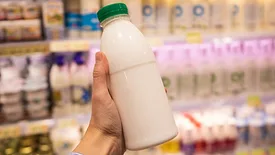
Postbiotin-E8, derived from Lacticaseibacillus, demonstrated antibacterial and antibiofilm activity against several foodborne pathogens, as well as the ability to extend the freshness of pasteurized milk, suggesting its potential as a natural preservative and surface decontaminant.
USDA and University of Arkansas researchers concluded that the plant-derived antimicrobial compound could possibly offer a natural disinfection solution for controlling S. Infantis biofilms on plastic and stainless steel surfaces in poultry and food processing facilities.
This episode of Food Safety Five discusses new research on avocado oil authenticity in processed foods, the effects of nanoplastics on bacterial biofilms in drinking water systems, factors influencing Listeria monocytogenes persistence on plastic food contact surfaces, and stress-adaptation traits that may help E. coli persist from farm to fork.
A new study found high levels of multidrug resistance and biofilm formation among Enterococcus spp. isolated from retail meat, market workers, and consumers. Genetic similarities among E. faecalis and E. faecium isolates from different sources suggested potential cross-transmission at the food–human
interface, although the researchers emphasized that direct transmission was not established.
The findings suggest that pathogen persistence on plastic food contact surfaces is governed by the combined effects of material composition, engineered surface topography, and microbial ecology rather than any single factor.
A new hypothesis suggests Listeria monocytogenes persists by colonizing nutrient-rich voids left behind when Gram-negative bacterial biofilms disperse. If the theory is validated, the authors suggest shifting food safety strategies toward managing biofilm ecology and ecological succession, rather than focusing solely on pathogen detection.
Adding to a growing body of evidence that micro- and nanoplastics may enhance the virulence and persistence of pathogens in food and the environment, a new study found that nanoplastics may strengthen E. coli biofilms in drinking water systems and increase resistance to chlorine treatment.
The co-occurrence of biofilm formation, acid tolerance, and antimicrobial resistance genes in E. coli isolatedfrom irrigation water, soil, and crops could complicate downstream microbial control efforts in produce production systems.
When a certain protein pathway was disrupted in the assembly of extracellular matrices, normal Bacillus cereus biofilm formation was impaired, but compensatory responses enabled a level of matrix plasticity that could help explain why biofilms are difficult to eradicate.
This episode of Food Safety Five discusses new research on the use of cold plasma technologies for biofilm inactivation and reducing allergenic risk, deriving more accurate “sell by” dates based on microbial changes on meat, and ultra-processed food nutrition and purchasing realities.
 RSS
RSS