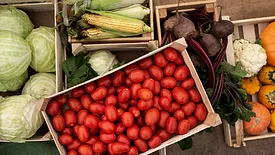
The Center for Produce Safety-funded project aims to generate practical guidance for produce growers, including improved sampling approaches to determine whether groundwater is influenced by surface water, and immediately actionable recommendations for mitigating microbial contamination and biofilms in irrigation systems.
The Achyut Adhikari Research Group is conducting several projects focused on preventive, FSMA-aligned strategies to reduce microbiological risks during pre-harvest and processing of produce, including hydroponic production, manure fertilizer treatment, food-contact surface sanitation, and antimicrobial packaging development.
Researchers found that the presence of nanoplastic particles can increase the expression of virulence and antimicrobial resistance (AMR) genes in Salmonella,and can also encourage biofilm formation.
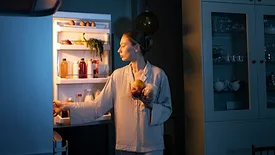
In an analysis of domestic refrigerator swabs, researchers discovered complex microbial communities harboring foodborne pathogens and antimicrobial resistance (AMR). The findings also suggested that regular cleaning is possibly more important than temperature control in managing these communities.
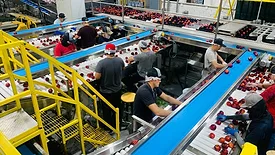
A recent study examined the efficacy of three commonly used sanitizers—chlorine, QACs, and UV-C light—against Listeria monocytogenes biofilms on stainless steel, PET, and silicone rubber surfaces, including organic matter, representing produce packing environments.
Drawing upon insights shared by UK food safety professionals, a report produced by the Food Safety Research Network (FSRN)/Quadram Institute identifies emerging defenses against microbiological risks in food production environments, including science-backed approaches, advanced technologies, and culture-based initiatives.
New research has demonstrated that certain plant-based compounds (i.e., curcumin, berberine, quercetin, and capsaicin) can enhance the antimicrobial effect of blue light treatment against Listeria monocytogenes on food and disrupt its biofilm-forming abilities.
Through the One Health lens, a scientific review summarized current knowledge on Salmonella biofilms, the importance of non-antibiotic interventions given the rise of antimicrobial resistance (AMR), emerging alternative strategies with potential for real-world use, and challenges and needs moving forward.
The top ten food safety research projects that excited Food Safety Magazine’s audience the most in 2025 covered Listeria monocytogenes (especially related to biofilms), microplastics, Escherichia coli, antimicrobial resistance (AMR), avian influenza in dairy, microbial threats in irrigation water, and food allergens.
In this year-end episode of Food Safety Matters, we round up the top stories of 2025, covering U.S. federal food safety policy changes under the Trump Administration, MAHA- and state-led moves against food additives of concern and ultra-processed foods, infant formula safety, science on Listeria and biofilms, ongoing monitoring of avian flu, and AI food safety applications.
 RSS
RSS