Food Safety
search
Ask Food Safety AI
cart
facebook twitter linkedin instagram youtube
  • Sign In
  • Join Today
  • Sign Out
  • My Account
Food Safety
  • NEWS
    • Latest News
    • Food Safety Five Newsreel
  • PRODUCTS
  • TOPICS
    • Contamination Control
    • Food Types
    • Management
    • Process Control
    • Regulatory
    • Sanitation
    • Supply Chain
    • Testing and Analysis
  • PODCAST
  • EXCLUSIVES
    • eBooks
    • Sponsored Insights
    • Sponsored White Papers
    • FSM Distinguished Service Award
    • Interactive Product Spotlights
    • Videos
  • MORE
    • BUYER'S GUIDE
    • NEWSLETTERS >
      • Archive Issues
      • Subscribe to eNews
    • Store
    • ASK FSM AI
  • WEBINARS
  • FOOD SAFETY SUMMIT
  • FSM FEATURES
    • FSM Features Collection
    • eMag Archives
    • Editorial Advisory Board
    • Contact
    • Advertise
  • JOIN
Home » Topics » Sanitation » Biofilm Control

Biofilm Control
Biofilm Control RSS Feed RSS

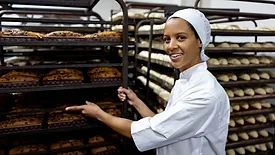
woman smiling at camera in industrial commercial bakery

Study Shows Bacillus cereus Persists on Bakery Food-Contact Surfaces After Sanitation, Describes Biofilms’ Influence

FSM logo
Food Safety Magazine Editorial Team
November 9, 2026

The researchers investigated microbial contamination on food-contact equipment at a bakery processing facility following routine sanitation, assessed the biofilm-forming ability of recovered B. cereus isolates, and compared disinfectant efficacy against planktonic and biofilm-associated cells on stainless steel and polypropylene surfaces.


Read More
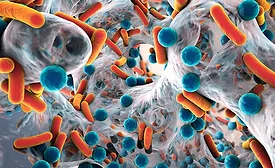
orange and blue illustration of a biofilm

USDA Study Explores Enzyme-Bacteriocin Treatments to Control Listeria Biofilms in Food Processing Environments

FSM logo
Food Safety Magazine Editorial Team
October 27, 2026

Treatment effectiveness varied by L. monocytogenes strain and bacteriocin used. While the findings supported continued development of enzyme-bacteriocin combinations as potential bio-based tools for L. monocytogenes biofilm control, researchers highlighted the need to ensure that biofilm disruption is accompanied by effective bacterial inactivation.


Read More
unlabeled bottle of milk

Novel Antimicrobial Peptide Inhibits Foodborne Pathogens, Delays Milk Spoilage

FSM logo
Food Safety Magazine Editorial Team
October 22, 2026

Postbiotin-E8, derived from Lacticaseibacillus, demonstrated antibacterial and antibiofilm activity against several foodborne pathogens, as well as the ability to extend the freshness of pasteurized milk, suggesting its potential as a natural preservative and surface decontaminant.


Read More
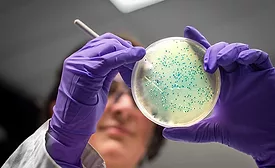
scientist looking at petri dish with cultured biofilm

Study Shows Potential of Thymol for Controlling Salmonella Biofilms on Food-Contact Surfaces

FSM logo
Food Safety Magazine Editorial Team
September 15, 2026

USDA and University of Arkansas researchers concluded that the plant-derived antimicrobial compound could possibly offer a natural disinfection solution for controlling S. Infantis biofilms on plastic and stainless steel surfaces in poultry and food processing facilities.


Read More
a close-up of a vibrant green, ruffled leafy vegetable

Food Safety Five Ep. 36: Listeria, E. coli, Biofilms, Plastics, and Oil Adulteration

Bailee Henderson headshot
Bailee Henderson
August 18, 2026

This episode of Food Safety Five discusses new research on avocado oil authenticity in processed foods, the effects of nanoplastics on bacterial biofilms in drinking water systems, factors influencing Listeria monocytogenes persistence on plastic food contact surfaces, and stress-adaptation traits that may help E. coli persist from farm to fork.


Read More
meat in wax paper

Study Finds Multidrug-Resistant, Biofilm-Forming Enterococcus Across Retail Meat, Workers, Consumers

FSM logo
Food Safety Magazine Editorial Team
August 10, 2026

A new study found high levels of multidrug resistance and biofilm formation among Enterococcus spp. isolated from retail meat, market workers, and consumers. Genetic similarities among E. faecalis and E. faecium isolates from different sources suggested potential cross-transmission at the food–human interface, although the researchers emphasized that direct transmission was not established.


Read More
cartoon bacteria petri dish

Researchers Identify Plastic Food Contact Material Properties, Background Microbes that Influence Listeria Biofilm Persistence

FSM logo
Food Safety Magazine Editorial Team
July 31, 2026

The findings suggest that pathogen persistence on plastic food contact surfaces is governed by the combined effects of material composition, engineered surface topography, and microbial ecology rather than any single factor.


Read More
rod shaped bacteria

Researchers Propose Listeria Biofilm Colonization Hypothesis to Explain Persistence in Food Processing Plants

FSM logo
Food Safety Magazine Editorial Team
July 28, 2026

A new hypothesis suggests Listeria monocytogenes persists by colonizing nutrient-rich voids left behind when Gram-negative bacterial biofilms disperse. If the theory is validated, the authors suggest shifting food safety strategies toward managing biofilm ecology and ecological succession, rather than focusing solely on pathogen detection.


Read More
hands catching water from drinking fountain

Another Study Suggests Plastic Particles Strengthen E. coli Biofilms; Researchers Underline Drinking Water Safety Implications

FSM logo
Food Safety Magazine Editorial Team
July 21, 2026

Adding to a growing body of evidence that micro- and nanoplastics may enhance the virulence and persistence of pathogens in food and the environment, a new study found that nanoplastics may strengthen E. coli biofilms in drinking water systems and increase resistance to chlorine treatment.


Read More
wet lettuce plant

Study: E. coli in Lettuce Growing Environment Have Stress Adaptation Traits Enabling Farm-to-Fork Persistence

FSM logo
Food Safety Magazine Editorial Team
July 15, 2026

The co-occurrence of biofilm formation, acid tolerance, and antimicrobial resistance genes in E. coli isolated from irrigation water, soil, and crops could complicate downstream microbial control efforts in produce production systems.


Read More
Previous 1 2 3 4 5 6 7 8 Next
Manage My Account
  • Join Food Safety Magazine
  • Manage My Preferences
  • Customer Service

More Videos

Sponsored Content

Sponsored Content is a special paid section where industry companies provide high quality, objective, non-commercial content around topics of interest to the Food Safety Magazine audience. All Sponsored Content is supplied by the advertising company and any opinions expressed in this article are those of the author and not necessarily reflect the views of Food Safety Magazine or its parent company, BNP Media. Interested in participating in our Sponsored Content section? Contact your local rep!

close
  • pre-packaged salads, noodles, and prepared meals stocked on multi-tier grocery store refrigerator shelves
    Sponsored byCorbion

    How Many Days of Shelf Life Are You Leaving on the Table?

  • Top view portrait of two factory workers standing by conveyor belt during quality inspection at food production, copy space
    Sponsored byFlexXray

    Foreign Material By the Numbers: What the 2026 Benchmark Report Reveals

  • a conveyorized industrial metal detector system that appears to resemble a Loma Systems IQ4 Metal Detector setup with an integrated conveyor belt and control panel for food or package inspection.
    Sponsored byMettler Toledo

    Beyond Detection: How to Avoid Physical Contamination in Food Through a Smarter Inspection Strategy

Popular Stories

dino nuggets and ketchup

WHO Proposes Food Profiling Model to Inform Regulation of Ultra-Processed Foods

FoodSafetyMattersFinal-900x550-(002).jpg

Ep. 229. Rocco Renaldi: Rethinking the Ultra-Processed Foods Debate

AI and Advanced Analytics eBook

eBook | AI and Advanced Analytics for Smarter Food Safety Management

allergens ebook

Events

November 17, 2026

Are You Getting the Most from Your Food Safety Testing?

Live: November 17, 2026 at 11:00 am EST: Attend this webinar to explore practical ways food processors can modernize sanitation verification and microbiological testing while keeping workflows simple and effective.

December 2, 2026

Beyond Surface Clean: Tackling Biofilms and Persistent Pathogens

Live: December 2, 2026 at 11:00 am EST: Attend this webinar to understand why chlorine dioxide is not chlorine, and what “ultra-pure” means for residues, byproducts, and effectiveness.

December 3, 2026

How to Use AI to Improve Workforce Training

Live: December 3, 2026 at 11:00 am EST: This webinar will cover best practices for reviewing, refining, and governing AI-generated training content for accuracy and consistency.

View All

Products

Global Food Safety Microbial Interventions and Molecular Advancements

Global Food Safety Microbial Interventions and Molecular Advancements

See More Products

Never miss the latest news and trends shaping the food safety industry

Newsletters | Website | FSM Features Collection

JOIN TODAY!
  • RESOURCES
    • Advertise
    • Contact Us
    • Directories
    • Store
  • JOIN TODAY
    • Create Account
    • FSM Features Collection
    • Newsletters
    • Customer Service
    • Manage Preferences
  • SERVICES
    • Marketing Services
    • Reprints
    • Market Research
    • List Rental
    • Survey/Respondent Access
  • STAY CONNECTED
    • LinkedIn
    • Facebook
    • Instagram
    • X (Twitter)
    • YouTube
  • PRIVACY
    • PRIVACY POLICY
    • TERMS & CONDITIONS
    • DO NOT SELL MY PERSONAL INFORMATION
    • PRIVACY REQUEST
    • ACCESSIBILITY

Copyright ©2026. All Rights Reserved BNP Media, Inc. and BNP Media II, LLC.

Design, CMS, Hosting & Web Development :: ePublishing