USDA Study Explores Enzyme-Bacteriocin Treatments to Control Listeria Biofilms in Food Processing Environments
A new study by researchers from the U.S. Department of Agriculture's Agricultural Research Service (USDA-ARS) and the University of Virginia has demonstrated the potential of combining an engineered enzyme with food-grade bacteriocins to disrupt Listeria monocytogenes biofilms and reduce the number of viable bacterial cells released during treatment. However, the effectiveness of the treatments varied by L. monocytogenes strain and bacteriocin used.
Published in the journal Pathogens, the study evaluated the effects of an engineered carbohydrate-active enzyme (CAase) and two bacteriocins, nisin and thermophilin 110 (T110), individually and in combination, against biofilms formed by 11 L. monocytogenes strains.
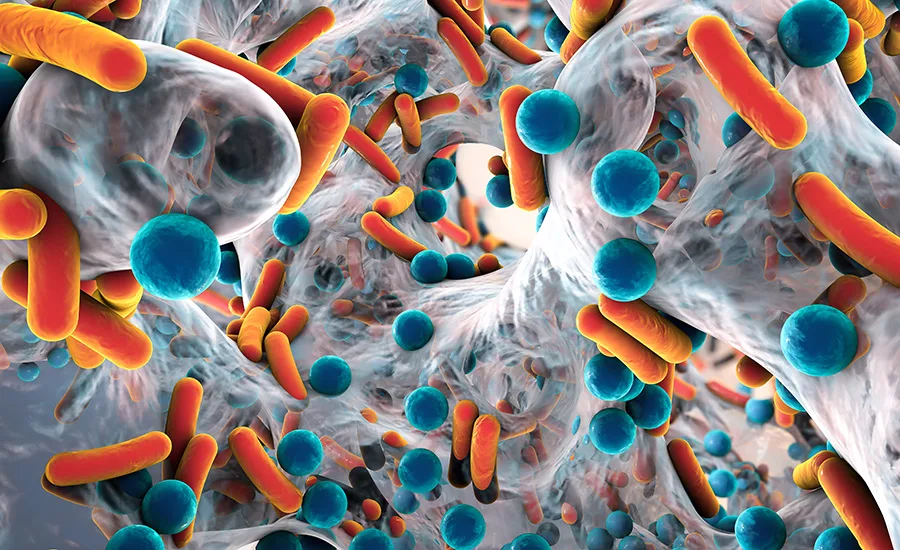
L. monocytogenes can form persistent biofilms on surfaces commonly found in food processing facilities, including stainless steel, rubber, and plastic. Within biofilms, bacterial cells are protected by an extracellular polymeric substance (EPS) matrix that can limit the effectiveness of cleaning and sanitation procedures, allowing the pathogen to persist and potentially cross-contaminate food products.
Enzymes that degrade the biofilm matrix may improve antimicrobial access to embedded bacterial cells. Previous research had demonstrated that CAase could disrupt L. monocytogenes biofilms and enhance the antimicrobial activity of T110, but these findings were limited to a single bacterial strain.
Enzyme Treatment Reduced Biofilm Biomass Across All Strains
To evaluate the broader applicability of enzyme-bacteriocin treatments, the researchers cultivated biofilms from 11 L. monocytogenes strains. Mature, six-day-old biofilms were then exposed to CAase, nisin, T110, or combinations of CAase with either bacteriocin for 20–24 hours at 30 °C.
The researchers found that CAase alone significantly reduced biofilm biomass across all 11 strains, demonstrating its ability to degrade the extracellular matrix. However, the enzyme exhibited little antimicrobial activity, and treatment generally increased the number of viable bacterial cells released from biofilms.
Nisin alone significantly reduced biofilm biomass in nine of the 11 strains, while T110 alone produced significant reductions in only two strains.
Looking for quick answers on food safety topics?
Try Ask FSM, our new smart AI search tool.
Ask FSM →
For two strains, combining CAase with nisin further improved biofilm disruption compared to CAase alone for two strains. Similarly, combining CAase with T110 improved biofilm disruption in two different strains.
For most strains, however, adding either bacteriocin did not significantly improve biomass reduction beyond that achieved with CAase alone.
Nisin More Effective at Inhibiting Viable Listeria Cells
Although CAase effectively disrupted biofilm structures, the researchers emphasized the importance of inactivating bacterial cells released during enzymatic treatment to prevent their potential spread.
Nisin was more effective than T110 at reducing the recovery of viable L. monocytogenes cells from treated biofilms. When used alone or in combination with CAase, nisin reduced viable-cell recovery below untreated control levels for all 11 strains.
In contrast, T110 treatment alone resulted in viable-cell recovery comparable to or greater than untreated controls for five strains. When combined with CAase, T110 produced similar or greater viable-cell recovery than controls for six strains, suggesting that the bacteriocin concentration used was insufficient to inactivate released cells consistently.
Further testing showed that the minimum bactericidal concentration of T110 was at least 2,048 arbitrary units per milliliter for many strains, exceeding the concentration used in the biofilm experiments. By comparison, the minimum bactericidal concentration of nisin was 25 micrograms per milliliter or lower for all strains, consistent with its greater effectiveness under the experimental conditions.
Implications for Listeria Control in Food Processing Facilities
The researchers concluded that combining a biofilm-degrading enzyme with a bacteriocin could offer a bio-based approach to controlling persistent L. monocytogenes contamination in food production environments.
In particular, the findings suggested that CAase and nisin could potentially be incorporated into cleaning-in-place or spray-based sanitation processes. However, the researchers noted that residual biofilm biomass remained after treatment, indicating that additional biofilm-degrading compounds or other interventions may be necessary.
The study was conducted under controlled laboratory conditions using single-species biofilms and standardized surfaces. The researchers called for further investigations under industrially relevant conditions, including mixed-species biofilms, different food-contact surfaces, organic loads, and temperature fluctuations.
Additional research was also recommended to better understand the molecular and structural factors contributing to strain-dependent treatment responses and to assess the effects of repeated enzyme-bacteriocin exposure.