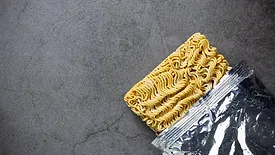
At least 106 people have been infected by the outbreak strain in 13 European countries. Young people are disproportionately affected. Some sickened children reported eating the noodles and seasoning dry, without adding boiling water as instructed on the package.
The Center for Produce Safety (CPS)-funded study also found that some produce items may naturally inhibit Listeria monocytogenes growth and that peracetic acid may sometimes promote Listeria growth during storage.
The Alert and Cooperation Network (ACN), which enables EU Member States to exchange information and coordinate responses to food safety incidents, processed a record 10,490 notifications. Notable incidents included a Listeria outbreak linked to French cheese, Salmonella in Italian tomatoes, and cereulide in infant formula.
When a certain protein pathway was disrupted in the assembly of extracellular matrices, normal Bacillus cereus biofilm formation was impaired, but compensatory responses enabled a level of matrix plasticity that could help explain why biofilms are difficult to eradicate.
Traceability investigations identified a common seed supplier, with implicated alfalfa seeds imported from India and distributed throughout Europe. Available evidence suggested the seeds were likely contaminated before entering the EU.
Reoccurring, emerging, and persisting (REP) strains cause foodborne illnesses over extended periods of time, rather than through isolated outbreaks. The REP framework was jointly developed by CDC, FDA, and USDA-FSIS through the Interagency Foodborne Outbreak Response Collaboration.
The ruling in the case Monsanto v. Durnell shields pesticide manufacturers like Bayer–Monsanto, the maker of glyphosate-based Roundup, in failure-to-warn lawsuits. A legal expert explained to Food Safety Magazine how this decision potentially weakens state right-to-know chemical health warning laws like California's Proposition 65.
The Arkansas-based study showed that repeated mid-season soil aeration events significantly reduced arsenic concentrations in rice grain without increasing cadmium levels, providing field-scale evidence that water management can help mitigate arsenic accumulation.
 RSS
RSS