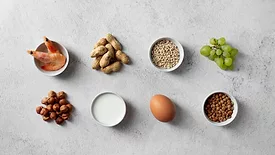
During a technical meeting convened by IAEA, FAO, and WHO, experts emphasized the need for a joint response to the interconnected issues of food safety and nutrition. The use of nuclear techniques to enhance food safety and nutrition was also explored.
In a new peer-reviewed paper, experts emphasized the need for a paradigm shift in how the entire frozen berry supply chain can manage enteric virus safety, shifting from reliance on detection to a focus on prevention strategies.
Originally limited to Great Value products sold at Walmart, FDA is warning consumers not to eat or purchase imported frozen shrimp sold under five additional brand names, originating from a single distributor, due to potential radioactivity.
A study from the University of Florida College of Veterinary Medicine suggests that commensal Escherichia coli strains could be utilized to mitigate antibiotic-resistant nontyphoidal Salmonella Heidelberg, ultimately improving food safety.
FDA has issued a safety alert raw frozen shrimp products that tested positive for radioactive isotope Celsium-137, which were imported from Indonesia and sold at Walmart stores in 13 states. The agency recommends a recall.
FDA has updated its list of chemicals currently under post-market review, which now includes six additional artificial food colorants, among other chemicals. The agency is also expediting the review of chemicals included in previous updates, like phthalates and titanium dioxide.
Commissioned by the UK Food Standards Agency (FSA), a survey of prepacked salmon filets sold at supermarkets in the UK showed a low presence of Listeria monocytogenes and Escherichia coli, as well as low levels of antimicrobial resistance (AMR).
The 2025 Center for Produce Safety (CPS) Symposium offered practical solutions for growers, packers, and food safety professionals, based on findings from new research and emerging technologies aimed at strengthening produce safety across the supply chain.
A new study led by the University of Georgia’s Center for Food Safety has confirmed that imported seafood carries colistin resistance genes that are capable of transfer, posing the risk of this resistance gene spreading via the U.S. food supply.