According to the Canadian Food Inspection Agency's (CFIA’s) 2024–2025Food Fraud Annual Report, CFIA tested 886 food samples for authenticity and conducted 362 label verifications. Olive oil had the lowest authenticity compliance rate.
The Nuclear Energy Agency (NEA) recommendations were informed by lessons learned from the Chernobyl and Fukushima Daiichi incidents, which demonstrated that radioactive contamination of food can have long-lasting public health and economic consequences.
The Alert and Cooperation Network (ACN), which enables EU Member States to exchange information and coordinate responses to food safety incidents, processed a record 10,490 notifications. Notable incidents included a Listeria outbreak linked to French cheese, Salmonella in Italian tomatoes, and cereulide in infant formula.
Four European research and innovation projects—SecureFood, EFF-CoP, ACT4FOOD, and DEFENSEFOOD—will host a joint webinar on July 3, titled, "Advancing Food System Security: From Early Signals to Systemic Resilience.”
AI is no longer just a tool to be adopted; it is a national and business security domain that must be secured if food corporations intend to remain in business
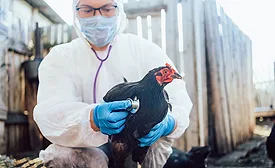
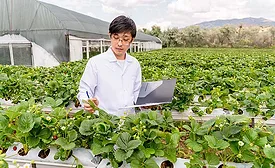
AI-enhanced biosurveillance, integrated sensor networks, and intelligent analytics have been framed as critical enablers of safer, more efficient food systems. At the same time, the field has begun to acknowledge that the same tools that drive efficiency and predictive power can also be turned against the food system itself.
Supply chains are going digital, omnichannel operations are becoming the norm, and automation is everywhere. This should be good news for food fraud prevention. More data should mean more visibility, but in reality, it also creates more opportunities for both prevention and exploitation.
In 2025, FDA sampled domestic and imported honey to detect food fraud. Consistent with previous years, the rate of fraud was low, but still high enough to emphasize the ongoing vulnerability of honey to economically motivated adulteration.
This article examines the need to always engage subject matter experts in the analysis of AI results for food safety in the context of biosurveillance and cognitive security.
The free virtual event will take place on March 31 and will feature four European research and innovation initiatives to discuss how food security can be safeguarded by addressing fraud, crises, cyber threats, and chemical, biological and radiological (CBR) hazards across the food supply chain.
Garlic carries a distinct bacterial signature reflective of the soil in which it was grown, enabling geographic identification based on microbial composition. A novel method using microbiome data and AI analysis potentially offers a low-cost authentication technique.