A Codex committee has advanced work on Draft Guidelines on the Prevention and Control of Food Fraud, although consensus on parts of the guideline has not been reached.
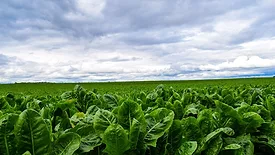
Designed for Salinas Valley, California growers, an ongoing project supported by the Center for Produce Safety will leverage existing science and consider unique farming operation factors to create a user-friendly tool that assesses Escherichia coli contamination risk and provides actionable mitigation measures.
The Consumer Good Forum’s Global Food Safety Initiative (GFSI) has launched a consultation on a new Food Safety Auditor Professional Development Framework.
Following the deadly listeriosis outbreak tied to its product, Boar’s Head announced that it is indefinitely closing the facility and is discontinuing the liverwurst responsible, and has established a council of industry-leading experts to enhance the company’s food safety and quality programs.
In light of a recent investigation that found nearly half of honey imported to the EU is adulterated, UK researchers have demonstrated the promise of two innovative techniques—DNA barcoding and spatial offset Raman Spectroscopy—for detecting sugar adulterants in honey.
The UK Food Standards Agency (FSA) recently published the 2024 Food Crime Strategic Assessment. Since the last report in 2020, the UK food supply chain has faced significant disruptions, causing the food crime landscape to change and creating new opportunities for fraud.
The UK Food Standards Agency (FSA) has endorsed the Chartered Trading Standards Institute’s (CTSI’s) Professional Competency in Feed qualification route.
Recently introduced to U.S. Congress, the Federal and State Food Safety Information Sharing Act aims to grant the U.S. Food and Drug Administration (FDA) the authority to share crucial food safety information with state and local regulatory agencies to improve foodborne illness outbreak response.
Providing food manufacturers with a standardized methodology for determining whether precautionary allergen labeling is appropriate for their products, the Allergen Bureau has introduced the latest version of its risk assessment tool, Voluntary Incidental Trace Allergen Labeling (VITAL®) 4.0.
The world could be rendered defenseless against the next global pandemic if antimicrobial use in Southeast Asian animal agriculture is not curbed, researchers from RMIT University have warned.
 RSS
RSS