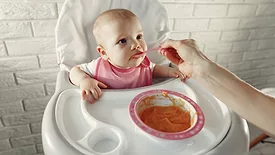
The New York bill is awaiting the Governor’s signature, while the California bill advances from the Assembly to the Senate. The bills would require baby food and infant formula manufacturers to regularly test their products for toxic heavy metals and disclose results.
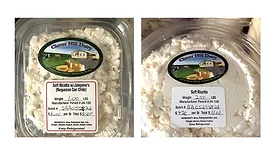
The now-recalled requeson cheese was produced by Maryland-based Clover Hill Dairy. Patients have been identified in New York, Maryland, and Virginia, with the earliest illness occurring in early 2023 and the most recent in May 2026.
FDA did not identify deficiencies in ByHeart’s production facilities that could explain the outbreak, but a powdered milk ingredient did test positive for C. botulinum. ByHeart is developing an action plan based on data generated from the investigations.
The World Health Organization (WHO) has released its anticipated updated global burden of foodborne disease estimates, which suggest that 42 microbiological and chemical hazards caused approximately 866 million illnesses and 1.52 million deaths in 2021.
Commissioned by the International Food Information Council (IFIC) and published at a time when FDA is considering a federally standardized FOP nutrition labeling scheme, the survey provides insight into what Americans are seeking from FOP nutrition labels.
The latest data from the UK Health Security Agency (UKHSA) show that the number of Campylobacter and Salmonella infections in England remained high or increased in 2025, while listeriosis cases stayed stable from the previous year.
A collection of studies and editorials published in the American Journal of Public Health presents one of the most comprehensive examinations to date of ultra-processed food (UPF) as a public health crisis shaped not only by nutrition, but by corporate practices, political influence, and regulation failures.
The study was conducted to support the development of new global burden of foodborne disease estimates, which are going to be released on June 4, ahead of World Food Safety Day.
This episode of Food Safety Five discusses new research on the use of cold plasma technologies for biofilm inactivation and reducing allergenic risk, deriving more accurate “sell by” dates based on microbial changes on meat, and ultra-processed food nutrition and purchasing realities.
Ahead of World Food Safety Day, FAO and WHO have introduced a Food Safety Roadmap Development Tool and an online learning course on Codex-aligned risk assessments, supporting competent authorities and other stakeholders seeking to utilize science and data to improve national food safety systems.
 RSS
RSS