The U.S. Food and Drug Administration (FDA) recently released the findings of a sampling assignment that collected and tested ready-to-eat (RTE) dips and spreads with the aim of determining the presence of Listeria monocytogenes and Salmonella.
The need remains for a continuous means of sanitizing and disinfecting high-touch and other environmental surfaces where persistent microbial pathogens can be found
New uses for existing technologies are being deployed in foodservice establishments to prevent persistent pathogens like Salmonella, and viral pathogens like norovirus and Hepatitis A, on surfaces where continuous sanitation and disinfection is needed.
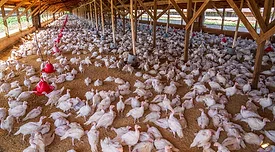
In this bonus episode of Food Safety Matters, we speak with two poultry science experts about what industry can do to reduce the presence of Salmonella in poultry products in light of the U.S. Department of Agriculture’s (USDA’s) recently proposed requirements that would consider Salmonella an adulterant in poultry.
The U.S. Department of Agriculture’s Agricultural Research Service (USDA’s ARS) has launched the Salmonella Grand Challenge—a new, nationwide initiative that brings together a group of elite scientists from different specialties to fight salmonellosis. The scientists will integrate their research to learn more about Salmonella risks to meat and poultry products, which will then inform the development of monitoring tools for meat and poultry producers to prevent Salmonella contamination.
The U.S. Department of Agriculture’s Food Safety and Inspection Service (USDA’s FSIS) has released an updated Guideline for Controlling Salmonella in Swine Slaughter and Pork Processing Establishments.
Salmonella infection is one of the most commonly reported causes of foodborne illness, resulting in over 80 million cases of foodborne salmonellosis each year globally.
Additional control measures for Salmonella contamination by manufacturers of Not ready-to-eat (NRTE) breaded, stuffed chicken products—such as those proposed by the U.S. Department of Agriculture—could reduce salmonellosis cases associated with such products, according to a recent study from the U.S. Centers for Disease Control and Prevention (CDC).
A recent study aiming to describe the impact of the COVID-19 pandemic on cases of foodborne enteric diseases in Canada found a considerable reduction in cases in 2020 compared to pre-pandemic levels.
Researchers from the Singapore Food Agency’s National Center for Food Science and the National University of Singapore have developed a real-time polymerase chain reaction (PCR) approach for the detection of viable Salmonella Enteritidis contamination in shell eggs, which would accelerate the traditional Salmonella testing process if integrated.
A recent study, funded by the U.S. Department of Agriculture’s National Institute of Food and Agriculture (USDA’s NIFA), has estimated the economic burden of foodborne illnesses linked to flour and flour-based food products in the U.S. from 2001–2021 to be as high as $258 million. Salmonella and Escherichia coli were implicated pathogens.