Food Safety
search
Ask Food Safety AI
cart
facebook twitter linkedin
  • Sign In
  • Create Account
  • Sign Out
  • My Account
Food Safety
  • NEWS
    • Latest News
    • White Papers
  • PRODUCTS
  • TOPICS
    • Contamination Control
    • Food Types
    • Management
    • Process Control
    • Regulatory
    • Sanitation
    • Supply Chain
    • Testing and Analysis
  • PODCAST
  • EXCLUSIVES
    • Food Safety Five Newsreel
    • eBooks
    • FSM Distinguished Service Award
    • Interactive Product Spotlights
    • Videos
  • BUYER'S GUIDE
  • MORE
    • ENEWSLETTER >
      • Archive Issues
      • Subscribe to eNews
    • Store
    • Sponsor Insights
    • ASK FSM AI
  • WEBINARS
  • FOOD SAFETY SUMMIT
  • EMAG
    • eMagazine
    • Archive Issues
    • Editorial Advisory Board
    • Contact
    • Advertise
  • SIGN UP!
NewsContamination ControlFood TypeRegulatoryMicrobiologicalMeat/PoultryUSDA

Food Safety Advocacy Groups Support USDA-FSIS Proposal to Declare Salmonella an Adulterant in Certain Chicken Products

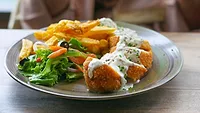
breaded stuffed chicken product on a plate

Image credit: Shameel mukkath via Pexels

August 14, 2023

The Center for Science in the Public Interest (CSPI) and other food safety advocates have announced their support of a proposal by the U.S. Department of Agriculture’s Food Safety and Inspection Service (USDA’s FSIS) to declare Salmonella an adulterant in breaded, stuffed, not-ready-to-eat (NRTE) chicken products. Besides CSPI, signatories to the comment filed with USDA include representatives of the Center for Foodborne Illness Research and Prevention at Ohio State University, Consumer Federation of America, Consumer Reports, Stop Foodborne Illness, and William (Bill) Marler, Esq.

The NRTE products in question, such as Chicken Cordon Bleu and Chicken Kiev, are typically frozen, and have been disproportionately associated with cases of salmonellosis. Because these products often come pre-browned and may appear cooked when they are not, consumers often do not understand the raw nature of the products and may use improper techniques for cooking. Although such products account for only 0.15 percent of domestic chicken products, they have been linked to five percent of all chicken-related Salmonella outbreaks.

In 2021, members of the aforementioned groups petitioned USDA to reform its poultry Salmonella regulations due to lack of progress in reducing human illnesses. The petition asked for enforceable final product standards that would disallow the sale of products with concerning types of Salmonella contamination, whether that be determined by the presence of specific Salmonella subtypes and/or the amount of Salmonella present in a product. The petition argued that final product standards would better motivate industry to control the most dangerous types of contamination and prevent products that are known to be particularly hazardous from reaching consumers.

USDA’s April 2023 proposed rule would consider Salmonella to be an adulterant in NRTE, breaded, stuffed chicken products under federal law when the bacteria is present at more than 1 colony forming unit per gram (CFU/g) of the product. The proposal is part of a broader effort by the agency to reduce Salmonella illnesses linked to poultry.

In comments submitted to USDA regarding its proposal, CSPI and the other consumer advocates wrote that they support the threshold of 1 CFU/g, which they believe should be effective in preventing a substantial proportion of illnesses related to the products in question. CSPI states that the proposed Salmonella product standard would reduce the burden on home cooks to control the pathogen, although proper cooking techniques should not be neglected.

Additionally, the groups explained their support for FSIS’ determination that Salmonella is an “added substance,” as the agency has traditionally viewed Salmonella as “naturally occurring” in food animals. Classifying Salmonella as an “added substance” or “naturally occurring” is important in determining when a product is “adulterated” under federal law requiring a higher likelihood of harm for substances that are “not an added substance” (i.e., “naturally occurring”), than for added substances. Specifically, whereas a poultry product may be considered adulterated if “it bears or contains any poisonous or deleterious substance which may render it injurious to health,” in the case of a naturally occurring substance, the standard requires that the “quantity of such substance” must “ordinarily render it injurious to health.”

The groups also support FSIS in its statement that it will continue to evaluate and refine its proposed determination as necessary, based on advances in science and technology related to pathogen levels, serotypes, and infectious dose. For example, with testing technology that allows for rapid serotyping and whole genome sequencing (WGS), it may become possible to pinpoint the most virulent and infectious serotypes or genetic variants of Salmonella, allowing FSIS to develop more stringent standards for specific types. If it is found in the coming years that a specific Salmonella subtype causes illnesses at a lower dose and is especially prevalent in chicken products, there may be a need to adjust standards.

Looking for quick answers on food safety topics?
Try Ask FSM, our new smart AI search tool.
Ask FSM →


KEYWORDS: Adulteration Bill Marler Consumer Reports CSPI Salmonella STOP Foodborne Illness USDA-FSIS

Share This Story

Recommended Content

JOIN TODAY
to unlock your recommendations.

Already have an account? Sign In

  • people holding baby chicks

    Serovar Differences Matter: Utility of Deep Serotyping in Broiler Production and Processing

    This article discusses the significance of Salmonella in...
    Contamination Control
    By: Nikki Shariat Ph.D.
  • woman washing hands

    Building a Culture of Hygiene in the Food Processing Plant

    Everyone entering a food processing facility needs to...
    Food Prep/Handling
    By: Richard F. Stier, M.S.
  • graphical representation of earth over dirt

    Climate Change and Emerging Risks to Food Safety: Building Climate Resilience

    This article examines the multifaceted threats to food...
    International
    By: Maria Cristina Tirado Ph.D., D.V.M. and Shamini Albert Raj M.A.
Manage My Account
  • eMagazine Subscription
  • Subscribe to eNewsletter
  • Manage My Preferences
  • Website Registration
  • Subscription Customer Service

More Videos

Sponsored Content

Sponsored Content is a special paid section where industry companies provide high quality, objective, non-commercial content around topics of interest to the Food Safety Magazine audience. All Sponsored Content is supplied by the advertising company and any opinions expressed in this article are those of the author and not necessarily reflect the views of Food Safety Magazine or its parent company, BNP Media. Interested in participating in our Sponsored Content section? Contact your local rep!

close
  • Salmonella bacteria
    Sponsored byThermoFisher

    Food Microbiology Testing Methods: Salmonella species

  • a diagram explaining indicator organisms
    Sponsored byHygiena

    How Proactive Listeria Testing Helps Prevent Six- and Seven-Figure Recalls

  • woman grocery shopping
    Sponsored byCorbion

    Designing Safety Into Every Bite: Proactive Risk Mitigation for Refrigerated Foods

Popular Stories

NRTE breaded stuffed chicken

USDA Indefinitely Delays Enforcement of Salmonella as Adulterant in Raw Breaded, Stuffed Chicken

non-conforming product

How to Handle Non-Conforming Product

spoonfuls of food ingredients

FDA’s Developing Rule to Tighten GRAS Oversight Moves to White House

Events

December 11, 2025

How to Develop and Implement an Effective Food Defense Strategy

Live: December 11, 2025 at 2:00 pm EDT: From this webinar, attendees will learn common areas where companies encounter challenges in their food defense strategies and how to address them.

May 11, 2026

The Food Safety Summit

Stay informed on the latest food safety trends, innovations, emerging challenges, and expert analysis. Leave the Summit with actionable insights ready to drive measurable improvements in your organization. Do not miss this opportunity to learn from experts about contamination control, food safety culture, regulations, sanitation, supply chain traceability, and so much more.

View All

Products

Global Food Safety Microbial Interventions and Molecular Advancements

Global Food Safety Microbial Interventions and Molecular Advancements

See More Products

Related Articles

  • cordon bleu

    USDA FSIS Declares Salmonella an Adulterant in Breaded, Stuffed Raw Chicken Products

    See More
  • breaded chicken product on cutting board

    USDA-FSIS: Salmonella Officially an Adulterant in Breaded, Stuffed Raw Chicken Products at 1 CFU/g or Higher

    See More
  • chicken in pen

    USDA-FSIS Proposed Regulatory Framework for Reducing Salmonella in Poultry May Declare Salmonella an Adulterant

    See More

Related Products

See More Products
  • 9781138070912.jpg

    Trends in Food Safety and Protection

  • 1119237963.jpg

    Food Safety in China: Science, Technology, Management and Regulation

  • 1119053595.jpg

    Food Safety for the 21st Century: Managing HACCP and Food Safety throughout the Global Supply Chain, 2E

See More Products

Related Directories

  • Food Production Solutions Assn. & EATS

    The Food Production Solutions Association (FPSA) is dedicated to delivering innovative food and technology solutions, meaningful education, industry engagement, philanthropy, and advocacy to advance member companies and the greater food production industry. FPSA is a dynamic community of food production industry leaders and experts, where collaboration and innovation lead the future of food production.
  • EAS Consulting Group, a Certified Group Co.

    EAS Consulting Group is a global leader in regulatory solutions for industries regulated by FDA, USDA, and other federal and state agencies. Our network of 200+ independent consultants enables EAS to provide comprehensive consulting, training, and auditing services, ensuring proactive regulatory compliance for food, supplements, pharmaceuticals, medical devices, cosmetics, tobacco, hemp, and CBD.
×

Never miss the latest news and trends driving the food safety industry

eNewsletter | Website | eMagazine

JOIN TODAY!
  • RESOURCES
    • Advertise
    • Contact Us
    • Directories
    • Store
    • Want More
  • SIGN UP TODAY
    • Create Account
    • eMagazine
    • eNewsletter
    • Customer Service
    • Manage Preferences
  • SERVICES
    • Marketing Services
    • Reprints
    • Market Research
    • List Rental
    • Survey/Respondent Access
  • STAY CONNECTED
    • LinkedIn
    • Facebook
    • Instagram
    • X (Twitter)
  • PRIVACY
    • PRIVACY POLICY
    • TERMS & CONDITIONS
    • DO NOT SELL MY PERSONAL INFORMATION
    • PRIVACY REQUEST
    • ACCESSIBILITY

Copyright ©2025. All Rights Reserved BNP Media.

Design, CMS, Hosting & Web Development :: ePublishing