Food Safety
search
Ask Food Safety AI
cart
facebook twitter linkedin
  • Sign In
  • Create Account
  • Sign Out
  • My Account
Food Safety
  • NEWS
    • Latest News
    • White Papers
  • PRODUCTS
  • TOPICS
    • Contamination Control
    • Food Types
    • Management
    • Process Control
    • Regulatory
    • Sanitation
    • Supply Chain
    • Testing and Analysis
  • PODCAST
  • EXCLUSIVES
    • Food Safety Five Newsreel
    • eBooks
    • FSM Distinguished Service Award
    • Interactive Product Spotlights
    • Videos
  • BUYER'S GUIDE
  • MORE
    • ENEWSLETTER >
      • Archive Issues
      • Subscribe to eNews
    • Store
    • Sponsor Insights
    • ASK FSM AI
  • WEBINARS
  • FOOD SAFETY SUMMIT
  • EMAG
    • eMagazine
    • Archive Issues
    • Editorial Advisory Board
    • Contact
    • Advertise
  • SIGN UP!
NewsContamination ControlFood TypeRegulatoryAllergensIngredientsFDA

Bimbo Bakeries Defends Practice of Intentionally Adding, Falsely Listing Sesame as Ingredient
By Bailee Henderson
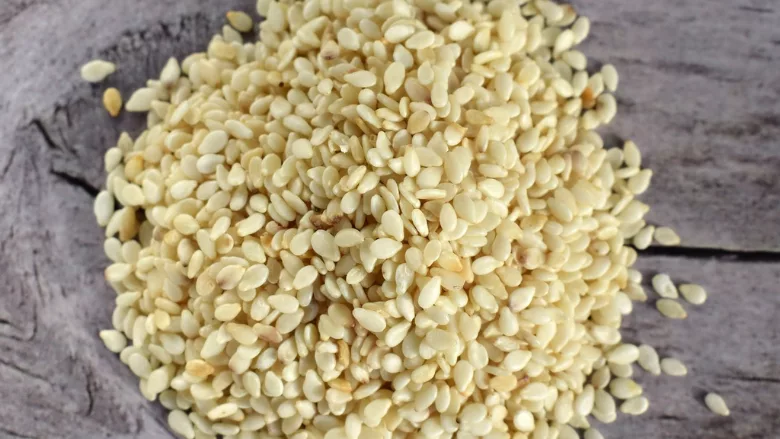
pile of sesame seeds

Image credit: Enotovyj via Pixabay

October 9, 2024

In June 2024, the U.S. Food and Drug Administration (FDA) sent a warning letter to Bimbo Bakeries USA Inc. for intentionally adding sesame to its products, as well as listing sesame as an ingredient on products that do not contain it, rather than taking steps to prevent sesame cross-contamination in compliance with the FASTER Act.

Bimbo Bakeries’ response letter to FDA has recently been revealed by two watchdog groups—the Center for Science in the Public Interest (CSPI) and Food Allergy Research and Education (FARE)—obtained through a request to FDA under the Freedom of Information Act (FOIA). CSPI and FARE are expressing their dissatisfaction with Bimbo Bakeries’ response, and are calling on manufacturers to find an appropriate solution for addressing cross-contamination risks and taking sesame out of products that did not contain the ingredient before sesame was declared a major allergen under the FASTER Act.

Specifically, in its response to FDA, Bimbo Bakeries claimed that it had not been able to control trace amounts of sesame in some of its manufacturing facilities, and "determined that the most protective approach for sesame-allergic consumers” was to add sesame as an actual ingredient to all products that are baked on the same line as products that contain sesame. Because this practice varies by facility, in the interest of consistency, Bimbo explained that it declares sesame as an ingredient for all products with the same name, even when sesame is not an intentionally added ingredient.

“Our Phoenix facility does not use sesame in the bread line, but it produces the four breads at issue that are also produced in other facilities on lines that also produce sesame-containing products. The only difference between the products is the small amounts of sesame included in the formulas of the same products produced at those other facilities,” explained Bimbo Bakeries to FDA. Accordingly, the product names and principal display panels are identical for the four products in national distribution, and we use a nationally uniform ingredient list and “Contains:” statement to prevent confusion and protect sesame-allergic consumers.”

CSPI called Bimbo Bakeries’ practice a “perverse response to food safety rules.” The group previously petitioned FDA to ban the practice of adding allergens or falsely declaring ingredients to evade compliance with food safety requirements, which FDA denied on the grounds that the agency cannot stop companies from adding sesame or other food allergens, but can stop them from falsely declaring them as an ingredient.

Since sesame became the ninth major food allergen under the FASTER Act, food manufacturers like Bimbo Bakeries have attempted to circumvent the requirements for preventing allergen cross-contamination by intentionally adding sesame to their products and declaring its presence on their labels. In September 2023, FDA called attention to and denounced this trend, updating its guidance for industry on hazards analysis and risk-based preventive controls to include a new chapter on food allergens that helps food facilities avoid allergen cross-contact and ensure proper labeling.

FDA regulations require food manufacturers to accurately and truthfully list which ingredients are present in their products, and to follow good manufacturing practices (GMPs) and implement appropriate preventive controls to prevent allergen cross-contamination. The agency does not consider labeling to be a substitute for adherence to GMPs or implementation of preventive controls; rather, firms must comply with applicable requirements to address allergen cross-contact.

Looking for quick answers on food safety topics?
Try Ask FSM, our new smart AI search tool.
Ask FSM →


KEYWORDS: CSPI FASTER Act labeling sesame

Share This Story

Baileehendersonmay23

Bailee Henderson is the Digital Editor of Food Safety Magazine. She can be reached at hendersonb@bnpmedia.com.

Recommended Content

JOIN TODAY
to unlock your recommendations.

Already have an account? Sign In

  • people holding baby chicks

    Serovar Differences Matter: Utility of Deep Serotyping in Broiler Production and Processing

    This article discusses the significance of Salmonella in...
    Microbiological
    By: Nikki Shariat Ph.D.
  • woman washing hands

    Building a Culture of Hygiene in the Food Processing Plant

    Everyone entering a food processing facility needs to...
    Management
    By: Richard F. Stier, M.S.
  • graphical representation of earth over dirt

    Climate Change and Emerging Risks to Food Safety: Building Climate Resilience

    This article examines the multifaceted threats to food...
    Best Practices
    By: Maria Cristina Tirado Ph.D., D.V.M. and Shamini Albert Raj M.A.
Manage My Account
  • eMagazine Subscription
  • Subscribe to eNewsletter
  • Manage My Preferences
  • Website Registration
  • Subscription Customer Service

More Videos

Sponsored Content

Sponsored Content is a special paid section where industry companies provide high quality, objective, non-commercial content around topics of interest to the Food Safety Magazine audience. All Sponsored Content is supplied by the advertising company and any opinions expressed in this article are those of the author and not necessarily reflect the views of Food Safety Magazine or its parent company, BNP Media. Interested in participating in our Sponsored Content section? Contact your local rep!

close
  • Salmonella bacteria
    Sponsored byThermoFisher

    Food Microbiology Testing Methods: Salmonella species

  • a diagram explaining indicator organisms
    Sponsored byHygiena

    How Proactive Listeria Testing Helps Prevent Six- and Seven-Figure Recalls

  • woman grocery shopping
    Sponsored byCorbion

    Designing Safety Into Every Bite: Proactive Risk Mitigation for Refrigerated Foods

Popular Stories

NRTE breaded stuffed chicken

USDA Indefinitely Delays Enforcement of Salmonella as Adulterant in Raw Breaded, Stuffed Chicken

digital map of europe

EU Publishes Food Fraud Tool Mapping Thousands of Cases Since 2016

non-conforming product

How to Handle Non-Conforming Product

Events

December 11, 2025

How to Develop and Implement an Effective Food Defense Strategy

Live: December 11, 2025 at 2:00 pm EDT: From this webinar, attendees will learn common areas where companies encounter challenges in their food defense strategies and how to address them.

May 11, 2026

The Food Safety Summit

Stay informed on the latest food safety trends, innovations, emerging challenges, and expert analysis. Leave the Summit with actionable insights ready to drive measurable improvements in your organization. Do not miss this opportunity to learn from experts about contamination control, food safety culture, regulations, sanitation, supply chain traceability, and so much more.

View All

Products

Global Food Safety Microbial Interventions and Molecular Advancements

Global Food Safety Microbial Interventions and Molecular Advancements

See More Products

Related Articles

  • slices of white and brown bread laid out on table

    FDA Admonishes Bimbo Bakeries for Falsely Listing Allergens on Labels of Products

    See More
  • Bimbo Bakeries USA Voluntary Recall of Entenmann’s Little Bites Cookies Due to Potential Presence of Plastic Pieces

    Bimbo Bakeries USA voluntary recall of Entenmann's Little Bites cookies due to potential presence of plastic pieces

    See More
  • FDA Encourages Manufacturers to Clearly Declare All Uses of Sesame in Ingredient List on Food Labels

    See More

Related Directories

  • Wenda Ingredients

    Natural curing, yield and texture improvement, shelf-life extension, color retention, and pathogen control. Wenda Ingredients' portfolio of clean-label ingredients provides brands and processors with the most advanced solutions.
  • A&B Ingredients

    A&B Ingredients is a manufacturer and distributor of unique specialty ingredients to the food industry. We specialize in natural, clean-label, plant-based ingredients for food safety and shelf life extension in food and beverage products. Our CytoGUARD portfolio includes antimicrobials, yeast and mold inhibitors, natural preservatives, and antioxidants. We also provide turn-key solutions for sodium reduction with natural lower sodium sea salts.
×

Never miss the latest news and trends driving the food safety industry

eNewsletter | Website | eMagazine

JOIN TODAY!
  • RESOURCES
    • Advertise
    • Contact Us
    • Directories
    • Store
    • Want More
  • SIGN UP TODAY
    • Create Account
    • eMagazine
    • eNewsletter
    • Customer Service
    • Manage Preferences
  • SERVICES
    • Marketing Services
    • Reprints
    • Market Research
    • List Rental
    • Survey/Respondent Access
  • STAY CONNECTED
    • LinkedIn
    • Facebook
    • Instagram
    • X (Twitter)
  • PRIVACY
    • PRIVACY POLICY
    • TERMS & CONDITIONS
    • DO NOT SELL MY PERSONAL INFORMATION
    • PRIVACY REQUEST
    • ACCESSIBILITY

Copyright ©2025. All Rights Reserved BNP Media.

Design, CMS, Hosting & Web Development :: ePublishing