Food Safety
search
Ask Food Safety AI
cart
facebook twitter linkedin instagram youtube
  • Sign In
  • Create Account
  • Sign Out
  • My Account
Food Safety
  • NEWS
    • Latest News
    • Sponsored Insights
    • Sponsored White Papers
  • PRODUCTS
  • TOPICS
    • Contamination Control
    • Food Types
    • Management
    • Process Control
    • Regulatory
    • Sanitation
    • Supply Chain
    • Testing and Analysis
  • PODCAST
  • EXCLUSIVES
    • Food Safety Five Newsreel
    • eBooks
    • FSM Distinguished Service Award
    • Interactive Product Spotlights
    • Videos
  • BUYER'S GUIDE
  • MORE
    • NEWSLETTERS >
      • Archive Issues
      • Subscribe to eNews
    • Store
    • ASK FSM AI
  • WEBINARS
  • FOOD SAFETY SUMMIT
  • EMAG
    • eMagazine
    • Archive Issues
    • Editorial Advisory Board
    • Contact
    • Advertise
  • SIGN UP!
Contamination ControlFood TypeProcess ControlMicrobiological ControlProcessing TechnologiesPlant-BasedBeverages

Reducing Spoilage of Plant-Based Milk with Flash Freezing
By Muayyad Karadsheh M.B.A., B.S.
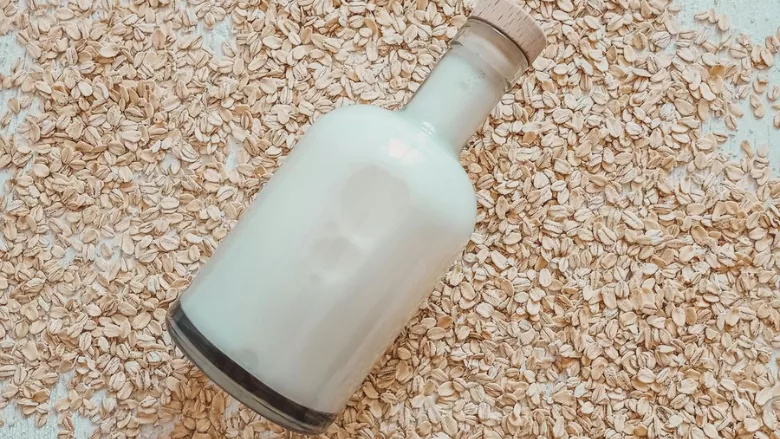
glass bottle of oat milk lying on bed of rolled oats

Image credit: hello aesthe via Pexels

July 16, 2024

A simple definition of flash freezing is lowering the temperature of food ingredients to 32 °F (0 °C) while keeping the cells in the food item intact. This allows for a reduction in shipping costs and spoilage, since water is frozen in the food item. Another benefit of flash freezing is retention of nutrition content of the final product, such as vitamins and minerals. It is important to note that ice crystals affect cell integrity over a period of time, as the cellular structure exhibits significant differences before and after flash freezing. The cellular structure of a food is intact before freezing, while frozen food items have small ice crystals (Figure 1).

Figure 1. The Flash Freezing Process (Image Created with Canva by Muayyad Karadsheh)

Does Flash Freezing Work for Plant-Based Milk?

Temperature control is a significant factor in extending the shelf life of plant-based milk. Textural attributes and temperature are directly related, and can lead to a different viscosity for the final product. Plant-based milk requires colder temperatures to remain shelf-stable, and flash freezing is an option for extending shelf life (Figure 2).  

As shown in Figure 1, fewer ice crystals are formed in the final product. This change in cell structure improves product quality and results in less damage during defrosting, as the ice crystals are not large. Moreover, flash freezing equipment increases moisture retention in thawed and cooked products like baked goods and produce. A blast freezer can be used to improve shelf life for a variety of products. For example, the shelf life of date juice packed in low-density polyethylene bags can be extended to six months through flash freezing, according to one study.

Figure 2. Flash Freezing is an Option for Extending the Shelf Life of Plant-Based Milk (Image Credit: Unsplash by Maryam Sicard)

Options for Reducing Oxygen and Spoilage with Flash Freezing

Looking for quick answers on food safety topics?
Try Ask FSM, our new smart AI search tool.
Ask FSM →

Food spoilage is the result of several factors, one of which is the level of moisture in the food. Flash freezing can be used to reduce spoilage, and is a viable option for plant-based milk. Several interventions can be applied to improve the quality and safety of the product, especially with regard to packaging. 

After flash freezing, the product should be stored in a dark container, and the container should be kept away from light to reduce oxidation. A stainless steel or tinted glass container can be used for plant-based milk. Nitrogen flushing can also be used to pump out oxygen, which protects the flavor and preserved the vitamin content of milk. Oxygen absorbers can also help increase the shelf life of plant-based milk. Airtight containers should be used to seal the bottle tight against oxygen. Possible options for airtight containers include polyethylene terephthalate or low-density polyethylene pouches.

Alteration in water content of a product changes microbiological activity. As flash freezing can help control the water content of a food product such as plant-based milk, it can also help improve the quality, safety, and shelf life of the final product. For more information and further reading on flash freezing for plant-based milks and other food products, please see the References Consulted section at the end of this article.

References Consulted
  1. Bomgardner, M. "Extending Shelf Life With Natural Preservatives." Chemical & Engineering News 96, no. 6. February 10, 2014. https://cen.acs.org/articles/92/i6/Extending-Shelf-Life-Natural-Preservatives.html.
  2. Maghsoudlou, Y., M. Alami, M. Mashkour, M.H. Shahraki. "Optimization of Ultrasound-Assisted Stabilization and Formulation of Almond Milk." Journal of Food Processing and Preservation 40, no. 5. November 20, 2015. https://ifst.onlinelibrary.wiley.com/doi/pdf/10.1111/jfpp.12661.
  3. Rysstad, G. and J. Kolstad. "Extended Shelf Life Milk—Advances in Technology." International Journal of Dairy Technology 59, no. 2. April 21, 2006. https://onlinelibrary.wiley.com/doi/full/10.1111/j.1471-0307.2006.00247.x.
  4. Tazi, S., F. Plantevin, C. Di Falco, A. Puigserver, and E. .H.H. Ajandouz. "Effects of light, temperature and water activity on the kinetics of lipoxidation in almond-based products." Food Chemistry 115, no. 3. January 14, 2009. https://www.sciencedirect.com/science/article/pii/S0308814609000405.
  5. Simuang, J. "Effects of fat content and temperature on the apparent viscosity of coconut milk." Journal of Food Engineering 64, no. 2. November 7, 2003.  https://www.sciencedirect.com/science/article/abs/pii/S0260877403003923.
  6. Kulkarni, S.G., P. Vijayanad, and L. Shubha. "Effect of processing of dates into date juice concentrate and appraisal of its quality characteristics." Journal of Food Science and Technology 47. April 10, 2010.  https://link.springer.com/article/10.1007/s13197-010-0028-y.
  7. Cichello, S.A. "Oxygen absorbers in food preservation: a review." Journal of Food Science and Technology 52, no. 4. February 6, 2014. https://www.ncbi.nlm.nih.gov/pmc/articles/PMC4375217/#!po=20.5357.
  8. Johnson, D.S., S.E. Duncan, L.M. Bianchi, H.H. Chang, W.N. Eigel, and S.F. O'Keefe. "Packaging modifications for protecting flavor of extended-shelf-life milk from light." Journal of Dairy Science 98, no. 4. February 04, 2015. http://dx.doi.org/10.3168/jds.2014-8857.

 

KEYWORDS: flash freezing plant based foods spoilage

Share This Story

Muayyad Karadsheh, M.B.A., B.S. is a food science writer with more than 15 years of experience in food science, nutrition, food manufacturing, food safety, food testing and analysis, and foodservice. He holds a B.S. degree in Nutrition and Food Science from Central Washington University, a B.S. degree in Resort and Restaurant Management from Colorado State University, a Harvard Certificate in the Chemistry and Physics of Food, and an M.B.A. from DeVry University.

Recommended Content

JOIN TODAY
to unlock your recommendations.

Already have an account? Sign In

  • people holding baby chicks

    Serovar Differences Matter: Utility of Deep Serotyping in Broiler Production and Processing

    This article discusses the significance of Salmonella in...
    Contamination Control
    By: Nikki Shariat Ph.D.
  • woman washing hands

    Building a Culture of Hygiene in the Food Processing Plant

    Everyone entering a food processing facility needs to...
    Personal Hygiene/Handwashing
    By: Richard F. Stier, M.S.
  • graphical representation of earth over dirt

    Climate Change and Emerging Risks to Food Safety: Building Climate Resilience

    This article examines the multifaceted threats to food...
    International
    By: Maria Cristina Tirado Ph.D., D.V.M. and Shamini Albert Raj M.A.
Manage My Account
  • eMagazine Subscription
  • Subscribe to Newsletters
  • Manage My Preferences
  • Website Registration
  • Subscription Customer Service

More Videos

Sponsored Content

Sponsored Content is a special paid section where industry companies provide high quality, objective, non-commercial content around topics of interest to the Food Safety Magazine audience. All Sponsored Content is supplied by the advertising company and any opinions expressed in this article are those of the author and not necessarily reflect the views of Food Safety Magazine or its parent company, BNP Media. Interested in participating in our Sponsored Content section? Contact your local rep!

close
  • Man In Warehouse
    Sponsored byRentokil

    Mitigating Hidden Rodent Risks in Food Facilities

  • an industrial manufacturing or processing facility
    Sponsored bybioMérieux

    Get Ahead of Spoilage in Food Manufacturing with Metagenomics for Preventive Monitoring

  • an automated industrial production line used in a modern food factory
    Sponsored byIFC

    A Formula for Food Processing Pest Management

Popular Stories

dozen white eggs

Nearly 100 Sick in Multistate Salmonella Outbreak, Millions of Eggs Recalled

Business people shaking hands with FDA logo overlay

FDA to Centralize Administrative Functions, Generalize Inspectors

cartoon bacteria petri dish

Researchers Identify Plastic Food Contact Material Properties, Background Microbes that Influence Listeria Biofilm Persistence

building a skilled workforce ebook

Events

August 6, 2026

Beyond Sanitation: Understanding the Hidden System Conditions That Allow Pathogens to Persist

Live: August 6, 2026 at 2:00 pm EDT: Attend this webinar to learn strategies for strengthening environmental control programs through a layered approach to pathogen management.

August 11, 2026

Beyond Sanitization: Reducing Contamination Risk Without Raising Operating Cost

Live: August 11, 2026 at 2:00 pm EDT: Attend this webinar to learn why ambient air is the largest and most overlooked contamination zone in food processing, and what it costs you between scheduled cleans.

August 25, 2026

Don’t Wing It: Bird Control for Food Processing Facilities

Live: August 25, 2026 at 2:00 pm EDT: This webinar will cover why managing bird activity should be a priority for your business, the complexities involved in effective bird control, and proactive strategies to help protect your facility.

View All

Products

Global Food Safety Microbial Interventions and Molecular Advancements

Global Food Safety Microbial Interventions and Molecular Advancements

See More Products

Related Articles

  • almond milk with FDA logo overlay

    FDA Draft Guidance for Naming, Labeling of Plant-Based Milk Alternatives

    See More
  • digital art of almond milk cartons with milk splashes and almonds

    CFIA Unable to Confirm Source of Contamination in Fatal Listeria Outbreak Linked to Plant-Based Milk

    See More
  • grilling sausages

    Food Safety and Quality Considerations in the Production of Plant-Based Meat Alternatives

    See More

Related Products

See More Products
  • 9781498721776.jpg

    Handbook of Food Processing: Food Safety, Quality, and Manufacturing Processes

  • 1444333348.jpg

    Handbook of Food Safety Engineering

  • Food-Forensics-3D.jpg

    Food Forensics Handbook Practice, Instrumentation, Case Studies

See More Products

Related Directories

  • Page & Pedersen International Ltd.

    Designing & Manufacturing analytical instruments for food safety and quality testing. Also supplying certified calibration standards for milk composition analyzers and cryoscopes. LactiCYTE Somatic Cell Counter for automated, image-based SCC in <1 min., LactiWhey for rapid fat & protein results, LactiCheck Composition Analyzers for Rapid Results, (Freezing-Point Cryoscopes) to test extraneous water in milk, moisture levels in cheese/yogurt (Halogen Infrared Moisture Analyzer) or see Somatic Cell Counts (automated image cytometry).
  • Premium Plant Services

    Premium Plant Services is a family-owned industrial cleaning company founded in 2004 in the Upper Midwest. Built on the industries that keep this country running - from farmers and grain facilities to refineries, power plants, and food processors. We earned our reputation by doing work right the first time. Clients kept calling back, and over two decades we’ve grown to nine offices across five states. Completing projects in nearly every state while staying true to the values that shaped us: straight talk, hard work, and follow-through.
  • Foth | Food Plant Engineering LLC

    We are designers and builders of sustainable food production facilities. Using imagination, innovation, and ingenuity, we help food manufacturing companies improve food safety, gain productivity, and grow capacity.
×

Never miss the latest news and trends driving the food safety industry

Newsletters | Website | eMagazine

JOIN TODAY!
  • RESOURCES
    • Advertise
    • Contact Us
    • Directories
    • Store
    • Want More
  • SIGN UP TODAY
    • Create Account
    • eMagazine
    • Newsletters
    • Customer Service
    • Manage Preferences
  • SERVICES
    • Marketing Services
    • Reprints
    • Market Research
    • List Rental
    • Survey/Respondent Access
  • STAY CONNECTED
    • LinkedIn
    • Facebook
    • Instagram
    • X (Twitter)
  • PRIVACY
    • PRIVACY POLICY
    • TERMS & CONDITIONS
    • DO NOT SELL MY PERSONAL INFORMATION
    • PRIVACY REQUEST
    • ACCESSIBILITY

Copyright ©2026. All Rights Reserved BNP Media, Inc. and BNP Media II, LLC.

Design, CMS, Hosting & Web Development :: ePublishing