Food Safety
search
Ask Food Safety AI
cart
facebook twitter linkedin instagram youtube
  • Sign In
  • Create Account
  • Sign Out
  • My Account
Food Safety
  • NEWS
    • Latest News
    • White Papers
  • PRODUCTS
  • TOPICS
    • Contamination Control
    • Food Types
    • Management
    • Process Control
    • Regulatory
    • Sanitation
    • Supply Chain
    • Testing and Analysis
  • PODCAST
  • EXCLUSIVES
    • Food Safety Five Newsreel
    • eBooks
    • FSM Distinguished Service Award
    • Interactive Product Spotlights
    • Videos
  • BUYER'S GUIDE
  • MORE
    • NEWSLETTERS >
      • Archive Issues
      • Subscribe to eNews
    • Store
    • Sponsor Insights
    • ASK FSM AI
  • WEBINARS
  • FOOD SAFETY SUMMIT
  • EMAG
    • eMagazine
    • Archive Issues
    • Editorial Advisory Board
    • Contact
    • Advertise
  • SIGN UP!
NewsContamination ControlRegulatoryChemical Control

Pennsylvania is Latest State to Introduce Food Additives Legislation, While Kentucky Urges FDA to Take Control
By Bailee Henderson
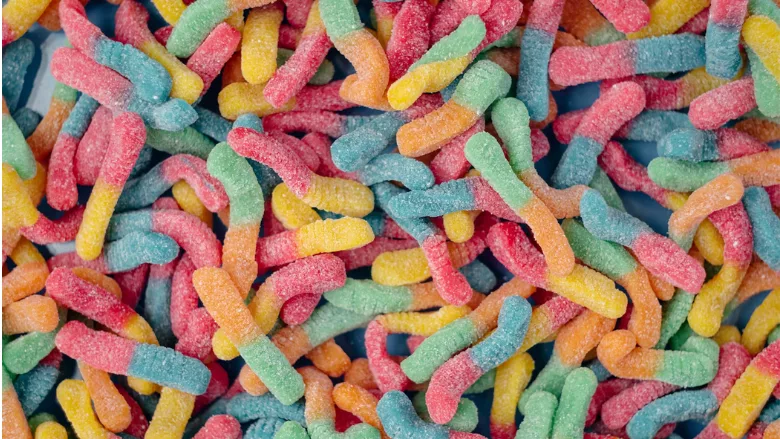
multicolor gummy worms

Image credit: Karsten Winegeart via Unsplash

March 21, 2024

Following the wave of state-level legislation on food additives cropping up across the U.S., two bills have been introduced in Pennsylvania to prohibit nine chemicals from being used as food additives in the state, due to potential harms to human health. Additionally, just prior to Pennsylvania’s introduction of its two bills, the state of Kentucky wrote a resolution urging the U.S. Food and Drug Administration (FDA) to mandate and enforce a federal prohibition on U.S. food manufacturers producing or selling food containing harmful ingredients that have been banned by several other countries.

Pennsylvania House Bill (HB) 2116 would ban red dye 3, red dye 40, yellow dye 5, yellow dye 6, blue dye 1, and blue dye 2. The second bill, HB 2117, targets potassium bromate, brominated vegetable oil (BVO), and beta hydroxy acids (BHA). Some scientific literature has linked the chemicals included in the two bills to heightened risk of cancer, hyperactivity and behavioral issues in children, damage to DNA, and harm to the nervous, endocrine, and reproductive systems. State Representatives Natalie Mihalek (R-Allegheny/Washington) and Melissa Shusterman (D-Chester) introduced the bills.

California was the first state to pass legislation banning food additives at the state level with the California Food Safety Act in October 2023, which targets red dye 3, potassium bromate, brominated vegetable oil (BVO), and propylparaben. Since then, Illinois, New York, Missouri, and Washington have introduced similar bills. California also introduced another additive-focused bill in March 2024, looking to ban six food colorants—blue 1, blue 1, green 3, red 40, yellow 5, and yellow 6—as well as titanium dioxide, from being offered in public schools. FDA has been trying to catch up for the past several months, announcing its intent to review several of the chemicals targeted by the state bills and revoking the authorization for BVO in food, as the agency works to modernize its postmarket food chemical safety review process.

Shortly preceding the introduction of Pennsylvania’s two additive bills, Kentucky published a concurrent resolution urging FDA to take strong action on food additives regulation at the federal level. The resolution states that FDA has “allowed food manufacturers in the U.S. to produce foods that are sold and consumed by the American public containing ingredients FDA acknowledges are harmful to humans and that its global counterparts have banned.” Kentucky is asking FDA to prohibit the sale of foods containing harmful additives banned by several other countries, specifically naming several of the additives targeted by a number of the recently introduced state-level bills and calling out the California Food Safety Act. The resolution states “Whereas, red dye 3 and BVO are two of four ingredients that the state of California banned from production and sale… and the EU, Great Britain, China, Japan, and many other countries have banned these harmful ingredients, mandating manufacturers produce foods with alternative and safe ingredients. FDA can mandate that food manufacturers find ways to create its same products without these toxic ingredients, as manufacturers do around the world.”

However, critics of state-level bans on food additives are beginning to speak up. For example, the National Confectioners’ Association (NCA) said in a statement, “Careless rhetoric deployed in this debate would lead consumers to believe the food additives in question are harmful and there is a systematic failure on behalf of the U.S. food safety system—ignoring the fact that FDA is taking action to modernize its review process to meet the growing demands of the agency. Usurping FDA’s authority does nothing but create a state-by-state patchwork of inconsistent state requirements that increase food costs, create confusion around food safety, and erode consumer confidence in our food supply.” NCA calls for a more “science-based” approach to food additives regulation, originating from the federal level.

Looking for quick answers on food safety topics?
Try Ask FSM, our new smart AI search tool.
Ask FSM →


KEYWORDS: additives kentucky Pennsylvania

Share This Story

Baileehendersonmay23

Bailee Henderson is the Digital Editor of Food Safety Magazine, where she covers industry-relevant current events, regulatory affairs, and scientific developments. She also produces the Food Safety Five Newsreel. Notably, Bailee's coverage for Food Safety Magazine has been featured in national televised news segments including CBS Sunday Morning and MSNBC's Rachel Maddow Show. She can be reached at hendersonb@bnpmedia.com.

Recommended Content

JOIN TODAY
to unlock your recommendations.

Already have an account? Sign In

  • people holding baby chicks

    Serovar Differences Matter: Utility of Deep Serotyping in Broiler Production and Processing

    This article discusses the significance of Salmonella in...
    Testing & Analysis
    By: Nikki Shariat Ph.D.
  • woman washing hands

    Building a Culture of Hygiene in the Food Processing Plant

    Everyone entering a food processing facility needs to...
    Management
    By: Richard F. Stier, M.S.
  • graphical representation of earth over dirt

    Climate Change and Emerging Risks to Food Safety: Building Climate Resilience

    This article examines the multifaceted threats to food...
    International
    By: Maria Cristina Tirado Ph.D., D.V.M. and Shamini Albert Raj M.A.
Manage My Account
  • eMagazine Subscription
  • Subscribe to Newsletters
  • Manage My Preferences
  • Website Registration
  • Subscription Customer Service

More Videos

Sponsored Content

Sponsored Content is a special paid section where industry companies provide high quality, objective, non-commercial content around topics of interest to the Food Safety Magazine audience. All Sponsored Content is supplied by the advertising company and any opinions expressed in this article are those of the author and not necessarily reflect the views of Food Safety Magazine or its parent company, BNP Media. Interested in participating in our Sponsored Content section? Contact your local rep!

close
  • the use of dual-energy X-ray food inspection technology to identify foreign contaminants.
    Sponsored byEagle by METTLER TOLEDO

    Precision Inspection Starts with the Right X-ray Detector

  • This image depicts a worker cleaning stainless steel machinery in a food processing plant
    Sponsored byCintas

    Employee Uniforms: A Frontline Defense Against Food Contamination

  • This image depicts a healthcare professional managing a large volume of paperwork and transitioning to a digital workflow.
    Sponsored bySafetyChain

    The Invisible Plant Tax Starts with Your Records

Popular Stories

Don Prater at the 2026 Food Safety Summit

Donald Prater Becomes New Head of FDA Human Foods Program

town hall panelists on stage at the 2026 food safety summit

Top U.S. Food Safety Officials Discuss Regulatory Landscape at Food Safety Summit

digital 3d rendering of a biofilm

Plasma-Activated Mist Shows Promise for Biofilm Removal in Food Facilities


Events

May 28, 2026

Advanced Sanitation Strategies for Allergen Risk Reduction in Food Processing

Live: May 28, 2026, at 2:00 pm EDT: From this webinar, attendees will learn why validation and verification are necessary for allergen control, and how analytical tools can support allergen management programs.

June 3, 2026

How to Build a Better Food Safety Training Program

Live: June 3, 2026 at 2:00 pm EDT: Join this webinar to learn how AI is impacting food safety training, and how you can leverage AI in your programs.

June 4, 2026

Building a Stronger Food Safety Program in a Changing GFSI Landscape

Live: June 4, 2026 at 11:00 am EDT: Attend this webinar to understand how GFSI requirements are evolving and what those changes signal for quality programs at food and beverage facilities.

View All

Products

Global Food Safety Microbial Interventions and Molecular Advancements

Global Food Safety Microbial Interventions and Molecular Advancements

See More Products
building a stronger food safety program webinar

Related Articles

  • Aldi sign

    Aldi's Decision to Ban 44 Food Additives Gets Ahead of Regulatory Uncertainty

    See More
  • RAW FARM-brand raw cheddar cheese shreds

    Amid E. coli Outbreak, Congress Urges FDA to Mandate Raw Cheese Recall

    See More
  • candy chips and marshmallows

    New York Poised to Ban Certain Food Additives, Require GRAS Ingredient Transparency

    See More

Related Products

See More Products
  • 9781032369990 (1).webp

    Food Safety Quality Control and Management

  • 9781498721776.jpg

    Handbook of Food Processing: Food Safety, Quality, and Manufacturing Processes

  • food-safety-making.jpg

    Food Safety: Making Foods Safe and Free From Pathogens

See More Products

Related Directories

  • Heat and Control Inc.

    Heat and Control®, a world-leading equipment manufacturer, offers the latest technology and highest quality equipment for processing, coating, seasoning, conveying, weighing, packaging, and inspection systems and develops innovative solutions for production challenges. With a global team of engineers, technicians, tradespeople, and support teams, they help manufacturers to achieve production goals.
×

Never miss the latest news and trends driving the food safety industry

Newsletters | Website | eMagazine

JOIN TODAY!
  • RESOURCES
    • Advertise
    • Contact Us
    • Directories
    • Store
    • Want More
  • SIGN UP TODAY
    • Create Account
    • eMagazine
    • Newsletters
    • Customer Service
    • Manage Preferences
  • SERVICES
    • Marketing Services
    • Reprints
    • Market Research
    • List Rental
    • Survey/Respondent Access
  • STAY CONNECTED
    • LinkedIn
    • Facebook
    • Instagram
    • X (Twitter)
  • PRIVACY
    • PRIVACY POLICY
    • TERMS & CONDITIONS
    • DO NOT SELL MY PERSONAL INFORMATION
    • PRIVACY REQUEST
    • ACCESSIBILITY

Copyright ©2026. All Rights Reserved BNP Media, Inc. and BNP Media II, LLC.

Design, CMS, Hosting & Web Development :: ePublishing