Food Safety
search
Ask Food Safety AI
cart
facebook twitter linkedin instagram youtube
  • Sign In
  • Create Account
  • Sign Out
  • My Account
Food Safety
  • NEWS
    • Latest News
    • Sponsored Insights
    • Sponsored White Papers
  • PRODUCTS
  • TOPICS
    • Contamination Control
    • Food Types
    • Management
    • Process Control
    • Regulatory
    • Sanitation
    • Supply Chain
    • Testing and Analysis
  • PODCAST
  • EXCLUSIVES
    • Food Safety Five Newsreel
    • eBooks
    • FSM Distinguished Service Award
    • Interactive Product Spotlights
    • Videos
  • BUYER'S GUIDE
  • MORE
    • NEWSLETTERS >
      • Archive Issues
      • Subscribe to eNews
    • Store
    • ASK FSM AI
  • WEBINARS
  • FOOD SAFETY SUMMIT
  • EMAG
    • eMagazine
    • Archive Issues
    • Editorial Advisory Board
    • Contact
    • Advertise
  • SIGN UP!
NewsContamination ControlManagementRisk AssessmentChemical Control

German Officials Publish Guidance on Risk Assessment of Non-Intentionally Added Substances in Food Contact Materials

By Food Safety Magazine Editorial Team
food packaging
Image credit: Gingagi/iStock / Getty Images Plus via Getty Images
September 14, 2026

The German Federal Institute for Risk Assessment (BfR) has published a guideline outlining its approach to the risk assessment of non-intentionally added substances (NIAS) in food contact materials (FCMs), including analytical and toxicological requirements based on migration levels.

The guideline is primarily intended to support dossiers for new substances submitted for inclusion in the BfR Recommendations for FCMs or Annex 14 of the German Consumer Goods Ordinance. It is not intended for compliance testing, although BfR said parts of the approach could inform other NIAS risk assessments.

Under EU requirements, intentionally added substances (IAS) and NIAS must meet the same safety requirements for FCMs. NIAS can include impurities and byproducts associated with substances used to manufacture FCMs, as well as reaction and degradation products formed during production. BfR generally considered NIAS with molecular weights below 1,000 Daltons (Da) relevant for evaluation; substances above 1,000 Da should also be considered if they are expected to degrade in the gastrointestinal tract.

BfR developed the guideline with input from its Commission for Consumer Products, FCM stakeholders, and members of the European Food Safety Authority (EFSA) FCM Network.

Analytical and Toxicological Requirements for NIAS

For non-predictable NIAS, BfR said screening should be conducted on the commercial product and an extract of the finished FCM. At minimum, screening should generally use gas chromatography-mass spectrometry (GC-MS) and liquid chromatography-mass spectrometry (LC-MS), or equivalent methods, unless deviations are scientifically justified.

An attempt at structure elucidation must be made when migration above 0.15 micrograms per kilogram (µg/kg) of food is expected. At or below 0.15 µg/kg, BfR said no toxicological data are required, regardless of whether the NIAS structure has been identified.

Identified NIAS migrating between 0.15 and 50 µg/kg food must be evaluated for genotoxic potential. When experimental data are unavailable, BfR would accept approaches including database searches, justified read-across, and, under certain circumstances, in silico predictions. Evidence of genotoxic potential would require experimental testing.

Looking for quick answers on food safety topics?
Try Ask FSM, our new smart AI search tool.
Ask FSM →

When a NIAS cannot be identified despite sufficient analytical efforts, BfR said a formal risk assessment is not possible, but migration up to 10 µg/kg food can be tolerated. Unidentified NIAS migrating between 10 and 50 µg/kg would require case-specific expert judgment.

For NIAS migrating between 50 and 5,000 µg/kg food, subchronic toxicity and accumulation potential in humans must also be evaluated. Above 5,000 µg/kg, requirements additionally include evaluation of chronic toxicity and carcinogenicity, reproductive toxicity, and absorption, distribution, metabolism, and excretion.


KEYWORDS: food contact materials (FCMs) Germany guidance non-intentionally added substances

Share This Story

Fsm purple logo 200x200

The Food Safety Magazine editorial team comprises Bailee Henderson, Director of Content Strategy and news editor ✉, and Adrienne Blume, M.A., Director of Editorial and Industry Engagement.

Recommended Content

JOIN TODAY
to unlock your recommendations.

Already have an account? Sign In

  • people holding baby chicks

    Serovar Differences Matter: Utility of Deep Serotyping in Broiler Production and Processing

    This article discusses the significance of Salmonella in...
    Microbiological Control
    By: Nikki Shariat Ph.D.
  • woman washing hands

    Building a Culture of Hygiene in the Food Processing Plant

    Everyone entering a food processing facility needs to...
    Sanitation
    By: Richard F. Stier, M.S.
  • graphical representation of earth over dirt

    Climate Change and Emerging Risks to Food Safety: Building Climate Resilience

    This article examines the multifaceted threats to food...
    International
    By: Maria Cristina Tirado Ph.D., D.V.M. and Shamini Albert Raj M.A.
Manage My Account
  • eMagazine Subscription
  • Subscribe to Newsletters
  • Manage My Preferences
  • Website Registration
  • Subscription Customer Service

More Videos

Sponsored Content

Sponsored Content is a special paid section where industry companies provide high quality, objective, non-commercial content around topics of interest to the Food Safety Magazine audience. All Sponsored Content is supplied by the advertising company and any opinions expressed in this article are those of the author and not necessarily reflect the views of Food Safety Magazine or its parent company, BNP Media. Interested in participating in our Sponsored Content section? Contact your local rep!

close
  • Man In Warehouse
    Sponsored byRentokil

    Mitigating Hidden Rodent Risks in Food Facilities

  • an industrial manufacturing or processing facility
    Sponsored bybioMérieux

    Get Ahead of Spoilage in Food Manufacturing with Metagenomics for Preventive Monitoring

  • an automated industrial production line used in a modern food factory
    Sponsored byIFC

    A Formula for Food Processing Pest Management

Popular Stories

iceberg lettuce growing

Cyclospora Outbreak Linked to Taylor Farms Lettuce Ends with Nearly 13,000 Illnesses, Two Deaths

cattle resting in field

Trump Executive Order Seeks Meat Inspection Modernization by Cutting ‘Unnecessary’ Requirements, Expanding State Programs

FSM podcast

Ep. 225. Yasuda, Boeffard, Boyce: The Stop Alliance Mentorship Program: Lessons Learned and Collaborations Shared

allergens ebook

Events

September 22, 2026

From EFSA to Enforcement: Managing the Growing Complexity of EU MRLs

Live: September 22, 2026 at 11:00 am EDT: Attend this webinar to evaluate best practices for monitoring regulatory changes and protecting market access.

September 24, 2026

Benchmarking Foreign Material Contamination in 2026: What the Data Shows

Live: September 24, 2026 at 2:00 pm EDT:  From this webinar, attendees will learn what is driving investment decisions, and the factors FSQA and ops leaders weigh when making the case for new prevention technology.

September 29, 2026

How to Talk to Your Board of Directors About Food Safety

Live: September 29, 2026 at 11:00 am EDT: Attend this webinar to learn how to position food safety as a material enterprise risk with measurable financial, operational, and reputational impacts relevant to Board-level decision-making.

View All

Products

Global Food Safety Microbial Interventions and Molecular Advancements

Global Food Safety Microbial Interventions and Molecular Advancements

See More Products

Related Articles

  • ILSI Europe logo

    ILSI Europe Releases Guidance for Analyzing Non-Intentionally Added Substances from Food Contact Materials

    See More
  • 3D rendering of microorganisms and dna

    Public Consultation Open for EFSA Draft Guidance on Characterization and Risk Assessment of Microorganisms in Food

    See More
  • person pulling packaged food out of paper bag and holding disposable cutlery

    Experts Call for Global Harmonization of Risk Assessment Methods for Food Contact Materials

    See More

Related Products

See More Products
  • food safety.jpg

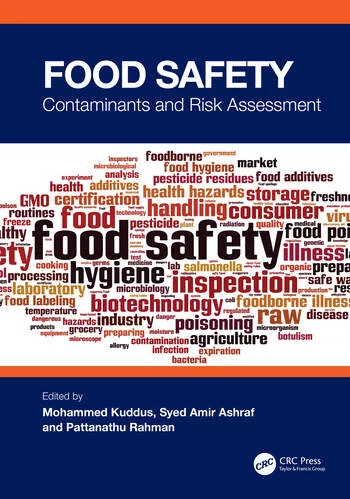
    Food Safety Contaminants and Risk Assessment

  • 9781138070912.jpg

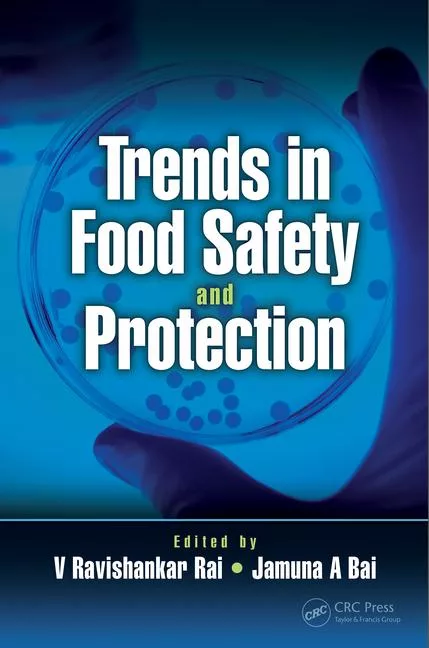
    Trends in Food Safety and Protection

  • 1119160553.jpg

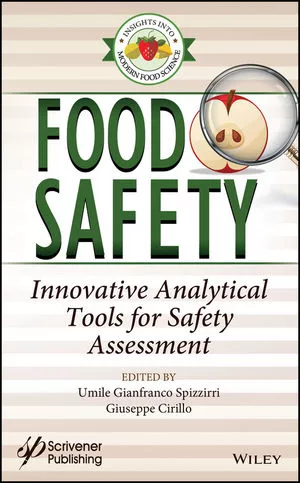
    Food Safety: Innovative Analytical Tools for Safety Assessment

See More Products

Events

View AllSubmit An Event
  • June 16, 2026

    Sustainable Food Contact Materials: Where Regulation Meets Analytical Testing

    On Demand: This webinar explores how sustainability regulations are changing food contact material requirements, including packaging compliance, unintended substances, and per- and polyfluoroalkyl substances.
  • May 6, 2026

    Allergen Uncertainty: Risk Assessment, Reference Doses, and Codex Management Guidance

    On Demand: Attendees will gain insight into the importance of preparing for the industry's shift from detection-based methods to risk-based allergen management.
View AllSubmit An Event

Related Directories

  • Women In Food Safety

    Women in Food Safety is a US-based global nonprofit organization dedicated to empowering and advancing women in the food safety and quality industry. Women In Food Safety provides a platform for professionals at all stages of their careers to grow, share knowledge, and support one another. Through community events, educational initiatives, and leadership development, we are building a more inclusive and resilient future for food safety worldwide. Together, we can do BETTER!
  • Association of Food and Drug Officials (AFDO)

    The consensus that AFDO develops is key to advancing uniform laws, regulations, and guidelines that result in more efficient regulation and less confusion among industry in the marketplace. AFDO develops support for its positions by interfacing with high-level regulatory officials, industry representatives, trade associations, and consumer organizations. This continues to have a significant impact on regulations at the federal, state and local level.
  • Active Food Safety

    Active Food Safety consists of an experienced team of food safety professionals who are thought-leaders in the food industry, and have each led enterprise level food safety management programs in several of the most well-known and respected brands in the food industry. We continuously help our clients ensure food safety based on proven business best practices designed specifically to the brand - to maximize risk reduction to prevent foodborne disease illnesses and outbreaks, to meet all government regulatory requirements, and to improve sales and brand reputation.
×

Never miss the latest news and trends driving the food safety industry

Newsletters | Website | eMagazine

JOIN TODAY!
  • RESOURCES
    • Advertise
    • Contact Us
    • Directories
    • Store
    • Want More
  • SIGN UP TODAY
    • Create Account
    • eMagazine
    • Newsletters
    • Customer Service
    • Manage Preferences
  • SERVICES
    • Marketing Services
    • Reprints
    • Market Research
    • List Rental
    • Survey/Respondent Access
  • STAY CONNECTED
    • LinkedIn
    • Facebook
    • Instagram
    • X (Twitter)
  • PRIVACY
    • PRIVACY POLICY
    • TERMS & CONDITIONS
    • DO NOT SELL MY PERSONAL INFORMATION
    • PRIVACY REQUEST
    • ACCESSIBILITY

Copyright ©2026. All Rights Reserved BNP Media, Inc. and BNP Media II, LLC.

Design, CMS, Hosting & Web Development :: ePublishing