Food Safety
search
Ask Food Safety AI
cart
facebook twitter linkedin instagram youtube
  • Sign In
  • Create Account
  • Sign Out
  • My Account
Food Safety
  • NEWS
    • Latest News
    • Sponsored Insights
    • Sponsored White Papers
  • PRODUCTS
  • TOPICS
    • Contamination Control
    • Food Types
    • Management
    • Process Control
    • Regulatory
    • Sanitation
    • Supply Chain
    • Testing and Analysis
  • PODCAST
  • EXCLUSIVES
    • Food Safety Five Newsreel
    • eBooks
    • FSM Distinguished Service Award
    • Interactive Product Spotlights
    • Videos
  • BUYER'S GUIDE
  • MORE
    • NEWSLETTERS >
      • Archive Issues
      • Subscribe to eNews
    • Store
    • ASK FSM AI
  • WEBINARS
  • FOOD SAFETY SUMMIT
  • EMAG
    • eMagazine
    • Archive Issues
    • Editorial Advisory Board
    • Contact
    • Advertise
  • SIGN UP!
NewsContamination ControlRegulatoryChemical Control

EPA Addresses Microplastics, PFAS in Drinking Water; HHS to Study Microplastics in Humans

By Bailee Henderson
man drinking glass of water
Image credit: Freepik
April 2, 2026

The U.S. Environmental Protection Agency (EPA) is adding per- and polyfluoroalkyl substances (PFAS), microplastics, pharmaceuticals, and other hazards to the Sixth Contaminant Candidate List (CCL 6) for drinking water.

Stakeholders can submit comments on the draft CCL 6 for 60 days under docket number EPA-HQ-OW-2022-0946 at regulations.gov. EPA will also consult with its independent Science Advisory Board before finalizing the list, which is expected to be signed by November 17, 2026. 

What is the Contaminant Candidate List?

The drinking water CCL is a list of contaminants that are not currently subject to any proposed or promulgated national primary drinking water regulations, but are known or anticipated to occur in public water systems. EPA is required to publish an updated CCL every five years.

Contaminants listed on the CCL may require future regulation under the Safe Drinking Water Act (SDWA), but the CCL itself does not impose any requirements on public water systems. EPA uses the CCL to identify priority contaminants for regulatory decision-making and information collection.

New Contaminants Added to CCL 6

Announced on April 2, EPA is including four contaminant groups in CCL 6—microplastics, pharmaceuticals, PFAS, and disinfection byproducts—as well as an additional 75 chemicals and nine microbes that may be found in drinking water.

For the first time, EPA is designating both microplastics and pharmaceuticals as priority contaminant groups in the CCL.

Trump Admin EPA Withdrew Biden-Era PFAS Limits for Drinking Water

Prior to EPA’s unveiling of CCL 6, the Trump Administration's EPA rolled back legally enforceable maximum limits for PFAS in drinking water that were finalized under the Biden Administration in April 2024. These limits would have included PFOA, PFOS, PFNA, PFHxS, and HFPO-DA (also known as GenX Chemicals), which are known to exist in U.S. drinking water and have harmful health effects.

Looking for quick answers on food safety topics?
Try Ask FSM, our new smart AI search tool.
Ask FSM →

In May 2025, EPA rescinded the regulations for PFNA, PFHxS, GenX chemicals, and PFBS. EPA also extended the compliance deadline for PFOA and PFOS from 2029 to 2031.

Some estimates based on EPA contaminant testing data suggest that as many as 30 million Americans are served by water systems with PFAS concentrations exceeding limits for one of the four PFAS that EPA rescinded.

HHS Announces Initiative to Address Microplastics in Humans

On the same day as EPA's CCL 6 announcement, the U.S. Department of Health and Human Services (HHS) unveiled the Systematic Targeting Of MicroPlastics (STOMP) initiative under the Advanced Research Projects Agency for Health (ARPA-H), a nationwide $144 million program to create the definitive toolbox for measuring, researching, and affordably removing microplastics and nanoplastics (MNPs) in the human body.

Led by Ileana Hancu, Ph.D. and Shannon Greene, Ph.D., STOMP will focus on three technical areas across two phases: Measurement and Mechanism (Phase 1) and Removal (Phase 2).

  1. Phase 1 will focus on understanding microplastics in the human body and developing measurement methods, including a clinical test that will quantify individual microplastic burden to support monitoring and interventions. This work will produce a risk stratification mechanism for plastic materials, ranking them by biological harm to help decision-makers identify and prioritize interventions.
  2. Phase 2 will commence once Phase 1 illuminates which MNPs present the greatest risk to public health and how they affect human health. The goal is to develop methods to mitigate the harm caused by MNPs in the human body, once those harms are better understood.

Update, April 2, 2026: The article has been edited to include the STOMP announcement.

KEYWORDS: EPA microplastics PFAS water water safety

Share This Story

Baileehendersonmay23

Bailee Henderson is the Director of Content Strategy for Food Safety Magazine. In the day-to-day, she covers industry-relevant current events, regulatory affairs, and scientific developments. She also produces the Food Safety Five Newsreel and edits the twice-weekly Food Safety Digest newsletter. Notably, Bailee's coverage for Food Safety Magazine has been featured in national televised news segments including CBS Sunday Morning and MSNBC's Rachel Maddow Show. She can be reached at hendersonb@bnpmedia.com.

Recommended Content

JOIN TODAY
to unlock your recommendations.

Already have an account? Sign In

  • people holding baby chicks

    Serovar Differences Matter: Utility of Deep Serotyping in Broiler Production and Processing

    This article discusses the significance of Salmonella in...
    Food Type
    By: Nikki Shariat Ph.D.
  • woman washing hands

    Building a Culture of Hygiene in the Food Processing Plant

    Everyone entering a food processing facility needs to...
    Training
    By: Richard F. Stier, M.S.
  • graphical representation of earth over dirt

    Climate Change and Emerging Risks to Food Safety: Building Climate Resilience

    This article examines the multifaceted threats to food...
    Risk Assessment
    By: Shamini Albert Raj M.A. and Maria Cristina Tirado Ph.D., D.V.M.
Manage My Account
  • eMagazine Subscription
  • Subscribe to Newsletters
  • Manage My Preferences
  • Website Registration
  • Subscription Customer Service

More Videos

Sponsored Content

Sponsored Content is a special paid section where industry companies provide high quality, objective, non-commercial content around topics of interest to the Food Safety Magazine audience. All Sponsored Content is supplied by the advertising company and any opinions expressed in this article are those of the author and not necessarily reflect the views of Food Safety Magazine or its parent company, BNP Media. Interested in participating in our Sponsored Content section? Contact your local rep!

close
  • an automated industrial production line used in a modern food factory
    Sponsored byIFC

    A Formula for Food Processing Pest Management

  • fly
    Sponsored byOrkin Commercial

    Fly Control in Food Processing Facilities: Managing Seasonal Food Safety Risks

  • Darkling Beetle
    Sponsored byElanco Animal Health

    Integrated Pest Management: Protecting Poultry Operations as Seasons Change

Popular Stories

U.S. Food and Drug Administration (FDA).

FDA to Hire 2,200 Staffers as it Narrows Search for Commissioner, Names Produce Safety Director

dry instant noodles pack

Salmonella-Contaminated Instant Noodles Sicken Dozens of Children Across Europe

alfalfa sprouted seeds

Salmonella-Tainted Alfalfa Sprouts Sicken 109 People in 11 European Countries, One Death Reported

building a skilled workforce ebook

Events

July 21, 2026

Using AI Responsibly in Food Safety Management Systems

Live: July 21, 2026 at 2:00 pm EDT: This webinar will provide participants with guidance on how to effectively use generative artificial intelligence (AI) tools to develop key components of a food safety management system (FSMS).

August 6, 2026

Beyond Sanitation: Understanding the Hidden System Conditions That Allow Pathogens to Persist

Live: August 6, 2026 at 2:00 pm EDT: Attend this webinar to learn strategies for strengthening environmental control programs through a layered approach to pathogen management.

August 25, 2026

Don’t Wing It: Bird Control for Food Processing Facilities

Live: August 25, 2026 at 2:00 pm EDT: This webinar will cover why managing bird activity should be a priority for your business, the complexities involved in effective bird control, and proactive strategies to help protect your facility.

View All

Products

Global Food Safety Microbial Interventions and Molecular Advancements

Global Food Safety Microbial Interventions and Molecular Advancements

See More Products

Related Articles

  • middle aged woman drinking bottled water outdoors

    FDA Testing Finds Bottled Water Samples Do Not Exceed EPA Limits for PFAS in Drinking Water

    See More
  • pouring tap water into pot

    Expert Scientists Urge WHO to Reconsider its Draft Guidelines on PFAS in Drinking Water

    See More
  • woman drinking water out of a glass

    Experts Urge Overhaul of UK Standards for PFAS in Drinking Water, Report Concerning Levels of Contamination

    See More

Related Products

See More Products
  • 9781138070912.jpg

    Trends in Food Safety and Protection

  • 1119237963.jpg

    Food Safety in China: Science, Technology, Management and Regulation

  • food safety.jpg

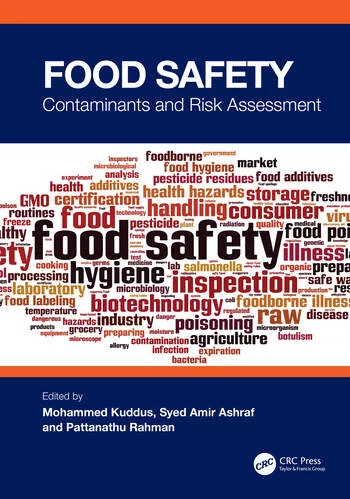
    Food Safety Contaminants and Risk Assessment

See More Products

Related Directories

  • Anatek Labs Inc.

    Anatek Labs, Inc is a full service environmental testing laboratory, with locations in Moscow, ID and Spokane, Yakima and Wenatchee, WA. Some of our services include testing for: pesticides, food pathogens, wastewater/soils, microbiology, compost, hazardous waste, PFC-PFAS, drinking water and more. Please visit our website for all tests and pricing.
  • Food Radar Systems in Sweden AB

    Food Radar Systems, based in Sweden, develops microwave technology that detects and rejects low-density foreign bodies in pumpable food products, helping food manufacturers improve safety, protect consumers, and strengthen quality assurance in modern production environments.
×

Never miss the latest news and trends driving the food safety industry

Newsletters | Website | eMagazine

JOIN TODAY!
  • RESOURCES
    • Advertise
    • Contact Us
    • Directories
    • Store
    • Want More
  • SIGN UP TODAY
    • Create Account
    • eMagazine
    • Newsletters
    • Customer Service
    • Manage Preferences
  • SERVICES
    • Marketing Services
    • Reprints
    • Market Research
    • List Rental
    • Survey/Respondent Access
  • STAY CONNECTED
    • LinkedIn
    • Facebook
    • Instagram
    • X (Twitter)
  • PRIVACY
    • PRIVACY POLICY
    • TERMS & CONDITIONS
    • DO NOT SELL MY PERSONAL INFORMATION
    • PRIVACY REQUEST
    • ACCESSIBILITY

Copyright ©2026. All Rights Reserved BNP Media, Inc. and BNP Media II, LLC.

Design, CMS, Hosting & Web Development :: ePublishing