Food Safety
search
Ask Food Safety AI
cart
facebook twitter linkedin
  • Sign In
  • Create Account
  • Sign Out
  • My Account
Food Safety
  • NEWS
    • Latest News
    • White Papers
  • PRODUCTS
  • TOPICS
    • Contamination Control
    • Food Types
    • Management
    • Process Control
    • Regulatory
    • Sanitation
    • Supply Chain
    • Testing and Analysis
  • PODCAST
  • EXCLUSIVES
    • Food Safety Five Newsreel
    • eBooks
    • FSM Distinguished Service Award
    • Interactive Product Spotlights
    • Videos
  • BUYER'S GUIDE
  • MORE
    • NEWSLETTERS >
      • Archive Issues
      • Subscribe to eNews
    • Store
    • Sponsor Insights
    • ASK FSM AI
  • WEBINARS
  • FOOD SAFETY SUMMIT
  • EMAG
    • eMagazine
    • Archive Issues
    • Editorial Advisory Board
    • Contact
    • Advertise
  • SIGN UP!
NewsRegulatoryInspectionInternational Standards/Harmonization

Auditors Find EU Countries Do Not Consistently Check Safety, Authenticity of Olive Oil

By Bailee Henderson
olive oil bottle and olives on gray background
Image credit: fabrikasimf via Freepik
January 16, 2026

In a new report, the EU Court of Auditors say food safety control systems for olive oil are “comprehensive but unevenly applied.”

Given the economic importance of the olive oil sector, the Court of Auditors assessed whether the olive oil control framework as required by EU legislation adequately ensures that products are “genuine, safe, and traceable.” The audit included an assessment of the implementation of olive oil controls in four Member States since 2018—Belgium, Greece, Spain, and Italy—specifically, whether these countries conducted the required checks for authenticity, conformity/contamination, and traceability.

A Strong Olive Oil Control Framework Exists in the EU, with Room for Improvement

The auditors found that olive oil is highly regulated. There is a comprehensive set of rules defining how authenticity checks should be carried out by Member States, including laboratory physico-chemical analyses and organoleptic assessments.

The legal framework for conformity checks is also strong, but some flaws in control systems exist, mostly regarding contaminants rather than pesticides. For example, some contaminants have not been prescribed maximum limits, and there is no minimum number of contaminant checks required at the EU level. Member States, which do not always document their risk analyses or justify their control choices, find very few cases of contaminant levels in olive oil exceeding legal limits. Additionally, checks for both pesticides and contaminants in imported olive oil (from non-EU countries) were either nonexistent or very limited in the Member States visited.

Moreover, traceability checks do not always successfully identify a product’s origin; in a sample of 24 olive oils, the auditors were unable to confirm the labeled origin for four oils, with traceability beyond national borders proving to be a challenge. There are no comprehensive EU rules or guidance on how and when traceability aspects should be checked, allowing Member States to check traceability to different extents.

Some legal requirements set by the EU are not sufficiently clear, such as the conditions for blending oils from different harvest years, or whether blending extra virgin and virgin olive oils to sell as extra virgin is allowed.

Controls are Inconsistently Applied in Member States

Despite the comprehensive regulatory framework for olive oil in the EU, Member States do not always comply with regulations.

Looking for quick answers on food safety topics?
Try Ask FSM, our new smart AI search tool.
Ask FSM →

The auditors found that some Member States do not carry out the minimum number of checks, or they carry out incomplete laboratory analyses or exclude parts of the market from their risk analyses. The countries assessed did complement EU-required conformity checks with other types of state-level checks, however.

The auditors also found that, in cases of non-compliance, sanctions and penalties are not always effective or dissuasive.

Overall, the auditors believe the European Commission does not have a complete understanding of how olive oil control systems function within Member States.

Recommendations for Improving Olive Oil Control Across EU

The court of auditors offered several recommendations for the European Commission based on its findings:

  • Strengthening oversight of Member States’ olive oil control systems by requiring national authorities to provide relevant information, conducting assessment of control systems, and taking action when control systems are insufficient
  • Clarifying the rules for blending different olive oils
  • Improving guidance on checks for contaminants in olive oil (i.e., risk analyses, decision-making, and frequency) and require imported olive oil to be considered in risk analyses
  • Clarifying and providing guidance on what traceability checks should cover and how the results of traceability checks should be reported
Improving the traceability of olive oil by encouraging Member States to develop registers for records of olive oil and olive movements, as well as supporting Member States in improving compatibility of their traceability systems.
KEYWORDS: EU Europe oils report

Share This Story

Baileehendersonmay23

Bailee Henderson is the Digital Editor of Food Safety Magazine. She can be reached at hendersonb@bnpmedia.com.

Recommended Content

JOIN TODAY
to unlock your recommendations.

Already have an account? Sign In

  • people holding baby chicks

    Serovar Differences Matter: Utility of Deep Serotyping in Broiler Production and Processing

    This article discusses the significance of Salmonella in...
    Testing & Analysis
    By: Nikki Shariat Ph.D.
  • woman washing hands

    Building a Culture of Hygiene in the Food Processing Plant

    Everyone entering a food processing facility needs to...
    Training
    By: Richard F. Stier, M.S.
  • graphical representation of earth over dirt

    Climate Change and Emerging Risks to Food Safety: Building Climate Resilience

    This article examines the multifaceted threats to food...
    Risk Assessment
    By: Maria Cristina Tirado Ph.D., D.V.M. and Shamini Albert Raj M.A.
Manage My Account
  • eMagazine Subscription
  • Subscribe to Newsletters
  • Manage My Preferences
  • Website Registration
  • Subscription Customer Service

More Videos

Sponsored Content

Sponsored Content is a special paid section where industry companies provide high quality, objective, non-commercial content around topics of interest to the Food Safety Magazine audience. All Sponsored Content is supplied by the advertising company and any opinions expressed in this article are those of the author and not necessarily reflect the views of Food Safety Magazine or its parent company, BNP Media. Interested in participating in our Sponsored Content section? Contact your local rep!

close
  • Salmonella bacteria
    Sponsored byThermoFisher

    Food Microbiology Testing Methods: Salmonella species

  • a diagram explaining indicator organisms
    Sponsored byHygiena

    How Proactive Listeria Testing Helps Prevent Six- and Seven-Figure Recalls

  • woman grocery shopping
    Sponsored byCorbion

    Designing Safety Into Every Bite: Proactive Risk Mitigation for Refrigerated Foods

Popular Stories

new food pyramid 2026

Eat Real Food: New U.S. Dietary Guidelines Name and Shame ‘Highly Processed Foods’

microbiologist examining petri dish with microbial colonies

EU Provides Guidance on Shelf-Life Studies to Reflect New Listeria Criteria for RTE Foods

crop duster plane

Journal Retracts Hallmark Glyphosate Safety Study, Increasing Cancer Concerns

Events

January 27, 2026

Strategies for Reinforcing Food Safety Culture Among Temporary and Seasonal Staff

Live: January 27, 2026 at 2:00 pm EST: From this webinar, attendees will learn common areas where companies encounter challenges in their food defense strategies and how to address them.

May 11, 2026

The Food Safety Summit

Stay informed on the latest food safety trends, innovations, emerging challenges, and expert analysis. Leave the Summit with actionable insights ready to drive measurable improvements in your organization. Do not miss this opportunity to learn from experts about contamination control, food safety culture, regulations, sanitation, supply chain traceability, and so much more.

View All

Products

Global Food Safety Microbial Interventions and Molecular Advancements

Global Food Safety Microbial Interventions and Molecular Advancements

See More Products

Related Articles

  • date code on milk bottle

    Half of EU Adults Do Not Check Use-By Date Before Consuming Food

    See More
  • Budget cuts money

    EU Countries Struggle to Check Business Compliance Due to Lack of Resources

    See More
  • farmland with sunset in distance

    European Commission Wants to Stop Agri-Food Imports That Do Not Meet EU Production Standards

    See More

Related Products

See More Products
  • 9781498721776.jpg

    Handbook of Food Processing: Food Safety, Quality, and Manufacturing Processes

  • 1444333348.jpg

    Handbook of Food Safety Engineering

  • 1119160553.jpg

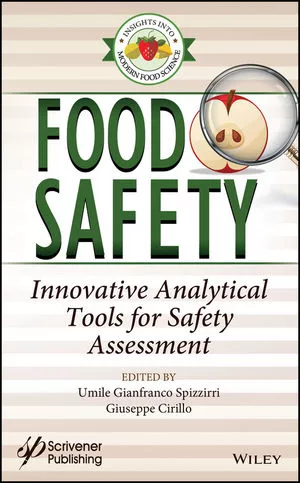
    Food Safety: Innovative Analytical Tools for Safety Assessment

See More Products

Related Directories

  • On Target Packaging

    On Target Packaging is a production/maintenance servicer for combination and check weighers. We do not sell or process food, but provide service/repairs, and equipment for the food industry
  • BD Food Safety Consultants LLC

    We are a Food Safety Training and Consulting firm located in Naperville, IL. Our primary goal is to provide with effective training and consulting solutions for Food Manufacturing and Distributing companies. Our training services include the following: FSPCA PCQI classes, IAVA Courses, IHA Accredited HACCP classes, FSVP Courses and Internal Auditor Training classes. We also offer Learning Management System for food manufacturing industry.
×

Never miss the latest news and trends driving the food safety industry

Newsletters | Website | eMagazine

JOIN TODAY!
  • RESOURCES
    • Advertise
    • Contact Us
    • Directories
    • Store
    • Want More
  • SIGN UP TODAY
    • Create Account
    • eMagazine
    • Newsletters
    • Customer Service
    • Manage Preferences
  • SERVICES
    • Marketing Services
    • Reprints
    • Market Research
    • List Rental
    • Survey/Respondent Access
  • STAY CONNECTED
    • LinkedIn
    • Facebook
    • Instagram
    • X (Twitter)
  • PRIVACY
    • PRIVACY POLICY
    • TERMS & CONDITIONS
    • DO NOT SELL MY PERSONAL INFORMATION
    • PRIVACY REQUEST
    • ACCESSIBILITY

Copyright ©2026. All Rights Reserved BNP Media.

Design, CMS, Hosting & Web Development :: ePublishing