Food Safety
search
Ask Food Safety AI
cart
facebook twitter linkedin instagram youtube
  • Sign In
  • Create Account
  • Sign Out
  • My Account
Food Safety
  • NEWS
    • Latest News
    • Food Safety Five Newsreel
  • PRODUCTS
  • TOPICS
    • Contamination Control
    • Food Types
    • Management
    • Process Control
    • Regulatory
    • Sanitation
    • Supply Chain
    • Testing and Analysis
  • PODCAST
  • EXCLUSIVES
    • eBooks
    • Sponsored Insights
    • Sponsored White Papers
    • FSM Distinguished Service Award
    • Interactive Product Spotlights
    • Videos
  • MORE
    • BUYER'S GUIDE
    • NEWSLETTERS >
      • Archive Issues
      • Subscribe to eNews
    • Store
    • ASK FSM AI
  • WEBINARS
  • FOOD SAFETY SUMMIT
  • FSM FEATURES
    • FSM Features Collection
    • eMag Archives
    • Editorial Advisory Board
    • Contact
    • Advertise
  • SIGN UP!
NewsManagementRegulatoryInternationalInternational Standards/Harmonization

Codex Committee Discussions Held at CAC48 Cover Key Fishery Initiatives

By Food Safety Magazine Editorial Team
fish and salt
Image credit: Freepik
November 20, 2025

The 48th session of the Codex Alimentarius Commission (CAC48), held November 10–14, 2025 at the headquarters of the Food and Agriculture Organization of the United Nations (FAO) in Rome, Italy, included discussions by different Codex committees, offering insight into the ongoing work to advance international food safety standards.

The conversations held at CAC48 are in addition to the official adoption of new and updated standards, including new maximum levels for lead in cinnamon and dried herbs, the first international standard for fresh dates, and other standards, a full summary of which can be read here.

For instance, the Codex Committee on Fish and Fishery Products (CCFFP) is advancing key initiatives, including the conversion of the Regional Standard for Laver Products (Asia) into a worldwide standard. The Committee is also considering new work on other seaweed and aquatic species, reviewing marine biotoxin provisions, updating standards for fisheries and aquaculture products to ensure accuracy and alignment with recent Codex texts, and responding to queries from other Codex committees.

The Codex Committee on Methods of Analysis and Sampling (CCMAS) updated the Recommended Methods of Analysis and Sampling (CXS 234-1999). The revisions include corrections to methods for quick-frozen fish products and the addition of references to Appendix VI. CCMAS also revoked certain outdated methods of analysis, while retaining the method for salt saturation in salted fish and dried salted fish of the Gadidae family of fishes and the method for sampling preparation.

The Codex Committee on Food Additives (CCFA) discussed the need for guidance on the use of 4‑hexylresorcinol in quick-frozen shrimps, prawns, and lobsters. The Codex Committee on Fish and Fishery Products (CCFFP) will examine the issue and provide feedback to CCFA.

The Codex Committee on Contaminants in Foods (CCCF) adopted editorial amendments to the General Standard for Contaminants in Food and Feed (CXS 193-1995) to remove outdated content in the scientific justification for the guideline levels for radionuclides in foods contaminated following a nuclear or radiological emergency. The committee also included maximum levels (MLs) for marine biotoxins contained in the Standard for Live and Raw Bivalve Mollusks (CXS 292-2008) to ensure that CXS 193-1995 remains the single, authoritative reference for the safety levels for contaminants in foods and feeds.

Lastly, a new proposal was submitted by the Regional Committee for Africa (CCAfrica) for the development of a regional standard for boiled, salted, and unsalted dried fish.

Looking for quick answers on food safety topics?
Try Ask FSM, our new smart AI search tool.
Ask FSM →


KEYWORDS: Codex

Share This Story

Fsm purple logo 200x200

The Food Safety Magazine editorial team comprises Bailee Henderson, Director of Content Strategy and news editor ✉, and Adrienne Blume, M.A., Director of Editorial and Industry Engagement.

Recommended Content

JOIN TODAY
to unlock your recommendations.

Already have an account? Sign In

  • people holding baby chicks

    Serovar Differences Matter: Utility of Deep Serotyping in Broiler Production and Processing

    This article discusses the significance of Salmonella in...
    Contamination Control
    By: Nikki Shariat Ph.D.
  • woman washing hands

    Building a Culture of Hygiene in the Food Processing Plant

    Everyone entering a food processing facility needs to...
    Food Prep/Handling
    By: Richard F. Stier, M.S.
  • graphical representation of earth over dirt

    Climate Change and Emerging Risks to Food Safety: Building Climate Resilience

    This article examines the multifaceted threats to food...
    Management
    By: Maria Cristina Tirado Ph.D., D.V.M. and Shamini Albert Raj M.A.
Manage My Account
  • eMagazine Subscription
  • Subscribe to Newsletters
  • Manage My Preferences
  • Website Registration
  • Subscription Customer Service

More Videos

Sponsored Content

Sponsored Content is a special paid section where industry companies provide high quality, objective, non-commercial content around topics of interest to the Food Safety Magazine audience. All Sponsored Content is supplied by the advertising company and any opinions expressed in this article are those of the author and not necessarily reflect the views of Food Safety Magazine or its parent company, BNP Media. Interested in participating in our Sponsored Content section? Contact your local rep!

close
  • Top view portrait of two factory workers standing by conveyor belt during quality inspection at food production, copy space
    Sponsored byFlexXray

    Foreign Material By the Numbers: What the 2026 Benchmark Report Reveals

  • a conveyorized industrial metal detector system that appears to resemble a Loma Systems IQ4 Metal Detector setup with an integrated conveyor belt and control panel for food or package inspection.
    Sponsored byMettler Toledo

    Beyond Detection: How to Avoid Physical Contamination in Food Through a Smarter Inspection Strategy

  • The image displays a bottling plant production line, commonly used in the beverage industry for filling and packaging soft drinks.
    Sponsored byBIOIONIX

    Sustainability with ROI: A Beverage Producer Case Study in Water Savings

Popular Stories

chemicals in beakers fda logo overlay

FDA Quietly Included Provision in GRAS Proposed Rule to Expand One ‘Loophole’ While Tightening Another

milk caution tape

American Academy of Pediatrics Endorses Raw Milk Ban as Children Continue to Fall Seriously Ill

Genome sequencing data and lab equipment

Whole Genome Sequencing in Food Safety: Non-Technical Systems Barriers and Opportunities for Enhanced Global Use

allergens ebook

Events

October 29, 2026

FDA Proposes Major GRAS Reform: What It Could Mean for Your Business

Live: October 29, 2026 at 2:00 pm EDT: Attend this webinar to examine potential implications for self-GRAS, Flavor and Extract Manufacturers Association (FEMA) GRAS, and food-contact substances.

November 5, 2026

How Middle Managers Shape Food Safety Culture and Risk Performance

Live: November 5, 2026 at 11:00 am EST: From this webinar, attendees will learn how investing in middle managers improves both FSQ strategy implementation and accountability across all levels of the company.

November 12, 2026

From Data Overload to Actionable Food Safety Risk Intelligence

Live: November 12, 2026 at 11:00 am EST: This webinar explores how data integration, advanced analytics, and digital technologies can help transform disparate information into meaningful risk intelligence.

View All

Products

Global Food Safety Microbial Interventions and Molecular Advancements

Global Food Safety Microbial Interventions and Molecular Advancements

See More Products

Related Articles

  • veterinarian preparing to administer drugs to pig

    Codex Committee Advances Work on Standards for Veterinary Drug Residues in Food

    See More
  • the word fraud under a magnifying glass

    Codex Committee Working on Guidelines for Food Fraud Prevention and Control

    See More
  • Public Meeting to Address Agenda Items for Codex Committee on Spices and Culinary Herbs

    See More

Related Products

See More Products
  • 1119160553.jpg

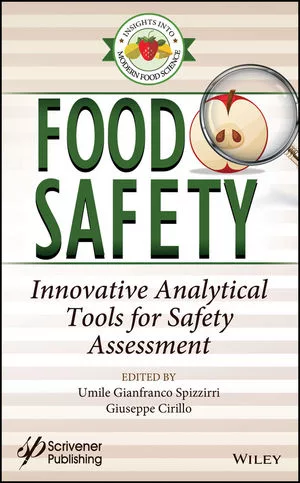
    Food Safety: Innovative Analytical Tools for Safety Assessment

  • shelf life.jpg

    Shelf Life and Food Safety

  • food safety.jpg

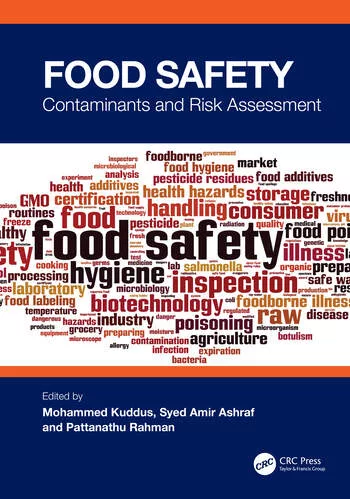
    Food Safety Contaminants and Risk Assessment

See More Products

Events

View AllSubmit An Event
  • May 6, 2026

    Allergen Uncertainty: Risk Assessment, Reference Doses, and Codex Management Guidance

    On Demand: Attendees will gain insight into the importance of preparing for the industry's shift from detection-based methods to risk-based allergen management.
View AllSubmit An Event

Related Directories

  • Protective Industrial Products Inc.

    Protective Industrial Products, Inc. is a global Personal Protective Equipment leader in worker safety. With a diversified product line of over 10,000 products and 1.5 million square feet of warehousing, PIP is dedicated to delivering innovative safety products and a best-in-class customer experience.
×

Never miss the latest news and trends driving the food safety industry

Newsletters | Website | FSM Features Collection

JOIN TODAY!
  • RESOURCES
    • Advertise
    • Contact Us
    • Directories
    • Store
    • Want More
  • SIGN UP TODAY
    • Create Account
    • eMagazine
    • Newsletters
    • Customer Service
    • Manage Preferences
  • SERVICES
    • Marketing Services
    • Reprints
    • Market Research
    • List Rental
    • Survey/Respondent Access
  • STAY CONNECTED
    • LinkedIn
    • Facebook
    • Instagram
    • X (Twitter)
  • PRIVACY
    • PRIVACY POLICY
    • TERMS & CONDITIONS
    • DO NOT SELL MY PERSONAL INFORMATION
    • PRIVACY REQUEST
    • ACCESSIBILITY

Copyright ©2026. All Rights Reserved BNP Media, Inc. and BNP Media II, LLC.

Design, CMS, Hosting & Web Development :: ePublishing