Study Shows How Plastic Pollution Enters Produce
A recent study has revealed that nanoplastics as small as one-millionth of a centimeter can infiltrate the edible parts of crops during growth, adding to the understanding of how plastic pollution may enter the human food chain.
Published in Environmental Research, the study underscores the urgent need for further investigation into the implications of nanoplastic contamination in agriculture and its potential impacts on food safety and public health.
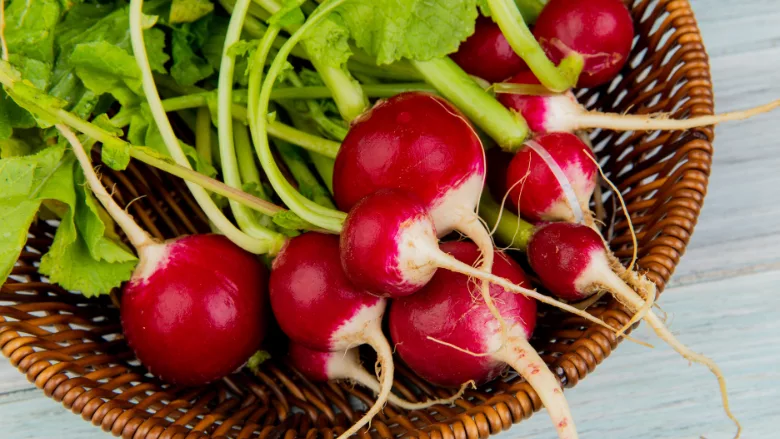
Using radishes grown in a hydroponic system, researchers demonstrated that plastic nanoparticles can penetrate plant roots and accumulate in both the fleshy root and leaf tissues. After five days of exposure to a solution of polystyrene nanoparticles that contained radiolabeled carbon, nearly 5 percent of the particles were retained by the root system, amounting to millions of nanoplastic particles. Of those, approximately 25 percent migrated into the edible root and 10 percent into the leaves.
This discovery reveals the ability of plastic pollution to penetrate the Casparian strip, a natural plant barrier in the root that should act as a filter against particles. The researchers say there is no reason to believe that this phenomenon is unique to radishes, as existing literature shows the ubiquitous presence of plastic particles in the environment and produce.
Conducted by researchers at the University of Plymouth, the study builds on earlier work showing the rapid absorption of plastic nanoparticles by marine species. These findings contribute to a broader understanding of how micro- and nanoplastics can move through and accumulate within the food chain.
The lead author on the study was Nathaniel Clark, Ph.D., Lecturer in Physiology at Plymouth University. Head of Plymouth University's International Marine Litter Research Unit, Richard Thompson OBE FRS, Ph.D., was a senior author on the study.
Looking for quick answers on food safety topics?
Try Ask FSM, our new smart AI search tool.
Ask FSM →