Food Safety
search
Ask Food Safety AI
cart
facebook twitter linkedin
  • Sign In
  • Create Account
  • Sign Out
  • My Account
Food Safety
  • NEWS
    • Latest News
    • White Papers
  • PRODUCTS
  • TOPICS
    • Contamination Control
    • Food Types
    • Management
    • Process Control
    • Regulatory
    • Sanitation
    • Supply Chain
    • Testing and Analysis
  • PODCAST
  • EXCLUSIVES
    • Food Safety Five Newsreel
    • eBooks
    • FSM Distinguished Service Award
    • Interactive Product Spotlights
    • Videos
  • BUYER'S GUIDE
  • MORE
    • ENEWSLETTER >
      • Archive Issues
      • Subscribe to eNews
    • Store
    • Sponsor Insights
    • ASK FSM AI
  • WEBINARS
  • FOOD SAFETY SUMMIT
  • EMAG
    • eMagazine
    • Archive Issues
    • Editorial Advisory Board
    • Contact
    • Advertise
  • SIGN UP!
NewsContamination ControlChemical

Ionophore Use in Food Animals May Pose Medically Important AMR Risks, Researchers Warn
By Bailee Henderson
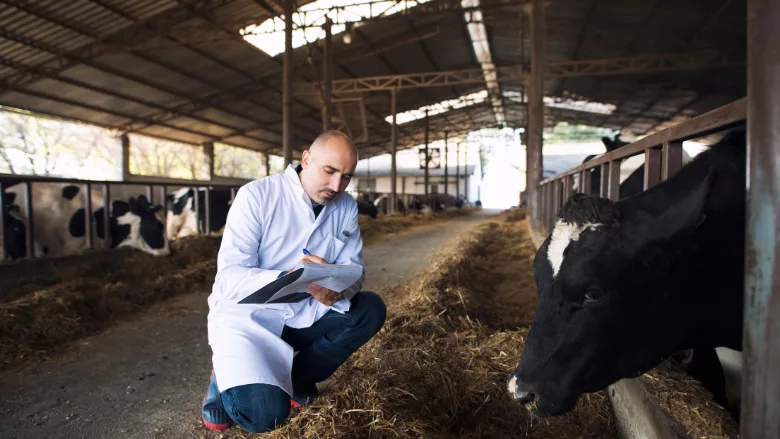
veterinarian checking clipboard on cow farm
Image credit: aleksandarlittlewolf via Freepik
August 5, 2025

Since ionophores—a class of antibiotics used widely in animal production—are not used in human medicine, it has largely been assumed that they do not contribute to medically important AMR. However, a new study suggests that ionophores may contribute to the development of medically important antimicrobial resistance (AMR).

Ionophores are commonly used as anti-coccidials in poultry, and for growth promotion in swine and cattle. As of 2022, ionophores represent 37 percent of antibiotics used in food-producing animals in the U.S., with nearly 4.2 kilograms sold. Classified as having low or no importance for human medicine in the U.S. and Canada, their use is regulated less strictly than other classes of antibiotics.

Despite assumptions about the relative human medical insignificance of ionophore use in animal agriculture, recent evidence suggests that ionophore use in animal populations has the potential to contribute indirectly to human-relevant AMR. This may potentially occur through cross-resistance (i.e., a gene that causes ionophore resistance also causes resistance to a medically important antibiotic) or co-selection (i.e., a gene that causes ionophore resistance is genetically linked to genes causing resistance to medically important antibiotics). At present, however, actual human risks posed by ionophore use in animals are still unclear.

To investigate growing concerns that ionophore usage could co-select for clinically relevant AMR, using publicly available data, researchers investigated the global distribution and linkage of ionophore resistance genes narA and narB with other AMR genes. The researchers identified more than 2,400 narAB-bearing isolates reported from 51 countries, derived from a variety of species including poultry, cattle, and humans. narAB sequences were found in ten bacterial species, with Enterococcus faecalis and E. faecium most highly represented.

The more than 2,400 narAB-containing isolates harbored an average of 8.26 resistance genes, with the most commonly detected resistance genes predicted to confer resistance to medically important antibiotics erythromycin, tetracycline, and aminoglycosides. The narAB-containing isolates also harbored an average 2.13 point mutations predicted to confer daptomycin resistance, ampicillin resistance, or a multidrug resistant (MDR) phenotype.

Additionally, statistically positive associations were detected between resistance determinants in E. faecalis and 13 medically important resistance genes, including all members of a vancomycin resistance gene cluster. In E. faecium, the researchers found positive associations between narAB and 11 resistance genes, as well as four point mutations.

Overall, the researchers caution that, based on their findings showing clear potential for co-selection for clinically relevant AMR, ionophore use cannot be assumed to be risk-free. While the direction of narAB transfer has not been established, transfer from farm animals to humans seems most likely, say the researchers.

Published in Antimicrobial Chemotherapy, the study was conducted by researchers in the Carleton University Department of Biology. funded through a research service agreement with Perdue Farms, as well as through a Natural Sciences and Engineering Research Council (NSERC) Discovery Grant.

Looking for quick answers on food safety topics?
Try Ask FSM, our new smart AI search tool.
Ask FSM →


KEYWORDS: AMR study

Share This Story

Baileehendersonmay23

Bailee Henderson is the Digital Editor of Food Safety Magazine. She can be reached at hendersonb@bnpmedia.com.

Recommended Content

JOIN TODAY
to unlock your recommendations.

Already have an account? Sign In

  • people holding baby chicks

    Serovar Differences Matter: Utility of Deep Serotyping in Broiler Production and Processing

    This article discusses the significance of Salmonella in...
    Methods
    By: Nikki Shariat Ph.D.
  • woman washing hands

    Building a Culture of Hygiene in the Food Processing Plant

    Everyone entering a food processing facility needs to...
    Management
    By: Richard F. Stier, M.S.
  • graphical representation of earth over dirt

    Climate Change and Emerging Risks to Food Safety: Building Climate Resilience

    This article examines the multifaceted threats to food...
    Management
    By: Maria Cristina Tirado Ph.D., D.V.M. and Shamini Albert Raj M.A.
Manage My Account
  • eMagazine Subscription
  • Subscribe to eNewsletter
  • Manage My Preferences
  • Website Registration
  • Subscription Customer Service

More Videos

Sponsored Content

Sponsored Content is a special paid section where industry companies provide high quality, objective, non-commercial content around topics of interest to the Food Safety Magazine audience. All Sponsored Content is supplied by the advertising company and any opinions expressed in this article are those of the author and not necessarily reflect the views of Food Safety Magazine or its parent company, BNP Media. Interested in participating in our Sponsored Content section? Contact your local rep!

close
  • Salmonella bacteria
    Sponsored byThermoFisher

    Food Microbiology Testing Methods: Salmonella species

  • a diagram explaining indicator organisms
    Sponsored byHygiena

    How Proactive Listeria Testing Helps Prevent Six- and Seven-Figure Recalls

  • woman grocery shopping
    Sponsored byCorbion

    Designing Safety Into Every Bite: Proactive Risk Mitigation for Refrigerated Foods

Popular Stories

baby eating bottle

Infant Botulism Spike Exceeds 100 Cases, Extent of ByHeart's Involvement Unclear

NRTE breaded stuffed chicken

USDA Indefinitely Delays Enforcement of Salmonella as Adulterant in Raw Breaded, Stuffed Chicken

digital map of europe

EU Publishes Food Fraud Tool Mapping Thousands of Cases Since 2016

Events

December 11, 2025

How to Develop and Implement an Effective Food Defense Strategy

Live: December 11, 2025 at 2:00 pm EDT: From this webinar, attendees will learn common areas where companies encounter challenges in their food defense strategies and how to address them.

May 11, 2026

The Food Safety Summit

Stay informed on the latest food safety trends, innovations, emerging challenges, and expert analysis. Leave the Summit with actionable insights ready to drive measurable improvements in your organization. Do not miss this opportunity to learn from experts about contamination control, food safety culture, regulations, sanitation, supply chain traceability, and so much more.

View All

Products

Global Food Safety Microbial Interventions and Molecular Advancements

Global Food Safety Microbial Interventions and Molecular Advancements

See More Products

Related Articles

  • two veterinarians talking on cow farm with clipboard

    Sales of Medically Important Antibiotics for Use in Food-Producing Animals Decreased Slightly in 2023

    See More
  • muddy cow at farm

    U.S. Sales of Medically Important Antibiotics for Use in Food-Producing Animals Dropping Since 2015

    See More
  • goats at an informal market

    Antibiotic Use in SE Asian Food Animals Must be Curbed to Protect Global Health, Say Researchers

    See More

Related Products

See More Products
  • 9781138070912.jpg

    Trends in Food Safety and Protection

  • 1119237963.jpg

    Food Safety in China: Science, Technology, Management and Regulation

  • 1119053595.jpg

    Food Safety for the 21st Century: Managing HACCP and Food Safety throughout the Global Supply Chain, 2E

See More Products

Related Directories

  • Elanco Animal Health

    ELANCO (NYSE: ELAN) is a global animal health company serving customers in more than 90 countries. The Elanco Poultry team combines industry-leading products and services with their professional experience and collaboration skills to help customers remain confident of success in the ever-changing poultry industry. Our team includes consultants with extensive veterinary knowledge and experience. Our industry-leading products focus on food safety, intestinal integrity, bioprotection, and nutrition.
  • Puritan Medical Products Co.

    Puritan is an American company known worldwide as the trusted manufacturer of single-use products for the healthcare, diagnostic, forensic, critical environment, food safety, and drug manufacturing industries. At Puritan, we take pride in our unwavering commitment to producing high-quality products. Order with confidence, knowing that Puritan products are manufactured, packaged and shipped from our state-of-the-art manufacturing facilities in Maine. We maintain valuable relationships with many of America’s top distributors and kit manufacturers in order to ensure that all industries have access to our extensive product portfolio.
×

Never miss the latest news and trends driving the food safety industry

eNewsletter | Website | eMagazine

JOIN TODAY!
  • RESOURCES
    • Advertise
    • Contact Us
    • Directories
    • Store
    • Want More
  • SIGN UP TODAY
    • Create Account
    • eMagazine
    • eNewsletter
    • Customer Service
    • Manage Preferences
  • SERVICES
    • Marketing Services
    • Reprints
    • Market Research
    • List Rental
    • Survey/Respondent Access
  • STAY CONNECTED
    • LinkedIn
    • Facebook
    • Instagram
    • X (Twitter)
  • PRIVACY
    • PRIVACY POLICY
    • TERMS & CONDITIONS
    • DO NOT SELL MY PERSONAL INFORMATION
    • PRIVACY REQUEST
    • ACCESSIBILITY

Copyright ©2025. All Rights Reserved BNP Media.

Design, CMS, Hosting & Web Development :: ePublishing