Reagan-Udall Foundation’s ‘Roadmap to Produce Safety’ Encourages Private Sector-Led Collaboration
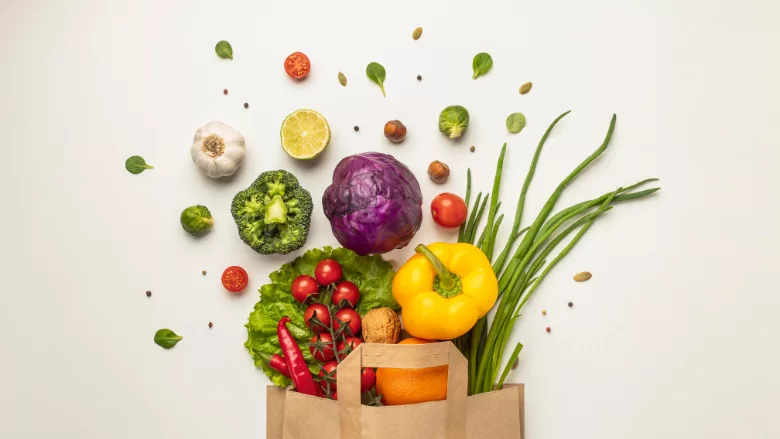
Image credit: Freepik
The Reagan-Udall Foundation for the U.S. Food and Drug Administration (FDA) has published a report based on months of stakeholder dialogues, titled, the Roadmap to Produce Safety, which illustrates what an enhanced produce food safety system might look like, and provides recommendations for a private sector-led collaborative to improve produce safety.
The Reagan-Udall Foundation is an independent nonprofit organization created by Congress to support FDA by advancing regulatory science, develop and disseminate reliable information, and facilitate engagement. The report was compiled based on the Produce Safety Dialogue process, which involved more than 170 people engaged in eight work groups between September 2024 and April 2025, and was led by a steering committee of representatives from industry and consumer advocacy groups. The project was funded by a $100,000 award from FDA and the U.S. Department of Health and Human Services (HHS).
The importance of fresh produce to a healthy diet is undisputed, but so is the complexity of ensuring the microbial safety of fruits and vegetables due to the lack of a final kill step (e.g., cooking) in their preparation. Additionally, according to the report, the produce safety system is also “fragmented, reactive, and providing too little support to growers—large and small, domestic and foreign—to make produce as safe as reasonably possible.” In light of these challenges, the Produce Safety Dialogue aimed to forge a path forward to improving produce safety.
Summarizing the Produce Safety Dialogue, the Roadmap to Produce Safety presents the key opportunities identified by participants to revolutionize how produce safety is fundamentally managed. Participants in the dialogue concluded that “progress requires more than just regulations—it requires leadership from the breadth of the fresh produce supply chain and adjacent sectors,” which must include “active investment by produce industry leaders, in addition to government engagement and support,” to develop a lasting mechanism for change.
Specifically, this mechanism for change would be a private-sector-led, structured, standalone, sustainably funded stakeholder collaboration (SSC). The report recommends that a subset of Produce Safety Dialogue participants, representative of the entire produce supply chain, should initiate the SSC. The Roadmap to Produce Safety outlines what a successful SSC could look like.
Importantly, the SSC would “provide the leadership and infrastructure, such as project management, to help collaborators develop and maintain trust to then achieve objectives of the Strategic Roadmap and have a mechanism for tracking progress against goals.” It would need to address deeply rooted issues exposed through the Produce Safety Dialogue, such as a lack of trust and systemic power and economic differentials.
After addressing the issues required to move forward collaboratively, the SSC could work toward improving produce safety through a coordinated set of activities over a multi-year period, outlined as a Strategic Roadmap in the Roadmap to Produce Safety. The Produce Safety Dialogue identified several strategic opportunities:
- Make the case for and develop a strategy to increase public investment in produce safety. An organized effort inclusive of the broadest possible range of public and private stakeholders should promote the need for and seek greater public investment in produce safety to reduce illness and foster greater consumption for healthy diets.
- Focus on developing and implementing science-based, risk-reducing best practices. Buyers, growers, and other produce safety stakeholders should collaborate with FDA on creating and implementing processes for private sector-led development of best practices that target and reduce significant food safety risks.
- Expand technical assistance and other resources to support industry implementation of best practices. The produce industry, government agencies, academia, and other stakeholders should collaborate to systematically identify the resource needs and technical support requirements for growers and mobilize extension and other resources to meet them.
- Increase incentives for growers to implement best practices. Buyers and regulators should create incentives and remove obstacles to implementation of best practices and reward implementation of key best practices.
After an SSC is established, it should define its priorities for a given timeframe. Although the priorities suggested during the Produce Safety Dialogue (e.g., the issue of agricultural water) can serve as a useful starting point, further scoping is required to agree on a path forward.
Looking for quick answers on food safety topics?
Try Ask FSM, our new smart AI search tool.
Ask FSM →
Some examples of activities identified during the Produce Safety Dialogue that would benefit produce safety include data-sharing to support a One Health approach to managing fresh produce production and animal agriculture, and to facilitate knowledge transfer based on learnings from outbreaks.
The Roadmap to Produce Safety calls to attention the creativity required in the face of continuously inadequate funding for produce safety activities. “While funding for produce safety activities—research, extension, and implementation—has historically never been commensurate with the public health priority of fruit and vegetable consumption, this chasm is only widening with cuts to federal and state funding,” it says. “This reality requires the private sector to rethink how to collaborate with stakeholders, including policymakers, researchers, and extension specialists to improve produce safety.”
Regarding the report, FDA said it will actively participate in the SSC efforts and agrees with the recommendation that regulators should not own or lead the coalition.
Read the full Roadmap to Produce Safety report here.