Food Safety
search
Ask Food Safety AI
cart
facebook twitter linkedin
  • Sign In
  • Create Account
  • Sign Out
  • My Account
Food Safety
  • NEWS
    • Latest News
    • White Papers
  • PRODUCTS
  • TOPICS
    • Contamination Control
    • Food Types
    • Management
    • Process Control
    • Regulatory
    • Sanitation
    • Supply Chain
    • Testing and Analysis
  • PODCAST
  • EXCLUSIVES
    • Food Safety Five Newsreel
    • eBooks
    • FSM Distinguished Service Award
    • Interactive Product Spotlights
    • Videos
  • BUYER'S GUIDE
  • MORE
    • ENEWSLETTER >
      • Archive Issues
      • Subscribe to eNews
    • Store
    • Sponsor Insights
    • ASK FSM AI
  • WEBINARS
  • FOOD SAFETY SUMMIT
  • EMAG
    • eMagazine
    • Archive Issues
    • Editorial Advisory Board
    • Contact
    • Advertise
  • SIGN UP!
NewsFDAFSMATraceability/Recall

2025 Food Safety Summit Opening Workshop Tackles Traceability 'Next Steps'
By Adrienne Blume, M.A.
Panelists at Workshop 1 of the 2025 Food Safety Summit.png

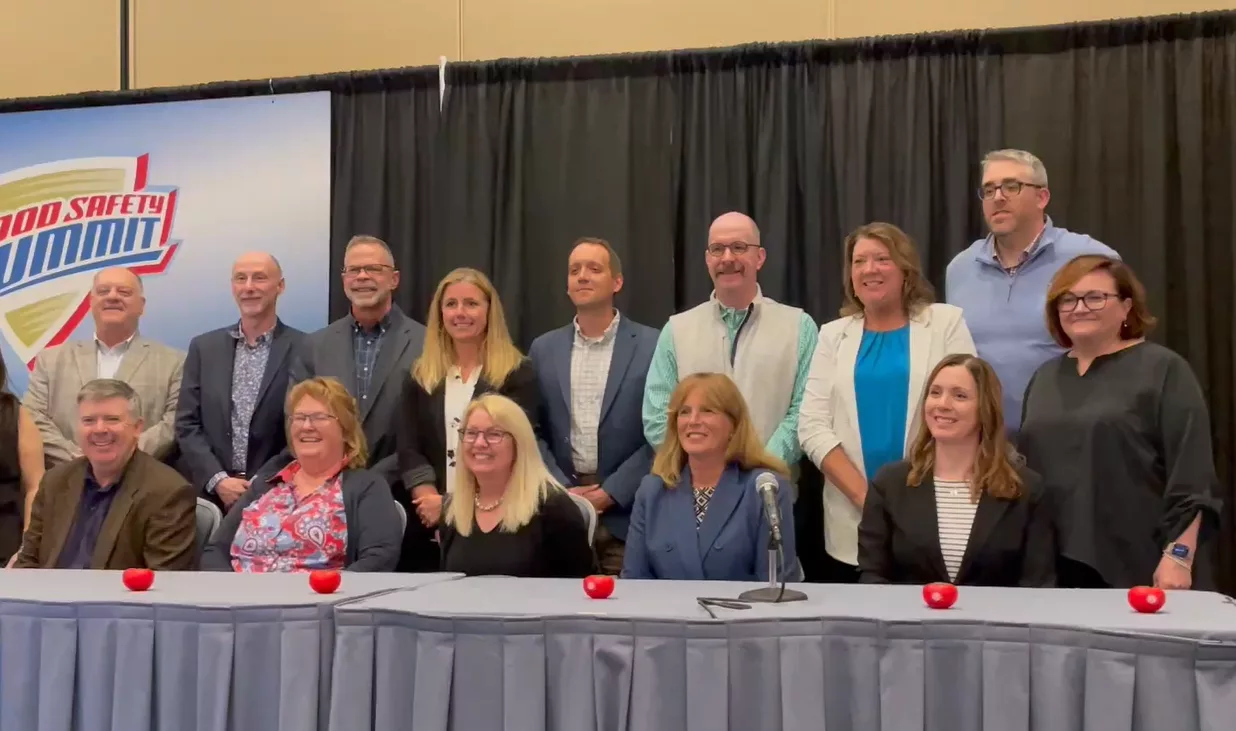
Panelists at the "Traceability Next Steps" opening workshop of the 2025 Food Safety Summit (Photo credit: Food Safety Summit / Alexis Diaz)

May 13, 2025

The opening workshop of the 2025 Food Safety Summit focused on "Traceability Next Steps: Supply Chain Implementation." The industry compliance date for the U.S. Food and Drug Administration's (FDA's) Final Food Traceability Rule, which falls under Section 204(d) of the Food Safety Modernization Act (FSMA), was recently postponed by 30 months from the original compliance date of January 20, 2026.

The workshop was moderated by Tim Jackson, FDA and Kathleen O'Donnell, Wegmans Food Markets. Panelists included Natasha Bangel, Taylor Farms; Patrick Guzzle, National Restaurant Association; Michael Lookup, Wegmans Food Markets; Hilary Thesmar, Ph.D., FMI—The Food Industry Association; Christopher Waldrop, M.P.H., FDA; Roberta Wagner, International Dairy Foods Association; Mike Williams, The Wendy's Company; and Rosalind Zils, Reckitt/Mead Johnson Nutrition.

To kick off the workshop, Amy Behm and Ryan Richard from GS1 led attendees through a traceability exercise using tomatoes, after sharing an overview of GS1 standards in the supply chain. They reviewed global location numbers (GLNs), critical tracking events (CTEs), key data elements (KDEs), global trade item numbers (GTINs), serial shipping container codes (SSCCs), and other elements. Throughout the exercise, the GS1 representatives presented poll questions to "quiz" attendees on the information presented.                                                                    

The panelists representing food companies and trade associations next discussed how the revised compliance date for the Traceability Rule has affected their organizations. The 30-month delay, announced by FDA in March, has not been officially entered in the Federal Register, which has made some trade associations and food companies hesitant to press "pause" on their traceability efforts. Many have continued to prepare for the January 2026 date, regardless of the extension.

Michael Lookup noted that "not much has changed" at Wegmans as a result of the compliance delay, and the company continues to work with its supply partners to comply with traceability requirements. Natasha Bangel from Taylor Farms said, "What we're planning on doing with the additional time is working on reporting, and working with our customers" on meeting data requirements.

The panelists also discussed a number of other topics:

  • How they have incorporated GS1 standards at their organizations
  • How they are working with their suppliers to achieve traceability compliance throughout their supply chains
  • How they are working with FDA to understand and implement traceability requirements and meet expectations for compliance
  • The technologies, tools, and methods they are using to track and trace foods on the Food Traceability List (FTL)
  • The roles of food safety culture and training in compliance with the Traceability Rule.

For the final hour of the workshop, Christopher Waldrop of FDA and Hilary Thesmar of FMI led attendees through an interactive activity to help them understand how to develop and implement a traceability plan and maintain traceability records.

The panelists also took questions throughout the three-hour workshop, which gave attendees the chance to clarify elements of the Traceability Rule and best practices for ensuring traceability and supply chain transparency.

Looking for quick answers on food safety topics?
Try Ask FSM, our new smart AI search tool.
Ask FSM →

The workshop is available to watch on-demand here, along with other livestreamed sessions from the 2025 Summit, for one year.

The 2025 Food Safety Summit is taking place May 12–15 at the Donald E. Stevens Convention Center in Rosemont, Illinois. Stay tuned for more onsite coverage!


KEYWORDS: Food Safety Summit FSMA 204 Traceability Rule

Share This Story

Ablumeauthor

Adrienne Blume, M.A. is Editorial Director of Food Safety Magazine, a BNP Media brand. She has more than 20 years of experience in B2B technical media, including the food safety/quality and energy technology sectors. She manages the editorial content for Food Safety Magazine and its podcast, Food Safety Matters, and also serves on the Educational Advisory Board for the annual Food Safety Summit. She keeps a pulse on trends, issues, and regulatory developments in food safety by attending and moderating sessions at food industry and food safety conferences worldwide. Ms. Blume holds an M.A. degree in English and Publishing from Rosemont College and B.A. degrees in English and Anthropology from Webster University. She can be contacted at BlumeA@bnpmedia.com.

Recommended Content

JOIN TODAY
to unlock your recommendations.

Already have an account? Sign In

  • people holding baby chicks

    Serovar Differences Matter: Utility of Deep Serotyping in Broiler Production and Processing

    This article discusses the significance of Salmonella in...
    Food Type
    By: Nikki Shariat Ph.D.
  • woman washing hands

    Building a Culture of Hygiene in the Food Processing Plant

    Everyone entering a food processing facility needs to...
    Training
    By: Richard F. Stier, M.S.
  • graphical representation of earth over dirt

    Climate Change and Emerging Risks to Food Safety: Building Climate Resilience

    This article examines the multifaceted threats to food...
    Risk Assessment
    By: Maria Cristina Tirado Ph.D., D.V.M. and Shamini Albert Raj M.A.
Manage My Account
  • eMagazine Subscription
  • Subscribe to eNewsletter
  • Manage My Preferences
  • Website Registration
  • Subscription Customer Service

More Videos

Sponsored Content

Sponsored Content is a special paid section where industry companies provide high quality, objective, non-commercial content around topics of interest to the Food Safety Magazine audience. All Sponsored Content is supplied by the advertising company and any opinions expressed in this article are those of the author and not necessarily reflect the views of Food Safety Magazine or its parent company, BNP Media. Interested in participating in our Sponsored Content section? Contact your local rep!

close
  • Salmonella bacteria
    Sponsored byThermoFisher

    Food Microbiology Testing Methods: Salmonella species

  • a diagram explaining indicator organisms
    Sponsored byHygiena

    How Proactive Listeria Testing Helps Prevent Six- and Seven-Figure Recalls

  • woman grocery shopping
    Sponsored byCorbion

    Designing Safety Into Every Bite: Proactive Risk Mitigation for Refrigerated Foods

Popular Stories

NRTE breaded stuffed chicken

USDA Indefinitely Delays Enforcement of Salmonella as Adulterant in Raw Breaded, Stuffed Chicken

digital map of europe

EU Publishes Food Fraud Tool Mapping Thousands of Cases Since 2016

non-conforming product

How to Handle Non-Conforming Product

Events

December 11, 2025

How to Develop and Implement an Effective Food Defense Strategy

Live: December 11, 2025 at 2:00 pm EDT: From this webinar, attendees will learn common areas where companies encounter challenges in their food defense strategies and how to address them.

May 11, 2026

The Food Safety Summit

Stay informed on the latest food safety trends, innovations, emerging challenges, and expert analysis. Leave the Summit with actionable insights ready to drive measurable improvements in your organization. Do not miss this opportunity to learn from experts about contamination control, food safety culture, regulations, sanitation, supply chain traceability, and so much more.

View All

Products

Global Food Safety Microbial Interventions and Molecular Advancements

Global Food Safety Microbial Interventions and Molecular Advancements

See More Products

Related Articles

  • Food safety modernization act infographic

    PMMI’s Food Safety & Traceability Report Dives into FSMA Perceptions & Next Steps

    See More
  • Food Safety Summit 2017 logo

    Opening Workshop on Root Cause, Keynote Presentation on Balancing Risk, and Dynamic Exhibit Hall, Highlight the 25th Annual Food Safety Summit

    See More

Related Products

See More Products
  • 1119258073.jpg

    FSMA and Food Safety Systems: Understanding and Implementing the Rules

  • 1119053595.jpg

    Food Safety for the 21st Century: Managing HACCP and Food Safety throughout the Global Supply Chain, 2E

  • 9781498721776.jpg

    Handbook of Food Processing: Food Safety, Quality, and Manufacturing Processes

See More Products

Events

View AllSubmit An Event
  • May 13, 2025

    Traceability Next Steps—Supply Chain Implementation

    On Demand: Join us for this engaging and highly practical workshop focused on building and sustaining traceability efforts across the food supply chain. 
View AllSubmit An Event

Related Directories

  • North American Chemical Residue Workshop

    NACRW) formerly the Florida Pesticide Residue Workshop conducts an annual meeting for scientists particularly interested in trace level analysis of pesticides, veterinary drug residues, and other chemicals in food, animal feed, and environmental samples. The purpose of the meeting is to provide training, develop and improve technical knowledge, facilitate development and distribution of new analysis methods and techniques, and establish networking to promote professional cooperation between scientists of these interests.
×

Never miss the latest news and trends driving the food safety industry

eNewsletter | Website | eMagazine

JOIN TODAY!
  • RESOURCES
    • Advertise
    • Contact Us
    • Directories
    • Store
    • Want More
  • SIGN UP TODAY
    • Create Account
    • eMagazine
    • eNewsletter
    • Customer Service
    • Manage Preferences
  • SERVICES
    • Marketing Services
    • Reprints
    • Market Research
    • List Rental
    • Survey/Respondent Access
  • STAY CONNECTED
    • LinkedIn
    • Facebook
    • Instagram
    • X (Twitter)
  • PRIVACY
    • PRIVACY POLICY
    • TERMS & CONDITIONS
    • DO NOT SELL MY PERSONAL INFORMATION
    • PRIVACY REQUEST
    • ACCESSIBILITY

Copyright ©2025. All Rights Reserved BNP Media.

Design, CMS, Hosting & Web Development :: ePublishing