Food Safety
search
Ask Food Safety AI
cart
facebook twitter linkedin
  • Sign In
  • Create Account
  • Sign Out
  • My Account
Food Safety
  • NEWS
    • Latest News
    • White Papers
  • PRODUCTS
  • TOPICS
    • Contamination Control
    • Food Types
    • Management
    • Process Control
    • Regulatory
    • Sanitation
    • Supply Chain
    • Testing and Analysis
  • PODCAST
  • EXCLUSIVES
    • Food Safety Five Newsreel
    • eBooks
    • FSM Distinguished Service Award
    • Interactive Product Spotlights
    • Videos
  • BUYER'S GUIDE
  • MORE
    • ENEWSLETTER >
      • Archive Issues
      • Subscribe to eNews
    • Store
    • Sponsor Insights
    • ASK FSM AI
  • WEBINARS
  • FOOD SAFETY SUMMIT
  • EMAG
    • eMagazine
    • Archive Issues
    • Editorial Advisory Board
    • Contact
    • Advertise
  • SIGN UP!
NewsContamination ControlChemicalPhysical

Study Shows Chewing Gum Releases Thousands of Microplastics, Whether Gum is Synthetic or Natural
By Food Safety Magazine Editorial Team
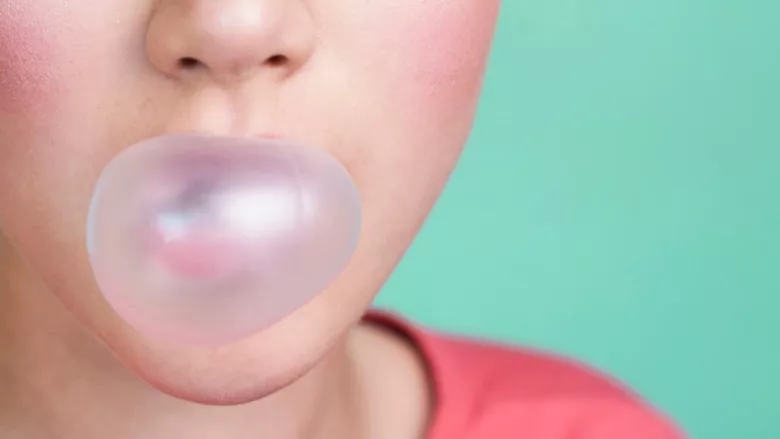
person blowing bubble of gum

Image credit: Freepik

April 4, 2025

At a recent meeting of the American Chemical Society (ACS), researchers from the University of California, Los Angeles (UCLA) presented the results of a study showing that chewing gum can release hundreds to thousands of microplastic particles per piece into saliva—no matter if the gum is made of synthetic or plant-based polymers.

The study is currently under peer review. Principal investigator on the project is Sanjay Mohanty, Ph.D., Associate Professor of Civil and Environmental Engineering in UCLA’s Samueli School of Engineering. The findings were presented at the ACS Spring 2025 meeting in March by Lisa Lowe, who worked on the project as an undergraduate intern at UCLA.

Starting with the hypothesis that synthetic chewing gum, the base of which is often a type of petroleum-derived plastic, would release significantly more microplastics than natural, plant-based polymer (e.g., chicle or other tree sap) gums, the researchers tested five brands each of commercially available synthetic and natural chewing gum. To reduce the variability of chewing patterns and saliva, one person conducted all of the chewing in the experiment, totaling seven pieces of chewed gum for each brand.

In the lab, the person chewed pieces of each brand of gum for four minutes at a time. The person produced saliva samples every 30 seconds, as well as a sample of a final mouth rinse with clean water, all of which were combined into a single sample. In a second test, the person’s saliva samples were collected periodically over a 20-minute span to investigate the release rate of microplastics from each piece of gum, after which the number of microplastics present in each saliva sample were quantified.

To count the microplastics, plastic particles were either stained red and counted under a microscope, or were analyzed by Fourier-transform infrared spectroscopy, which also provided the polymer composition. Only plastic particles that were 20 micrometers or larger were counted due to technical limitations; it is likely that smaller nanoplastics were present and went undetected.

Interestingly, there was not a significant difference in the amount or types of microplastics released by synthetic and natural chewing gums. In both kinds of gum, polyethylene terephthalate, polyacrylamide, and polystyrene polymers were present. Polyolefins, a group of plastics including polyethylene and polypropylene, were the most abundant polymers released by both gum types.

On average, 100 microplastic particles were released per gram of gum, although some pieces released as many as 600 microplastics per gram. An average piece of gum weighs between two and six grams, meaning that a large stick of gum could release up to 3,000 plastic particles. A person chewing 160–180 pieces of gum per year could ingest approximately 30,000 microplastics from their chewing gum habit alone—a not-insignificant amount, estimating that the average person ingests tens of thousands of microplastics per year from other sources of exposure (e.g., water, tea bags, seafood, leafy greens, olive oil, meat, etc.).

Looking for quick answers on food safety topics?
Try Ask FSM, our new smart AI search tool.
Ask FSM →

Most of the microplastics were released from the gum samples within the first two minutes of chewing, due to the abrasive act of chewing physically separating pieces of plastic from the whole piece, rather than as an effect of saliva enzymes breaking down the gum. After eight minutes of chewing, 94 percent of the microplastics collected during the tests had been released.

The exact effects of dietary exposure to microplastics are not yet understood, although initial animal studies and studies with human cells suggest microplastics could be harmful to health.

To be safe, it is recommended that individuals try to reduce their exposure to microplastics—although that may be a tall order, given their seemingly ubiquitous presence. Investigations have revealed that the presence of microplastics in the human body is not uncommon. With regard to chewing gum specifically, the UCLA researchers recommend that, if gum chewers want to reduce microplastics exposure, they chew one piece for a longer period of time rather than chewing multiple pieces.


KEYWORDS: microplastics study UCLA

Share This Story

Fsm purple logo 200x200

The Food Safety Magazine editorial team comprises Bailee Henderson, Digital Editor ✉; Adrienne Blume, M.A., Editorial Director; and Stacy Atchison, Publisher.

Recommended Content

JOIN TODAY
to unlock your recommendations.

Already have an account? Sign In

  • people holding baby chicks

    Serovar Differences Matter: Utility of Deep Serotyping in Broiler Production and Processing

    This article discusses the significance of Salmonella in...
    Meat/Poultry
    By: Nikki Shariat Ph.D.
  • woman washing hands

    Building a Culture of Hygiene in the Food Processing Plant

    Everyone entering a food processing facility needs to...
    Personal Hygiene/Handwashing
    By: Richard F. Stier, M.S.
  • graphical representation of earth over dirt

    Climate Change and Emerging Risks to Food Safety: Building Climate Resilience

    This article examines the multifaceted threats to food...
    Management
    By: Maria Cristina Tirado Ph.D., D.V.M. and Shamini Albert Raj M.A.
Manage My Account
  • eMagazine Subscription
  • Subscribe to eNewsletter
  • Manage My Preferences
  • Website Registration
  • Subscription Customer Service

More Videos

Sponsored Content

Sponsored Content is a special paid section where industry companies provide high quality, objective, non-commercial content around topics of interest to the Food Safety Magazine audience. All Sponsored Content is supplied by the advertising company and any opinions expressed in this article are those of the author and not necessarily reflect the views of Food Safety Magazine or its parent company, BNP Media. Interested in participating in our Sponsored Content section? Contact your local rep!

close
  • Salmonella bacteria
    Sponsored byThermoFisher

    Food Microbiology Testing Methods: Salmonella species

  • a diagram explaining indicator organisms
    Sponsored byHygiena

    How Proactive Listeria Testing Helps Prevent Six- and Seven-Figure Recalls

  • woman grocery shopping
    Sponsored byCorbion

    Designing Safety Into Every Bite: Proactive Risk Mitigation for Refrigerated Foods

Popular Stories

baby eating bottle

Infant Botulism Spike Exceeds 100 Cases, Extent of ByHeart's Involvement Unclear

NRTE breaded stuffed chicken

USDA Indefinitely Delays Enforcement of Salmonella as Adulterant in Raw Breaded, Stuffed Chicken

digital map of europe

EU Publishes Food Fraud Tool Mapping Thousands of Cases Since 2016

Events

December 11, 2025

How to Develop and Implement an Effective Food Defense Strategy

Live: December 11, 2025 at 2:00 pm EDT: From this webinar, attendees will learn common areas where companies encounter challenges in their food defense strategies and how to address them.

May 11, 2026

The Food Safety Summit

Stay informed on the latest food safety trends, innovations, emerging challenges, and expert analysis. Leave the Summit with actionable insights ready to drive measurable improvements in your organization. Do not miss this opportunity to learn from experts about contamination control, food safety culture, regulations, sanitation, supply chain traceability, and so much more.

View All

Products

Global Food Safety Microbial Interventions and Molecular Advancements

Global Food Safety Microbial Interventions and Molecular Advancements

See More Products

Related Articles

  • tea bags brewing in mug

    Study Shows Tea Bags Release Millions of Microplastics When Brewed

    See More
  • plastic cutlery and clear plastic film on purple background

    Microplastics Increase Antibiotic Resistance of E. coli, Aid Biofilm Formation, Study Shows

    See More
  • frozen raspberries

    Presence of Bacterial Pathogens on Swiss Frozen Berries is Very Low, Study Shows

    See More

Related Products

See More Products
  • 9781498721776.jpg

    Handbook of Food Processing: Food Safety, Quality, and Manufacturing Processes

  • 1444333348.jpg

    Handbook of Food Safety Engineering

  • Food-Forensics-3D.jpg

    Food Forensics Handbook Practice, Instrumentation, Case Studies

See More Products
×

Never miss the latest news and trends driving the food safety industry

eNewsletter | Website | eMagazine

JOIN TODAY!
  • RESOURCES
    • Advertise
    • Contact Us
    • Directories
    • Store
    • Want More
  • SIGN UP TODAY
    • Create Account
    • eMagazine
    • eNewsletter
    • Customer Service
    • Manage Preferences
  • SERVICES
    • Marketing Services
    • Reprints
    • Market Research
    • List Rental
    • Survey/Respondent Access
  • STAY CONNECTED
    • LinkedIn
    • Facebook
    • Instagram
    • X (Twitter)
  • PRIVACY
    • PRIVACY POLICY
    • TERMS & CONDITIONS
    • DO NOT SELL MY PERSONAL INFORMATION
    • PRIVACY REQUEST
    • ACCESSIBILITY

Copyright ©2025. All Rights Reserved BNP Media.

Design, CMS, Hosting & Web Development :: ePublishing