Food Safety
search
Ask Food Safety AI
cart
facebook twitter linkedin instagram youtube
  • Sign In
  • Create Account
  • Sign Out
  • My Account
Food Safety
  • NEWS
    • Latest News
    • Sponsored Insights
    • Sponsored White Papers
  • PRODUCTS
  • TOPICS
    • Contamination Control
    • Food Types
    • Management
    • Process Control
    • Regulatory
    • Sanitation
    • Supply Chain
    • Testing and Analysis
  • PODCAST
  • EXCLUSIVES
    • Food Safety Five Newsreel
    • eBooks
    • FSM Distinguished Service Award
    • Interactive Product Spotlights
    • Videos
  • BUYER'S GUIDE
  • MORE
    • NEWSLETTERS >
      • Archive Issues
      • Subscribe to eNews
    • Store
    • ASK FSM AI
  • WEBINARS
  • FOOD SAFETY SUMMIT
  • EMAG
    • eMagazine
    • Archive Issues
    • Editorial Advisory Board
    • Contact
    • Advertise
  • SIGN UP!
ProductsContamination ControlRegulatoryChemical ControlAudits/Certification/GFSI

BIZTRACKS

NSF 537: New PFAS-Free Certification for Food Industry Equipment, Chemical Suppliers
By Food Safety Magazine Editorial Team
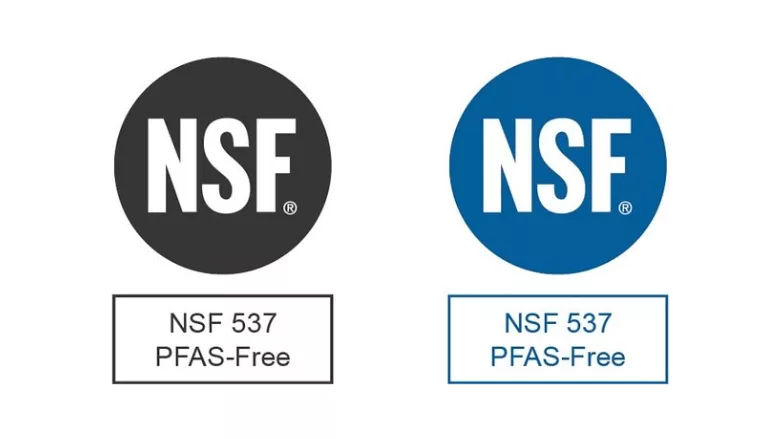
NSF 537 PFAS-Free certification label

Image credit: NSF 

March 25, 2025

NSF now offers a per- and polyfluoroalkyl substance (PFAS)-free certification for suppliers of food equipment materials, nonfood compounds, and chemicals, specifically, “NSF Certification Guideline 537: PFAS-Free Products for Nonfood Compounds and Food Equipment Materials” (NSF 537). The guideline leverages NSF’s laboratory and testing capabilities to confirm that products are free of harmful PFAS, also known as “forever chemicals.”

PFAS are often used to make nonstick, grease-proof products, including consumer goods, food equipment, and nonfood compounds like food-safe lubricants, cleaners, and sanitizers. However, a mounting body of evidence links PFAS to a number of health harms, including liver disease, certain types of cancers, and delayed development in children. The “forever chemicals” also do not break down in the environment or human body. Consumption of contaminated food and water is a major route of human exposure to PFAS.

In light of growing concerns about “forever chemicals” and the introduction of new PFAS regulations, NSF introduced NSF 537 so that manufacturers can distinguish their products as PFAS-free. NSF 537:

  • Is based on existing limits in state regulations
  • Confirms the absence of intentionally added PFAS through technical product formulation review
  • Ensures minimal to no detected total organic fluorine (TOF) levels with retesting every year
  • Requires manufacturers to attest that no PFAS additives or post-consumer recycled material are used in the product and that manufacturing facilities minimize cross-contamination
  • Indicates certification by the relevant official NSF mark and listing in the NSF White Book/Certified Food Equipment database.

“PFAS-free” is defined by NSF as any product that does not contain intentionally added PFAS, post-consumer recycled material, or intentionally used PFAS additives, and has TOF levels less than 50 parts-per-million (ppm).

Looking for quick answers on food safety topics?
Try Ask FSM, our new smart AI search tool.
Ask FSM →


KEYWORDS: certification NSF PFAS

Share This Story

Fsm purple logo 200x200

The Food Safety Magazine editorial team comprises Bailee Henderson, Director of Content Strategy and news editor ✉, and Adrienne Blume, M.A., Director of Editorial and Industry Engagement.

Recommended Content

JOIN TODAY
to unlock your recommendations.

Already have an account? Sign In

  • people holding baby chicks

    Serovar Differences Matter: Utility of Deep Serotyping in Broiler Production and Processing

    This article discusses the significance of Salmonella in...
    Meat/Poultry
    By: Nikki Shariat Ph.D.
  • woman washing hands

    Building a Culture of Hygiene in the Food Processing Plant

    Everyone entering a food processing facility needs to...
    Management
    By: Richard F. Stier, M.S.
  • graphical representation of earth over dirt

    Climate Change and Emerging Risks to Food Safety: Building Climate Resilience

    This article examines the multifaceted threats to food...
    Management
    By: Maria Cristina Tirado Ph.D., D.V.M. and Shamini Albert Raj M.A.
Manage My Account
  • eMagazine Subscription
  • Subscribe to Newsletters
  • Manage My Preferences
  • Website Registration
  • Subscription Customer Service

More Videos

Sponsored Content

Sponsored Content is a special paid section where industry companies provide high quality, objective, non-commercial content around topics of interest to the Food Safety Magazine audience. All Sponsored Content is supplied by the advertising company and any opinions expressed in this article are those of the author and not necessarily reflect the views of Food Safety Magazine or its parent company, BNP Media. Interested in participating in our Sponsored Content section? Contact your local rep!

close
  • Man In Warehouse
    Sponsored byRentokil

    Mitigating Hidden Rodent Risks in Food Facilities

  • an industrial manufacturing or processing facility
    Sponsored bybioMérieux

    Get Ahead of Spoilage in Food Manufacturing with Metagenomics for Preventive Monitoring

  • an automated industrial production line used in a modern food factory
    Sponsored byIFC

    A Formula for Food Processing Pest Management

Popular Stories

dozen white eggs

Nearly 100 Sick in Multistate Salmonella Outbreak, Millions of Eggs Recalled

Business people shaking hands with FDA logo overlay

FDA to Centralize Administrative Functions, Generalize Inspectors

packaged sesame seed buns

FDA's Allergen Agenda Is Expanding: Thresholds, Gluten Cross-Contact, and What Food Companies Should Watch for Next

building a skilled workforce ebook

Events

August 6, 2026

Beyond Sanitation: Understanding the Hidden System Conditions That Allow Pathogens to Persist

Live: August 6, 2026 at 2:00 pm EDT: Attend this webinar to learn strategies for strengthening environmental control programs through a layered approach to pathogen management.

August 11, 2026

Beyond Sanitization: Reducing Contamination Risk Without Raising Operating Cost

Live: August 11, 2026 at 2:00 pm EDT: Attend this webinar to learn why ambient air is the largest and most overlooked contamination zone in food processing, and what it costs you between scheduled cleans.

August 25, 2026

Don’t Wing It: Bird Control for Food Processing Facilities

Live: August 25, 2026 at 2:00 pm EDT: This webinar will cover why managing bird activity should be a priority for your business, the complexities involved in effective bird control, and proactive strategies to help protect your facility.

View All

Products

Global Food Safety Microbial Interventions and Molecular Advancements

Global Food Safety Microbial Interventions and Molecular Advancements

See More Products

Related Articles

  • mitsubishi gas chemical logo

    Mitsubishi Gas Chemical Develops First PFAS-free Oxygen Absorber for Food Industry

    See More
  • AIB International Logo

    AIB International Offers Free Guide for Food Industry on Mitigating Food Safety Impact of PFAS

    See More
  • knife and butter

    Upcoming EPA Deadline to Disclose PFAS Use Means Likely Surge in Litigation for Food Industry

    See More

Related Products

See More Products
  • 1118396308.jpg

    High Throughput Analysis for Food Safety

  • food-safety-making.jpg

    Food Safety: Making Foods Safe and Free From Pathogens

  • 1119053595.jpg

    Food Safety for the 21st Century: Managing HACCP and Food Safety throughout the Global Supply Chain, 2E

See More Products

Related Directories

  • International Association For Food Protection-IAFP

    The International Association for Food Protection (IAFP) represents a broad range of members with a singular focus — protecting the global food supply. Within the association, you will find educators, government officials, microbiologists, food industry executives and quality control professionals who are involved in all aspects of growing, storing, transporting, processing and preparing all types of foods.
  • Institute for Food Safety and Health (IFSH) - Illinois Tech

    IFSH is a one-of-a-kind applied food science research consortium comprised of the Illinois Tech, the U.S. FDA, and the food industry. In collaboration with the FDA, we provide stakeholders with the opportunity to develop and exchange knowledge, experience, and expertise in the areas of food safety, food defense, and nutrition.
  • NSF

    Since 1944, NSF has stood at the forefront of global efforts to improve human and planet health. As an independent, internationally recognized organization, we play a pivotal role in the development of robust public health standards. NSF engages in rigorous testing, auditing, and certification of various products and services.
×

Never miss the latest news and trends driving the food safety industry

Newsletters | Website | eMagazine

JOIN TODAY!
  • RESOURCES
    • Advertise
    • Contact Us
    • Directories
    • Store
    • Want More
  • SIGN UP TODAY
    • Create Account
    • eMagazine
    • Newsletters
    • Customer Service
    • Manage Preferences
  • SERVICES
    • Marketing Services
    • Reprints
    • Market Research
    • List Rental
    • Survey/Respondent Access
  • STAY CONNECTED
    • LinkedIn
    • Facebook
    • Instagram
    • X (Twitter)
  • PRIVACY
    • PRIVACY POLICY
    • TERMS & CONDITIONS
    • DO NOT SELL MY PERSONAL INFORMATION
    • PRIVACY REQUEST
    • ACCESSIBILITY

Copyright ©2026. All Rights Reserved BNP Media, Inc. and BNP Media II, LLC.

Design, CMS, Hosting & Web Development :: ePublishing