The project will evaluate the resulting assay's potential applications in relevant food matrices, including chicken, turkey, pork, and beef, with the broader objective of improving the identification of Salmonella strains associated with human illness and outbreaks.
This episode covers the final findings from the U.S. Cyclospora outbreak, new USDA efforts to address Listeria, the new FDA Food Code, research on high-pressure processing for raw chicken, and emerging food safety concerns associated with plastic pollution.
A federal court has barred the agency from using federal funds to shut down offices or relocate employees until December 11, at which time USDA could ask Congress to lift appropriations restrictions.
Marking National Food Safety Education Month, we speak to Dr. Mindy Brashears of USDA and Carmen Rottenberg of the Partnership for Food Safety Education Advisory Board about the essential role of consumer education in preventing foodborne illness; USDA's responsibility in supporting safe food handling; and how organizations can help consumers put food safety guidance into practice.
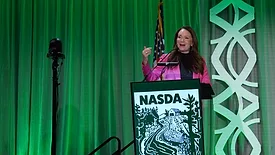
State agriculture officials gathered on September 13–16 in Portland, Maine for the National Association of State Departments of Agriculture’s (NASDA’s) 2026 Annual Meeting, which brought together state commissioners, directors, and secretaries of agriculture.
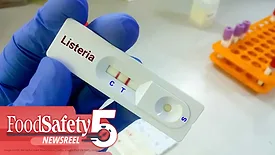
The program, which was explored after the Boar’s Head outbreak of 2024 spurred the agency to reevaluate its inspection and Listeria monitoring protocols, was piloted in FY 2026 and will be expanded to FSIS districts nationwide.
The newly announced Stand-Up funding program is the latest in a series of Trump Administration actions, including a Presidential Executive Order and the Ranchers First initiative, to expand regional processing capacity and cut “red tape” at the federal inspection level.
The order, aimed at expanding market access for U.S. meat producers, focuses on growing existing state inspection programs and state–federal agreements. It also calls for “sharpening inspection to focus on core food safety” and removing “overly prescriptive” USDA-FSIS requirements.
Congress cut two of three federal Cyclospora research projects as part of FY2026 appropriations, and the third will be disrupted by the Trump Administration’s planned USDA reorganization, according to sources who spoke to POLITICO.
In August 28 social media posts, President Trump and USDA Secretary Rollins alluded to plans to give ranchers and farmers the ability to process their own meats and other efforts to cut “red tape.” Industry groups said these actions would jeopardize food safety and consumer confidence.
 RSS
RSS