A new web portal allows small and very small establishments regulated by USDA-FSIS to submit appeals outsideof the Public Health Information System, supporting efforts to improve service and reduce regulatory burden for small meat and poultry processors.
Federally defining UPFs could allow U.S. regulatory agencies to pursue specific policies for the category. The importance of processing versus nutrient content and formulation in causing diet-related chronic diseases, as well as the value of defining UPFs, has been heavily debated.
In this bonus episode of Food Safety Matters, we speak to USDA's Under Secretary for Food Safety, Dr. Mindy Brashears,
and Administrator USDA-FSIS, Dr. Justin Ransom, about the future of food safety oversight at the agency, its emerging Salmonella strategy, evolving approach to Listeria control, the creation of a new scientific advisory panel, and the use of data, AI, and other technologies for inspection and risk identification.
Two topics of increasing regulatory scrutiny—the "Generally Recognized as Safe" (GRAS) rule and a federal definition of ultra-processed food (UPFs)—have seen some movement at the U.S. Government's Office of Management and Budget, signaling progress on the Trump administration's food policy agenda.
While New World screwworm (NWS) itself does not pose a food safety risk in edible meat or poultry products, residues from veterinary drugs used to treat and prevent infestations of NWS are potential chemical hazards.
USDA's Food Safety and Inspection Service (USDA-FSIS) has issued a revised directive outlining financial management procedures for state cooperative inspection programs. The directive replaced fiscal guidance that had been in effect since March 2004.
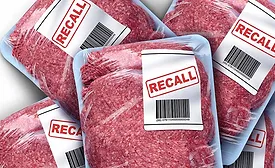
Given the headlines coming out of 2025, it would be reasonable to expect a shift in recall patterns in the food industry. Yet, looking past the headlines and into the numbers, 2025 remained remarkably consistent with the past decade of recall trends, in terms of count and cause.
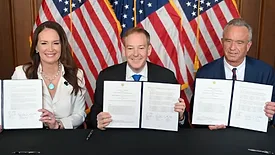
The Memorandum of Understanding expands interagency collaboration on food contaminant monitoring, including for toxic heavy metals and per- and polyfluoroalkyl substances (PFAS), under the National Residue Program.
Effective July 20, to support risk surveillance, the agency will perform metals analysis on samples that are already collected for allergen verification.
 RSS
RSS