Reoccurring, emerging, and persisting (REP) strains cause foodborne illnesses over extended periods of time, rather than through isolated outbreaks. The REP framework was jointly developed by CDC, FDA, and USDA-FSIS through the Interagency Foodborne Outbreak Response Collaboration.
Real-world data from meat processors show Clostridium perfringens is rarely detected in fully cooked meat and poultry products and remains uncommon even when deviations from USDA-FSIS Appendix B parameters are reported, challenging assumptions underlying regulatory limits for growth during stabilization.
As it stands, the bill would mandate that USDA provide guidance on HACCP plans to small and very small meat processors, require USDA and FDA to define “honey” and establish honey authenticity testing standards, and initiate other directives.
As the agency continues to delay enforcement of Salmonella verification testing for not-ready-to-eat, breaded and stuffed chicken products, Consumer Reports is asking for evidence to support USDA-FSIS’ assertion that currently available test methods are not suitable, which contradicts the agency’s previous stance.
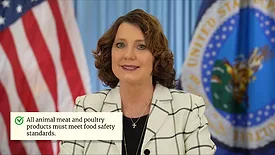
USDA Under Secretary for Food Safety Dr. Mindy Brashears, in collaboration with the Partnership for Food Safety Education, is calling on food safety educators nationwide to help dispel misinformation about the safety of the food supply amid the current New World Screwworm infestation.
A letter signed by Senator Amy Klobuchar and 24 others asks USDA to consider the impacts of its recently announced plans to restructure and relocate its Research, Education, and Economics Mission Area, including ARS and NIFA.
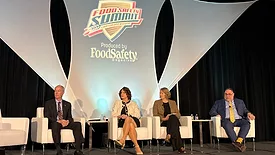
On Thursday morning, officials from FDA, USDA-FSIS, CDC, and AFDO took the stage at the 2026 Food Safety Summit Town Hall to talk about the current developments and priorities at their respective agencies.
This article discusses what the recently released Dietary Guidelines for Americans 2025–2030 say about "highly processed foods" and the food packaging concerns associated with such foods.
The guideline is designed to help small and very small plants producing egg products meet the regulatory requirements under the Egg Products Inspection Regulations Final Rule, including sanitation and HACCP requirements.
The plan includes the creation of a new, central National Food Safety Center in Iowa and Science Center in Georgia. Approximately 200 (two-thirds) of USDA-FSIS’ Washington D.C.-area workforce will be relocated. Other USDA offices, including ARS and NIFA, also face restructuring and relocations.
 RSS
RSS