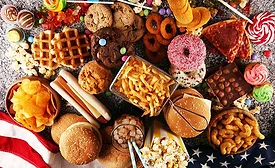
Less than two months after the filing of a first-of-its-kind lawsuit against ultra-processed food manufacturers, President Trump released an Executive Order establishing the Make America Healthy Again Commission.
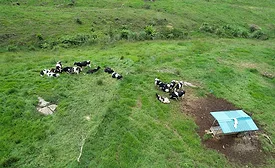
Significant growth and advancement in low- and middle-income countries can be accelerated when operators across the dairy chain meet international standards for food safety
The dairy sector contributes significantly to the resilience and economic viability of farmers and rural communities. Most of the milk produced across the world comes from either independent, family-owned farms or smallholder farms and cooperatives, rather than from large, corporate farming operations.
In the past week, the U.S. Food and Drug Administration (FDA) has published an updated list of its Human Foods Program priority guidance topics, resources to help industry comply with the Food Traceability Final Rule (FSMA 204), and a new Employee Health Policy Tool for food establishments.
The World Health Organization (WHO) has published a new guidance for food safety authorities in Europe about the prevention and control of antimicrobial resistance (AMR) in the food supply chain.
The European Food Safety Authority (EFSA) has launched a public consultation for a draft guidance on the requirements for applications for novel food authorizations in the EU, and will hold a public webinar for stakeholders in March about the draft guidance.
FDA recently published revisions to one guidance for industry and withdrew another. Specifically, FDA released revisions to the Preventive Controls for Human Food (PCHF) Draft Guidance, and withdrew its guidance onchlorpyrifos residues due to the U.S. Court of Appeals voiding EPA's ban on food tolerances for the pesticide chemical.
In the ever-evolving world of the food industry, ethics play a pivotal role in safeguarding consumers and upholding the integrity of businesses. This article aims to provide readers with a profound understanding of ethics in the food industry and how they intertwine with food safety culture. Thought-provoking stories highlight the importance of formal food ethics and their role in decision-making. As consumers, employees, or stakeholders, we all play a part in shaping a more ethically responsible food industry, where safety and trust are paramount.
Foundation FSSC has published new guidance documents on Equipment Management and Food Loss and Waste, as well as updated guidance documents in line with the FSSC 22000 Version 6.0 Scheme requirements.
FDA has announced two updates for Food Safety Modernization Act (FSMA) rules: the finalization of a draft guidance for sprout operations under the Produce Safety Rule and additional information about Food Traceability Final Rule (also known as FSMA 204) inspections and FDA’s Product Tracing System.
To address the trend of food manufacturers intentionally adding sesame to food products that did not originally contain the allergen in an attempt to circumvent allergen cross-contact requirements, FDA has updated its draft guidance for industry on hazards analysis and preventive controls with a new chapter on avoiding allergen cross-contact and proper labeling.
 RSS
RSS