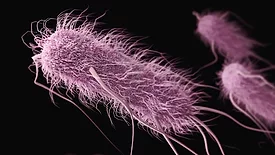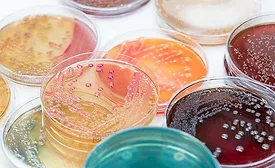
A new study by USDA researchers has shown that long-read whole genome sequencing (WGS) could detect Salmonella attachment to food-contact surfaces earlier than traditional culture-based methods, allowing for sanitation interventions to be applied before the maturation of robust and difficult-to-remove biofilms.
The new XP-Design Assay Salmonella Serotyping Solution from Bio-Rad enables rapid detection and precise characterization of Salmonella in food and environmental samples.
A recently published summary of an FAO technical meeting identified the challenges and needs related to applying gut microbiome data in future food chemical safety risk assessments.
Honeywell’s new Digital Holographic Microscopy technology leverages artificial intelligence (AI) and light-based holograms to quantify and classify microscopic particles and cells at the point-of-use. It can be used for liquid food safety and quality testing, as well as air and water environmental monitoring.
A new study conducted by Canadian Food Inspection Agency scientists demonstrates the capability of a streamlined workflow to detect low-level presence of Listeria monocytogenes in food samples within eight hours.
The new GENE-UP® TYPER solution from bioMérieux combines a PCR pathogen detection assay with a machine learning-based web application, facilitating root cause analysis of contamination incidents in the food industry.
The EU has adopted a new regulation requiring Member States to conduct whole genome sequencing (WGS) on the isolates of five important pathogens during the investigations of foodborne illness outbreaks, and sets data-sharing parameters.
Reintroduced to U.S. Congress on February 3, the Expanded Food Safety Investigation Act seeks to grant FDA the authority to collect microbial samples from concentrated animal feeding operations, also referred to as “factory farms,” during foodborne illness outbreak investigations.
The UK Government is proposing the addition of several foodborne and waterborne viruses, bacteria, and parasites to the list of notifiable causative agents under the Health Protection Notification Regulations, for which laboratories testing human samples are required to report positive test results.
A researcher from Southern Illinois University Carbondale has received a $150,000 grant from USDA-NIFA to develop an AI-based rapid detection method for Salmonella on onions.