The researchers conducted environmental sampling throughout a controlled environment agriculture (CEA) operation and tested swabs for L. monocytogenes. Boot covers proved to be a useful tool for evaluating the effectiveness of cleaning and sanitation.
MagnaFlow is a new automated inline washwater analyzer that provides continuous, real-time visibility into the microbial loads present in post-harvest wash systems.
The SMARTBIOME platform combines high‑resolution DNA sequencing with bioinformatics and data science, an exclusive spoilage knowledge base, and expert consulting services to translate microbiological data into actionable insights.
The detection system was able to detect the presence of foodborne pathogens in complex food matrices as little as three hours with 0 percent false positives, 94 percent recall, and 100 percent precision.
Researchers estimate that the use of whole genome sequencing (WGS) for routine pathogen surveillance in Australia prevents up to 10,900 foodborne salmonellosis cases and delivers as much as $17 million in cost savings annually.
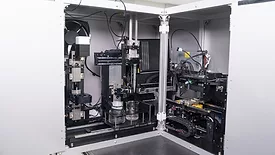
Automating the full pathogen detection workflow into a single device, the test can be operated with the press of a button and is designed for onsite use by non-specialists.
On January 1, three new EU reference laboratories for foodborne and waterborne diseases became officially operational, bringing the total number to nine. These laboratories will help national public health laboratories improve testing, data quality, and outbreak preparedness related to food- and waterborne pathogens.
Supported in part by USDA-NIFA, multidisciplinary researchers and Extension professionals from U.S. land-grant institutions have collaborated under the Enhancing Microbial Safety by Risk Analysis project, completing new research, helping inform policy, and providing education and outreach.
The European Commission has published a revised guidance document on monitoring and shelf-life studies for Listeria monocytogenes in ready-to-eat (RTE) foods in compliance with recent amendments to Regulation (EU) 2073/2005 on the microbiological criteria for foods.
A two-year study of Southeastern U.S. watersheds confirmed that surface water harbors complex, clinically relevant Salmonella populations that differ from food animal datasets—revealing critical gaps in understanding environmental Salmonella transmission and the need for robust One Health surveillance systems.
 RSS
RSS