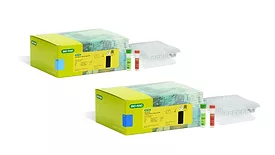
In-house quality control teams and third-party laboratories can use the GENE-UP PROBIOTIC SPECIES ID assay to identify 18 commonly used probiotic species in 90 minutes or less.
According to the company, the GENE-UP TYPER SLM assay specifically targets S. enterica, the subspecies most commonly associated with human salmonellosis and foodborne illness.
ByHeart-commissioned research shows the currently accepted “gold standard” for Clostridium botulinum detection in powdered formula, SRC enumeration, may fail to catch contamination. It is used by many formula brands, including Nara Organics, another company linked to an infant botulism outbreak. Following this finding, third-party IEH Labs developed a novel detection method.
As the agency continues to delay enforcement of Salmonella verification testing for not-ready-to-eat, breaded and stuffed chicken products, Consumer Reports is asking for evidence to support USDA-FSIS’ assertion that currently available test methods are not suitable, which contradicts the agency’s previous stance.
The certification confirms that the performance of the Bio-Rad method used in its EZ-Check Listeria and EZ-Check Listeria monocytogenes Kits is equivalent to that of the reference method according to ISO 16140-2 standards.
This episode of Food Safety Five discusses new academic publications exploring the limitations of a “zero-risk” approach to food safety and evaluating the limited benefits and trade-offs associated with intensified microbiological sampling.
The third Science Meets Policy conference will take place September 2–3 in Rome, Italy, focused on helping EU competent authorities and industry members effectively implement new WGS data-sharing requirements for foodborne pathogens.
The updated Microbiology Laboratory Guidebook chapter on whole genome sequencing (WGS) of bacterial isolates now includes protocols for using both the Illumina MiSeq and MiSeq i100 sequencing platforms.
Using metagenomic sequencing and qPCR, the study analyzed bacteria from produce, chicken meat, and RTE deli meats sold at retail stores in Tennessee. A high abundance and diversity of antibiotic resistance genes were identified, potentially contributing to the persistence and spread of antimicrobial resistance (AMR) in the food supply.
 RSS
RSS