Food Safety
search
Ask Food Safety AI
cart
facebook twitter linkedin instagram youtube
  • Sign In
  • Join Today
  • Sign Out
  • My Account
Food Safety
  • NEWS
    • Latest News
    • Food Safety Five Newsreel
  • PRODUCTS
  • TOPICS
    • Contamination Control
    • Food Types
    • Management
    • Process Control
    • Regulatory
    • Sanitation
    • Supply Chain
    • Testing and Analysis
  • PODCAST
  • EXCLUSIVES
    • eBooks
    • Sponsored Insights
    • Sponsored White Papers
    • FSM Distinguished Service Award
    • Interactive Product Spotlights
    • Videos
  • MORE
    • BUYER'S GUIDE
    • NEWSLETTERS >
      • Archive Issues
    • Store
    • ASK FSM AI
  • WEBINARS
  • FOOD SAFETY SUMMIT
  • FSM FEATURES
    • FSM Features Collection
    • eMag Archives
    • Op-Eds
    • Editorial Advisory Board
    • Contact
    • Advertise
  • JOIN
Home » Topics » Management » Best Practices

Best Practices
Best Practices RSS Feed RSS

food safety and quality organization

Critical Attributes of a Successful Food Safety and Quality Organization: FSQA on the Floor

What does it take to have an extremely effective FSQA technician team on the production floor?
Bob Lijana M.Sc.
June 12, 2023

What does it take to have an extremely effective Food Safety and Quality Assurance (FSQA) technician team on the production floor? This article shares practiced perspective on "what it takes." Attributes for success are identified and explained. How they are integrated within a FSQA team on the floor will go a long way to galvanizing the success of that team. For food and beverage companies, "success" means effective risk identification and management, protection of public health, reduced costs of poor quality, and the manufacture and sale of high-quality food and beverage ingredients and products.


Read More
people's hands in blue gloves picking up crisps in a food factory line

The Value of Mistake Proofing

Janna Hamlett
Janna Hamlett Ph.D.
April 24, 2023

Ensuring that non-conforming product is never created—or at least never arrives at customers' doorsteps—is invaluable in the food industry. Reduced downgrade, less rework, and decreased out-of-specification product are all benefits of mistake proofing.


Read More
GS1 US
BIZTRACKS

GS1 Connect 2023 Focuses on Supply Chain Visibility, Features More Than 275 Companies

April 19, 2023

GS1 Connect 2023, the annual conference and exhibition hosted by GS1 US, will feature more than 275 industry-leading companies that will share strategies for leveraging GS1 Standards to enable end-to-end supply chain visibility.


Read More
video conference software

Using Frontline Feedback to Nudge Food Safety Culture Improvements

The objective for an organization wanting to improve its food safety culture is to find ways to nudge and make incremental improvements
Lone Jespersen
Lone Jespersen Ph.D.
Sophie Tongyu Wu Ph.D. Carol Wallace Ph.D. Nimisha Raja Luci Russell
April 10, 2023

To improve the food safety culture of an organization, it is critical that a key focus be the frontline employees. A proven tool to improve frontline employee engagement in effective food safety behaviors is the concept of "nudging"—a regular cadence of small, easily controlled, and easily taken actions to make a change process more effective, manageable, and sustainable. This article will showcase real-life examples of nudging and share successful examples.


Read More
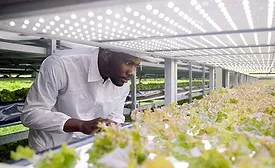
hydroponic vegetables

Is CEA a Safer Way to Grow and Process RTE Vegetables?

The risk profile of CEA must be compared to that of other RTE produce to explore the question of safety in CEA operations
Eric Wilhelmsen
Eric Wilhelmsen Ph.D., CFS
April 10, 2023

The questions about the safety of controlled environment agriculture (CEA) are complicated. This article outlines why CEA safety depends on understanding and properly addressing the challenges of combining agricultural and ready-to-eat (RTE) into a single facility. It also addresses why CEA is not inherently safe. Ultimately, this article will show how the risk profile of CEA must be compared to that of other RTE produce and that there is no universal answer to the question of CEA safety.


Read More
cyber security defense graphic

Cybersecurity and Food Defense: Establishing an ISAC for the Food and Agriculture Sector

With security threats on the rise, an Information Sharing and Analysis Center (ISAC) is needed for the food and agriculture sector
Robert Norton
Robert A. Norton Ph.D.
Marcus (Marc) Sachs P.E.
April 10, 2023

With security threats against the sector increasing and cyber threats against the global supply system also on the rise, it is imperative that a food and agriculture ISAC be formed. It does not have to be fully capable at the start; just a few large companies that agree to pool and analyze threat information can plant the initial seed. If successful awareness and deterrence can be demonstrated, then other companies will join. At full capability, the ISAC can serve as a watch and warning center for the sector, providing timely threat analysis for members at all levels. In this article, the authors look at what it takes to create and run a successful ISAC.


Read More
chef slicing lettuce

Current States of Food Safety Culture and FSMSs in Food Establishments

In what ways is your brand either superior to or deficient from the behaviors revealed by your colleagues?
Steven Mandernach
Steven Mandernach J.D.
Elizabeth A. Nutt M.P.H. Mark S. Miklos CP-FS Susan W. Arendt Ph.D. Yang Xu Ph.D.
April 5, 2023

A survey was sent to food industry trade association members representing food companies to determine what is known about food safety culture, food safety management systems, and active managerial control. The survey also asked about the implementation of such practices in support of a culture of food safety. The survey results indicate that many companies are well aware of these food safety concepts; however, many respondents are unsure whether their company is operating with true active managerial control. Opportunities were uncovered to inform and encourage engagement in active managerial control to a greater degree.


Read More
burger

Looking Back: E.coli O157:H7 and the Legacy of Dr. David Theno

The story of the 1992–1993 Jack in the Box outbreak is well documented, but how E. coli O157:H7 first showed up on the radar is less known
Andrew Kesler
February 6, 2023

This article looks back at the events of the 1993 E. coli outbreak associated with hamburgers served at Jack in the Box restaurants along the U.S. West Coast, examining the regulatory changes inspired by the fatal outbreak and its impact. Also discussed are the corporate and industry changes, spearheaded by Dr. David Theno, that set new standards for leadership and management in foodservice and food safety. 


Read More
connected world

An Information Sharing and Analysis Center for the Food and Agriculture Sector

The food and agriculture sector is the only U.S. critical infrastructure without a threat Information Sharing and Analysis Center (ISAC)
Robert Norton
Robert A. Norton Ph.D.
Marcus (Marc) Sachs P.E.
February 6, 2023

An increasingly critical element of food safety and defense planning is assurance of data integrity—the ability to keep data unchanged as it is communicated or stored. Information that is used for decision-making or reporting cannot be compromised, altered, or manipulated by unauthorized users. Threat information is best shared through the establishment and voluntary participation of an Information Sharing and Analysis Center (ISAC). Food and agriculture is the only sector that lacks an ISAC. With security threats against the sector increasing and cyber threats against the global supply system also on the rise, it is imperative that a food and agriculture ISAC be formed.


Read More
food prep

Reducing Food Safety Risks in Meal Kits

In the lack of specific regulations, businesses that are involved in meal kits have a responsibility to minimize food safety risks.
Kelsey James M.P.H.
February 6, 2023

Meal kits use a direct-to-consumer model of delivering perishable, pre-measured ingredients for pre-selected recipes that are then used to prepare and cook meals at home. Meal kits are likely to contain a variety of foods that may grow or be contaminated by pathogenic bacteria. Meal kit manufacturers also often repackage ingredients into plain or branded packaging, which can result in the consumption of unexpected ingredients or allergens.


Read More
Previous 1 2 … 8 9 10 11 12 13 14 15 16 … 32 33 Next
Manage My Account
  • Join Food Safety Magazine
  • Manage My Preferences
  • Customer Service

More Videos

Sponsored Content

Sponsored Content is a special paid section where industry companies provide high quality, objective, non-commercial content around topics of interest to the Food Safety Magazine audience. All Sponsored Content is supplied by the advertising company and any opinions expressed in this article are those of the author and not necessarily reflect the views of Food Safety Magazine or its parent company, BNP Media. Interested in participating in our Sponsored Content section? Contact your local rep!

close
  • pre-packaged salads, noodles, and prepared meals stocked on multi-tier grocery store refrigerator shelves
    Sponsored byCorbion

    How Many Days of Shelf Life Are You Leaving on the Table?

  • Top view portrait of two factory workers standing by conveyor belt during quality inspection at food production, copy space
    Sponsored byFlexXray

    Foreign Material By the Numbers: What the 2026 Benchmark Report Reveals

  • a conveyorized industrial metal detector system that appears to resemble a Loma Systems IQ4 Metal Detector setup with an integrated conveyor belt and control panel for food or package inspection.
    Sponsored byMettler Toledo

    Beyond Detection: How to Avoid Physical Contamination in Food Through a Smarter Inspection Strategy

Popular Stories

AI and Advanced Analytics eBook

eBook | AI and Advanced Analytics for Smarter Food Safety Management

man in suit inspector looking at documents in restaurant kitchen

FDA Issues 2026 Voluntary National Retail Food Regulatory Program Standards

Quality control in a food processing facility

Bridging the Gap Between Policy, Science, and Practice in Food Safety

AI and Advanced Analytics ebook

Events

December 2, 2026

Beyond Surface Clean: Tackling Biofilms and Persistent Pathogens

Live: December 2, 2026 at 11:00 am EST: Attend this webinar to understand why chlorine dioxide is not chlorine, and what “ultra-pure” means for residues, byproducts, and effectiveness.

December 3, 2026

How to Use AI to Improve Workforce Training

Live: December 3, 2026 at 11:00 am EST: This webinar will cover best practices for reviewing, refining, and governing AI-generated training content for accuracy and consistency.

December 8, 2026

Best Practices for Responding to a Foodborne Outbreak Investigation

Live: December 8, 2026 at 2:00 pm EST: Attendees will gain practical insight into the roles and expectations of industry and government during foodborne illness investigations, and how effective collaboration can support timely investigations and the best possible public health outcome.

View All

Products

Global Food Safety Microbial Interventions and Molecular Advancements

Global Food Safety Microbial Interventions and Molecular Advancements

See More Products

Never miss the latest news and trends shaping the food safety industry

Newsletters | Website | FSM Features Collection

JOIN TODAY!
  • RESOURCES
    • Advertise
    • Contact Us
    • Directories
    • Store
  • JOIN TODAY
    • Create Account
    • FSM Features Collection
    • Newsletters
    • Customer Service
    • Manage Preferences
  • SERVICES
    • Marketing Services
    • Reprints
    • Market Research
    • List Rental
    • Survey/Respondent Access
  • STAY CONNECTED
    • LinkedIn
    • Facebook
    • Instagram
    • X (Twitter)
    • YouTube
  • PRIVACY
    • PRIVACY POLICY
    • TERMS & CONDITIONS
    • DO NOT SELL MY PERSONAL INFORMATION
    • PRIVACY REQUEST
    • ACCESSIBILITY

Copyright ©2026. All Rights Reserved BNP Media, Inc. and BNP Media II, LLC.

Design, CMS, Hosting & Web Development :: ePublishing