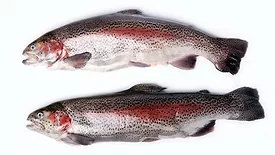
An ongoing project by the Norwegian food research institute Nofima is investigating the efficacy of different treatment baths for Listeria monocytogenes decontamination on fish and fish products.
To inform resourcing changes and program improvements, the U.S. Food and Drug Administration (FDA) is seeking public input on its current approach to managing certification for the export of human food products regulated by the agency.
The open access Food Safety Mass Spectral Library, developed by Wageningen University and Research scientists, comprises more than 1,000 chemicals including veterinary drugs, contaminants, pesticides, and natural toxins.
The Canadian Food Inspection Agency (CFIA) has completed its root cause investigation of the summer 2024 listeriosisoutbreak linked to plant-based Silk and Great Value milks. The agency was unable to confirm the primary source of the contamination, but found that the production facility was not compliant with testing requirements.
In the debut installment of the Food Safety Five Newsreel, we discuss an ongoing multistate outbreak of Escherichia coli infections linked to onions served at McDonald’s restaurants. The episode also takes a look at legislation passed in California that marks the country’s first mandatory food date labeling reforms.
To inform biosecurity and containment measures, the U.S. Department of Agriculture (USDA) is expanding its testing and monitoring efforts for Highly Pathogenic Avian Influenza (HPAI) H5N1 in milk.
Setting a new a new precedent for preharvest food safety interventions, the first-ever registration of an antimicrobial treatment for foodborne pathogens in preharvest agricultural water has been approved by the U.S. Environmental Protection Agency (EPA).
The U.S. Food and Drug Administration (FDA) has released a new final Compliance Policy Guide on scombrotoxin (histamine) adulteration in fish and fishery products, and has lowered the acceptable levels for histamine in fish.
 RSS
RSS