Food Safety
search
Ask Food Safety AI
cart
facebook twitter linkedin instagram youtube
  • Sign In
  • Create Account
  • Sign Out
  • My Account
Food Safety
  • NEWS
    • Latest News
    • Sponsored Insights
    • Sponsored White Papers
  • PRODUCTS
  • TOPICS
    • Contamination Control
    • Food Types
    • Management
    • Process Control
    • Regulatory
    • Sanitation
    • Supply Chain
    • Testing and Analysis
  • PODCAST
  • EXCLUSIVES
    • Food Safety Five Newsreel
    • eBooks
    • FSM Distinguished Service Award
    • Interactive Product Spotlights
    • Videos
  • BUYER'S GUIDE
  • MORE
    • NEWSLETTERS >
      • Archive Issues
      • Subscribe to eNews
    • Store
    • ASK FSM AI
  • WEBINARS
  • FOOD SAFETY SUMMIT
  • EMAG
    • eMagazine
    • Archive Issues
    • Editorial Advisory Board
    • Contact
    • Advertise
  • SIGN UP!
NewsContamination ControlRegulatoryChemical ControlFDA

Baby Food Safety Act Would Give FDA Authority to Limit Toxic Heavy Metals in Food for Children

By Food Safety Magazine Editorial Team
young baby being fed pureed food

Image credit: Phong Duong via Unsplash

May 13, 2024

To protect the health of young children, U.S. Senators Amy Klobuchar (D-Minnesota) and Tammy Duckworth (D-Illinois) have introduced legislation to limit the levels of toxic heavy metals allowed in foods produced for infants and toddlers. The House companion bill is led by Representatives Raja Krishnamoorthi (D-Illinois) and Tony Cárdenas (D-California).

The Baby Food Safety Act of 2024 would give the U.S. Food and Drug Administration (FDA) the authority to enforce scientifically established limits on heavy metals in commercially produced infant and toddler food (meaning foods represented as being specifically for children up to the age of 24 months). The bill would also set requirements on food manufacturer sampling, testing, and recordkeeping for contaminants in imported and domestic processed food, and would also bring greater transparency to the rate of food facility inspections conducted by FDA in the U.S. and abroad by initiating a study of FDA foreign/domestic inspections.

A food may be determined adulterated at the final product stage if it contains any contaminant in excess of the limits established under the authorities granted by the legislation. Specifically, if passed, the bill would enable FDA to establish limits on:

  • Lead, cadmium, mercury, and total arsenic in infant and toddler food
  • Lead, cadmium, mercury, and total arsenic in food pouches made with fruit or vegetable puree or juice
  • Lead and arsenic in juice
  • Additional contaminants in infant and toddler food, juice, and food pouches made with fruit/vegetable puree or juice, if determined appropriate.

The Baby Food Safety Act of 2024 follows a request for expanded authorities made by FDA Commissioner Robert Califf, M.D. during a May 8 Senate subcommittee hearing about the agency’s Fiscal Year 2025 budget request. During the hearing, Dr. Califf asked Congress to make it possible for FDA to require producers of foods for babies to conduct testing for contaminants, and to make testing data available to the agency. Dr. Califf also requested the authority to require manufacturers to report contamination in critical foods, such as infant formula, and to conduct better environmental monitoring.

At the state level, legislation similar to the Baby Food Safety Act was proposed in Maryland in February 2024. Maryland House Bill 97, also known as “Rudy’s Law,” would require baby food manufacturers to test products for toxic heavy metals and make the results available to consumers.

Due to several nationwide food safety crises that have occurred in the U.S. in recent years, concern has been rising with regard to toxic heavy metals and other harmful contaminants in foods intended for babies and young children. For example, in late 2023 into early 2024, the U.S. faced a string of lead poisoning cases in children linked to fruit puree pouches containing imported cinnamon adulterated by lead and chromium. Earlier, in 2022, a nationwide shortage of infant formula was spurred by the closure of a major formula production facility. Infants were sickened, and in some cases, died, after consuming formula that was contaminated with Cronobacter sakazakii and was produced at the closed facility.

Looking for quick answers on food safety topics?
Try Ask FSM, our new smart AI search tool.
Ask FSM →


KEYWORDS: arsenic baby food cadmium lead legislation mercury toxic heavy metals

Share This Story

Fsm purple logo 200x200

The Food Safety Magazine editorial team comprises Bailee Henderson, Director of Content Strategy and news editor ✉, and Adrienne Blume, M.A., Director of Editorial and Industry Engagement.

Recommended Content

JOIN TODAY
to unlock your recommendations.

Already have an account? Sign In

  • people holding baby chicks

    Serovar Differences Matter: Utility of Deep Serotyping in Broiler Production and Processing

    This article discusses the significance of Salmonella in...
    Methods
    By: Nikki Shariat Ph.D.
  • woman washing hands

    Building a Culture of Hygiene in the Food Processing Plant

    Everyone entering a food processing facility needs to...
    Food Prep/Handling
    By: Richard F. Stier, M.S.
  • graphical representation of earth over dirt

    Climate Change and Emerging Risks to Food Safety: Building Climate Resilience

    This article examines the multifaceted threats to food...
    Best Practices
    By: Maria Cristina Tirado Ph.D., D.V.M. and Shamini Albert Raj M.A.
Manage My Account
  • eMagazine Subscription
  • Subscribe to Newsletters
  • Manage My Preferences
  • Website Registration
  • Subscription Customer Service

More Videos

Sponsored Content

Sponsored Content is a special paid section where industry companies provide high quality, objective, non-commercial content around topics of interest to the Food Safety Magazine audience. All Sponsored Content is supplied by the advertising company and any opinions expressed in this article are those of the author and not necessarily reflect the views of Food Safety Magazine or its parent company, BNP Media. Interested in participating in our Sponsored Content section? Contact your local rep!

close
  • Man In Warehouse
    Sponsored byRentokil

    Mitigating Hidden Rodent Risks in Food Facilities

  • an industrial manufacturing or processing facility
    Sponsored bybioMérieux

    Get Ahead of Spoilage in Food Manufacturing with Metagenomics for Preventive Monitoring

  • an automated industrial production line used in a modern food factory
    Sponsored byIFC

    A Formula for Food Processing Pest Management

Popular Stories

dozen white eggs

Nearly 100 Sick in Multistate Salmonella Outbreak, Millions of Eggs Recalled

Business people shaking hands with FDA logo overlay

FDA to Centralize Administrative Functions, Generalize Inspectors

packaged sesame seed buns

FDA's Allergen Agenda Is Expanding: Thresholds, Gluten Cross-Contact, and What Food Companies Should Watch for Next

building a skilled workforce ebook

Events

August 6, 2026

Beyond Sanitation: Understanding the Hidden System Conditions That Allow Pathogens to Persist

Live: August 6, 2026 at 2:00 pm EDT: Attend this webinar to learn strategies for strengthening environmental control programs through a layered approach to pathogen management.

August 11, 2026

Beyond Sanitization: Reducing Contamination Risk Without Raising Operating Cost

Live: August 11, 2026 at 2:00 pm EDT: Attend this webinar to learn why ambient air is the largest and most overlooked contamination zone in food processing, and what it costs you between scheduled cleans.

August 25, 2026

Don’t Wing It: Bird Control for Food Processing Facilities

Live: August 25, 2026 at 2:00 pm EDT: This webinar will cover why managing bird activity should be a priority for your business, the complexities involved in effective bird control, and proactive strategies to help protect your facility.

View All

Products

Global Food Safety Microbial Interventions and Molecular Advancements

Global Food Safety Microbial Interventions and Molecular Advancements

See More Products

Related Articles

  • cattle grazing on hay

    Expanded Food Safety Investigation Act Would Give FDA, CDC Authority to Test for Pathogens on Farms to Trace Outbreaks

    See More
  • US capitol on a cloudy day

    Proposed Legislation Would Give FDA Authority to Share Food Safety Information With States

    See More
  • shrimp on ice

    Bipartisan Bill Would Give FDA Authority to Destroy Contaminated Food Imports

    See More

Related Products

See More Products
  • 1119053595.jpg

    Food Safety for the 21st Century: Managing HACCP and Food Safety throughout the Global Supply Chain, 2E

  • 9781138070912.jpg

    Trends in Food Safety and Protection

  • 1118396308.jpg

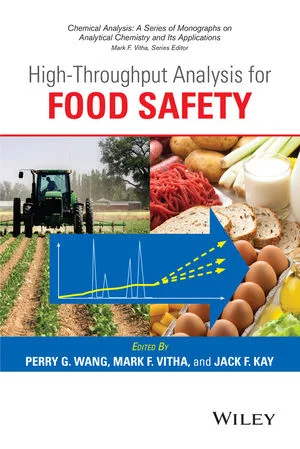
    High Throughput Analysis for Food Safety

See More Products

Related Directories

  • Women In Food Safety

    Women in Food Safety is a US-based global nonprofit organization dedicated to empowering and advancing women in the food safety and quality industry. Women In Food Safety provides a platform for professionals at all stages of their careers to grow, share knowledge, and support one another. Through community events, educational initiatives, and leadership development, we are building a more inclusive and resilient future for food safety worldwide. Together, we can do BETTER!
  • Institute for Food Safety and Health (IFSH) - Illinois Tech

    IFSH is a one-of-a-kind applied food science research consortium comprised of the Illinois Tech, the U.S. FDA, and the food industry. In collaboration with the FDA, we provide stakeholders with the opportunity to develop and exchange knowledge, experience, and expertise in the areas of food safety, food defense, and nutrition.
  • Active Food Safety

    Active Food Safety consists of an experienced team of food safety professionals who are thought-leaders in the food industry, and have each led enterprise level food safety management programs in several of the most well-known and respected brands in the food industry. We continuously help our clients ensure food safety based on proven business best practices designed specifically to the brand - to maximize risk reduction to prevent foodborne disease illnesses and outbreaks, to meet all government regulatory requirements, and to improve sales and brand reputation.
×

Never miss the latest news and trends driving the food safety industry

Newsletters | Website | eMagazine

JOIN TODAY!
  • RESOURCES
    • Advertise
    • Contact Us
    • Directories
    • Store
    • Want More
  • SIGN UP TODAY
    • Create Account
    • eMagazine
    • Newsletters
    • Customer Service
    • Manage Preferences
  • SERVICES
    • Marketing Services
    • Reprints
    • Market Research
    • List Rental
    • Survey/Respondent Access
  • STAY CONNECTED
    • LinkedIn
    • Facebook
    • Instagram
    • X (Twitter)
  • PRIVACY
    • PRIVACY POLICY
    • TERMS & CONDITIONS
    • DO NOT SELL MY PERSONAL INFORMATION
    • PRIVACY REQUEST
    • ACCESSIBILITY

Copyright ©2026. All Rights Reserved BNP Media, Inc. and BNP Media II, LLC.

Design, CMS, Hosting & Web Development :: ePublishing