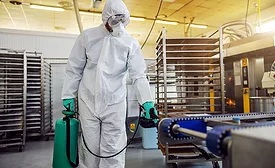
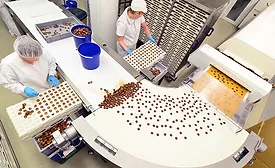
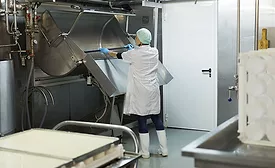
This article discusses the limits of "dry" sanitizers in low-moisture environments in terms of performance, cost, employee safety, and the hidden risks of moisture in hard-to-clean niches.
IAFNS-supported researchers have developed a low-moisture cleaning solution that is not only effective and less of a hazard for workers and plants, but also has the potential to save cleaning time.
The Sanitation Controls Practitioner Program empowers food producers to refine their sanitation practices to withstand even the strictest audits and inspections
Drawing on extensive research, industry conversations, and insights from focus groups and job task analysis, the Sanitation Controls Practitioner Program (SCPP) identifies critical job tasks related to sanitation. This article, inspired by the SCPP's comprehensive approach, will delve into the three pillars of an effective sanitation program: cleaning, monitoring and verification, and sanitizing.
General cleaning/sanitizing elements of Standard Operating Procedures (SOPs) should not be integrated into the "regulatory" requirements of Sanitation SOPs (SSOPs), but should be maintained as a separate plant operational set of documents. To further explain this the rationale for keeping these separate, this article reviews SSOPs to define their requirements and how these differ from general SOPs.
Madison Chemical has introduced its new ProClean® DEGREASER, a liquid, moderately alkaline, multi-purpose detergent for general purpose cleaning and degreasing in food and beverage plants.
A project funded by the Center for Produce Safety has collected information about, validated, and evaluated the efficacy of the cleaning and sanitation practices for harvest equipment among blueberry harvesters and packers.
Goodway Technologies is opening an office in Düsseldorf, Germany, bringing the company’s cleaning and sanitation solutions to Europe's food and beverage market.
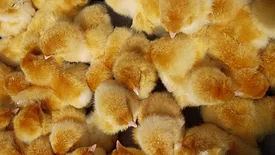
A recent study of hatcheries has demonstrated the efficacy of tailored advice on preventive controls for Salmonella, as well as provided insight into the prevalence of the pathogen in commercial British hatcheries.