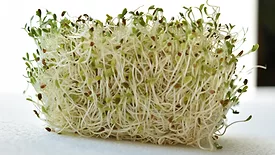
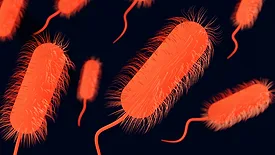
Supported by the Center for Produce Safety (CPS), Cornell researchers are developing a quantitative microbial risk assessment (QMRA) model to evaluate how quality defects affect Listeria and E. coli growth on produce, helping identify effective interventions and improve processes.
Food Standards Scotland (FSS) has outlined its plans to reduce foodborne illness over the next three years, prioritizing Campylobacter, Listeria monocytogenes, and Shiga toxin-producing Escherichia coli, as well as its related research objectives.
Outbreak strains include STEC serotypes O26:H11, O103:H25, and O168:H8 and one strain of Salmonella Agona. Some people were infected with more than one outbreak strain. The implicated products were distributed by Everything Sprouts LLC of Minneapolis, Minnesota.
This episode of Food Safety Five discusses new research on avocado oil authenticity in processed foods, the effects of nanoplastics on bacterial biofilms in drinking water systems, factors influencing Listeria monocytogenes persistence on plastic food contact surfaces, and stress-adaptation traits that may help E. coli persist from farm to fork.
UKHSA said the relatively stable number of STEC notifications in 2025 marked a departure from the steady annual increases observed since 2021, when larger outbreaks contributed substantially to case counts.
Adding to a growing body of evidence that micro- and nanoplastics may enhance the virulence and persistence of pathogens in food and the environment, a new study found that nanoplastics may strengthen E. coli biofilms in drinking water systems and increase resistance to chlorine treatment.
The co-occurrence of biofilm formation, acid tolerance, and antimicrobial resistance genes in E. coli isolatedfrom irrigation water, soil, and crops could complicate downstream microbial control efforts in produce production systems.
The E. coli outbreak involving Raw Farm unpasteurized dairy products has ended with one raw cheese sample matching isolates from a different 2025 outbreak. In an April 29 hearing, Congresspeople questioned whether U.S. Health Secretary Kennedy influenced FDA’s failure to mandate a recall.
In 2025, a genetically unique hybrid STEC/STEC strain was the cause of a foodborne illness outbreak that affected exclusively adults, with 90 percent of patients developing hemolytic uremic syndrome (HUS) and three deaths occurring.
During its investigation of an ongoing Escherichia coli O157:H7 outbreak involving Raw Farm-brand unpasteurized cheddar cheese, FDA detected E. coli in a product sample not matching the current outbreak strain, but instead matching a strain from a different 2025 outbreak.