Sodium Intersections With Food Safety and Health
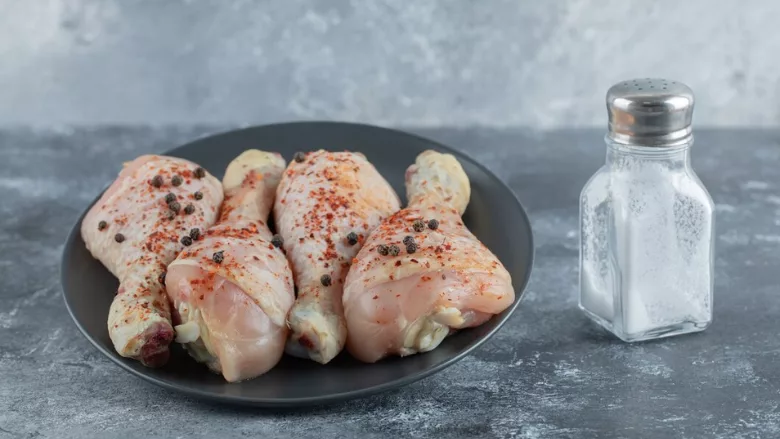
Image credit: azerbaijan_stockers via Freepik
In recent years, there has been a significant push toward making our diets healthier, driven by increasing awareness of the links between diet and health conditions like heart disease and hypertension. A common public health tactic is to recommend the consumption of less sodium and lower-sodium foods.
The U.S. Food and Drug Administration (FDA) has recently released draft guidance that updates voluntary targets for sodium reduction in foods. The new guidance proposes three-year sodium reduction targets for 163 food categories that are commercially processed, packaged, or prepared. If achieved, these actions would reduce sodium intake by 20 percent from previous levels.1
While these changes align with promoting public health, they may also challenge current food safety uses of sodium in products on the market. The solutions are more complicated than just cutting back on sodium levels in foods like meats and cheeses.
Food Safety and Quality Implications of Reducing Sodium
Sodium is not just a flavor enhancer; it also plays a critical role in food safety and quality. The addition of sodium to foods like processed meats and cheeses helps inhibit the growth of pathogenic bacteria like Listeria monocytogenes, Salmonella, Clostridium botulinum, and spoilage microorganisms in foods by reducing the water activity of the product. When sodium is reduced in these products, water activity increases, making more water available for microbial growth.
Lower sodium levels in processed meats and cheeses can also affect product quality. Sodium reduction can both shorten shelf life and alter the taste and texture of foods. Reduced-sodium cheeses, for example, can have an unpleasant hardness or gumminess.2 Reduced-sodium meats like bacon or ham can have a decreased water holding capacity, resulting in a product with textural changes and less "juiciness."3
These food safety and quality issues are complex and may need different approaches for different food commodities. For example, a typical cheese spread contains 4 percent sodium, or 400 mg per serving. This is considered a microbially safe, shelf-stable product. To create a lower-sodium cheese spread and reduce the sodium to 3.2 percent (or 320 mg per serving), both a food safety and quality impact can be observed.4
Looking for quick answers on food safety topics?
Try Ask FSM, our new smart AI search tool.
Ask FSM →
When the sodium quantity is reduced, there is an increase in the pH of the product (i.e., less acidic). This may allow for the production of C. botulinum toxin in the product. To counter this, the pH can be decreased by 0.2 units, making the product more acidic. However, this can cause quality issues. Customers who are used to the original product with a milder taste may dislike the more acidic-tasting reduced-sodium cheese spread. It is not just as simple as reducing sodium in food products. A multi-faceted approach to reducing sodium content while maintaining safety and quality is warranted.
Utilizing Current Technical Approaches
Different approaches can be used to overcome the resulting food safety and quality issues when sodium is reduced. For example, the pH of a food could be reduced to make it more acidic and prevent the growth of microorganisms. However, when this approach is taken—as in the cheese product example above—the product taste may change and not be acceptable to consumers.
Another strategy is to replace sodium chloride with alternative salts like potassium chloride. This helps reduce sodium content in foods while inhibiting microbiological effects. Studies have shown that replacing 50 percent of sodium salts with potassium salts decreases sodium content by half but also delays toxin production from C. botulinum and extends the shelf life of the product.5
However, sensory evaluations of salt-substituted products show that partial substitution hits limits at 30 percent before consumers experience an unacceptable metallic or bitter off-taste.6 These current solutions present their own challenges and require additional validation to ensure safety and quality.
Using Innovation and Collaboration to Drive Sodium Reduction
The availability of low-sodium products is beneficial for the daily diet. However, food safety remains a non-negotiable aspect of food production. The challenge lies in balancing these demands without compromising the safety and integrity of the food supply.
The Institute for the Advancement of Food and Nutrition Sciences (IAFNS) hosted a series of webinars7 followed by an expert dialogue to discuss current activities to reduce sodium intake, as well as address the food safety challenges associated with formulation changes.
A major takeaway from these discussions was that innovation and collaboration are key to overcoming the technical barriers to sodium reduction. Investments in research and development to innovate new ways to maintain food safety can drive the development of safer, healthier options. This could involve developing new preservation technologies—such as high-pressure processing (HPP) or pulsed electric fields—which can help reduce the need for traditional preservatives while ensuring food safety. Additionally, advancements in food packaging, like using modified atmospheres, can help extend shelf life without relying heavily on sodium.
Collaboration among diverse experts across disciplines is needed to drive innovative solutions to these challenges. Shared resources and knowledge8 can accelerate progress to support the development of new products and processes to ensure a safe, high-quality, healthier alternative product for consumers.
Looking Forward: The Future of Food Safety and Health
IAFNS works to support ongoing collaborative research among food scientists, manufacturers, regulators, and consumers. Working across universities, industry, and government can help ensure that healthier foods do not erode food safety.
The intersection of food safety and health is a growing area of focus. While reducing sodium in our diets is a positive step toward better health, it is essential to recognize the food safety implications that come with possible changes. By leveraging alternative preservatives and innovative technologies along with educating consumers, we can find a balance that ensures our food is both healthy and safe.
References
- U.S. Food and Drug Administration (FDA). "Guidance for Industry: Voluntary Sodium Reduction Goals." October 2021. https://www.fda.gov/regulatory-information/search-fda-guidance-documents/guidance-industry-voluntary-sodium-reduction-goals.
- Schroeder, C.L., F.W. Bodyfelt, C.J. Wyatt, and M.R. McDaniel. "Reduction of Sodium Chloride in Cheddar Cheese: Effect on Sensory, Microbiological, and Chemical Properties." Journal of Dairy Science (1988).
- Delgado-Pando, G., E. Fischer, P. Allen, J.P. Kerry, M.G. O'Sullivan, and R.M. Hamill. "Salt Content and Minimum Acceptable Levels in Whole-Muscle Cured Meat Products." Meat Science (2018) .
- Tanaka, N., E. Traisman, P. Plantinga, L. Finn, W. Flom, L.M. Meske, and J. Guggisberg. "Evaluation of Factors Involved in Antibotulinal Properties of Pasteurized Process Cheese Spreads." Journal of Food Protection (1986).
- Glass, K.A., M. Mu, B. LeVine, and F. Rossi. "Inhibition of Clostridium botulinum in Model Reduced-Sodium Pasteurized Prepared Cheese Products." Journal of Food Protection (2023).
- Aliño, M., R. Grau, F. Toldrá, E. Blesa, M.J. Pagán, and J.M. Barat. "Physicochemical Properties and Microbiology of Dry-Cured Loins Obtained by Partial Sodium Replacement with Potassium, Calcium and Magnesium." Meat Science (2010).
- Institute for the Advancement of Food and Nutrition Sciences (IAFNS). "State of the Science in Sodium Reduction to Improve Public Health—Webinar Series and Expert Dialogue." https://iafns.org/sodium-webinar-series-and-expert-convening/.
- IAFNS. "Sodium Reduction Science and Strategies Database." https://iafns.org/sodium-database/.