Food Safety
search
Ask Food Safety AI
cart
facebook twitter linkedin
  • Sign In
  • Create Account
  • Sign Out
  • My Account
Food Safety
  • NEWS
    • Latest News
    • White Papers
  • PRODUCTS
  • TOPICS
    • Contamination Control
    • Food Types
    • Management
    • Process Control
    • Regulatory
    • Sanitation
    • Supply Chain
    • Testing and Analysis
  • PODCAST
  • EXCLUSIVES
    • Food Safety Five Newsreel
    • eBooks
    • FSM Distinguished Service Award
    • Interactive Product Spotlights
    • Videos
  • BUYER'S GUIDE
  • MORE
    • NEWSLETTERS >
      • Archive Issues
      • Subscribe to eNews
    • Store
    • Sponsor Insights
    • ASK FSM AI
  • WEBINARS
  • FOOD SAFETY SUMMIT
  • EMAG
    • eMagazine
    • Archive Issues
    • Editorial Advisory Board
    • Contact
    • Advertise
  • SIGN UP!
Contamination ControlFood TypeMicrobiologicalReady-to-eat

From Crackers to Kibble: Why Pet Food Belongs in the Low-Moisture Food Safety Conversation
By Caitlin Karolenko Ph.D.
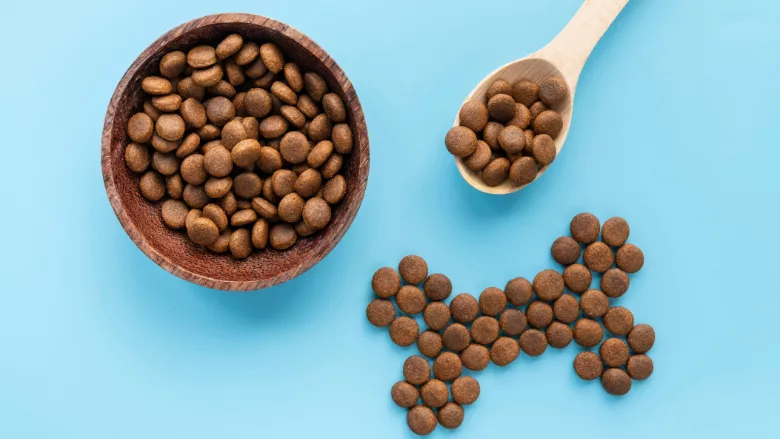
dog kibble arranged in shape of bone next to bowl and spoon full of kibble
Image credit: Freepik
January 20, 2026

Much of the discussion around low-moisture food safety has traditionally focused on foods intended for people—cereals, nut butters, powdered dairy, spices, and snacks. These products have repeatedly challenged the assumption that "dry means safe." Yet, one major category of low-moisture food remains underrepresented in these conversations: pet food.

That gap is striking given how closely pet food safety mirrors human food safety. Earlier this year, during a technical workshop on cleaning and sanitation for low-moisture foods, I found myself in conversation with a representative from a large pet food manufacturer. As we discussed why we were both there, it became clear that the issues he raised—environmental persistence, dry sanitation, post-process contamination—were not unique to pet food. They were the same challenges long recognized in human low-moisture food manufacturing.

This kind of cross-sector overlap has become increasingly apparent through multi-stakeholder scientific discussions. When experts from human food, animal food, academia, and government sit at the same table, the common ground is often larger than expected.

A Widely Handled, Low-Moisture Product

Pet food is not a niche commodity. Roughly two-thirds of U.S. households own at least one pet, meaning tens of millions of households handle pet food every day. Dry pet food—typically containing just 5–12 percent moisture—is the most common format. Semi-dry products contain more moisture, while canned foods are high-moisture. Dry kibble and treats most closely resemble human low-moisture foods from a microbiological perspective.

Like human low-moisture foods, dry pet foods rely on low water activity for shelf stability. This prevents microbial growth, but it does not eliminate pathogens. Pathogens like Salmonella can persist for long periods in dry products and processing environments, remaining infectious even in a dormant state.

Since dry pet foods are consumed without further processing, the margin for error is narrow. Once contamination occurs, it can be difficult to detect and even harder to eliminate.

Shared Pathways for Contamination

The contamination pathways in pet food manufacturing will sound familiar to anyone working with low-moisture human foods. Incoming ingredients—including grains, rendered animal proteins, and poultry byproducts—can introduce pathogens if control measures upstream are insufficient. Within facilities, dry environments can support long-term persistence in harborage sites such as cracks, crevices, and poorly designed equipment. Dust movement, pest activity, and cross-contamination between raw and finished areas all contribute to risk.

Looking for quick answers on food safety topics?
Try Ask FSM, our new smart AI search tool.
Ask FSM →

One area of particular concern in pet food is post-process application. Flavorings, fats, and palatability enhancers are often applied after extrusion and drying, at a point where no additional kill step exists. If these materials or application systems are contaminated, then finished product can be directly exposed.

Storage and transportation further extend the risk window. Once product leaves the facility, environmental contamination can still occur if controls break down.

Why Pet Food Safety Matters Beyond Pets

Pet food contamination is not solely an animal health issue. It is also a human health concern.

As pets have become increasingly integrated into households, opportunities for human exposure have expanded. Handling pet food, exposure to pet saliva, contact with pet feces, and proximity to food bowls and storage containers all create potential pathways for pathogen transmission—particularly in homes with young children or immunocompromised individuals.

Outbreak investigations have repeatedly demonstrated that contaminated pet food can sicken both animals and people. From a microbiological standpoint, the distinction between human food and animal food becomes less meaningful once products enter shared living spaces.

Applying Shared Science to Shared Risk

The good news is that the scientific principles needed to manage these risks are already well understood—and largely shared across sectors.

Validated thermal treatments remain foundational, but they must be designed for dry conditions, where pathogens such as Salmonella exhibit increased heat resistance. Dry cleaning and sanitation strategies, which limit water use and emphasize rapid drying, are essential. In low-moisture facilities, water is often treated as a controlled hazard, capable of reactivating dormant pathogens and undermining zoning and sanitation controls.

Facility design and environmental monitoring also play a critical role. Zoning, air handling, hygienic equipment design, and targeted environmental monitoring programs—long used in human food facilities—are increasingly being adopted in pet food manufacturing.

Emerging technologies—including non-thermal surface treatments, chemical controls, and biological interventions—continue to be explored. While no single tool is sufficient on its own, a layered scientific approach grounded in sound validation offers meaningful risk reduction.

The Value of Cross-Sector Dialogue

One of the clearest lessons from recent scientific discussions is the value of shared learning. When representatives from the human food and pet food sectors engage in the same conversations about sanitation, validation, environmental monitoring, and facility design, the science advances more quickly and blind spots are reduced.

Organizations that convene experts across sectors play an important role in enabling these discussions—not by prescribing solutions, but by creating space for data-sharing, critical evaluation, and alignment around best practices. This collaborative model reflects the reality that microbial hazards in low-moisture foods are not consumer-specific; they are environment- and process-specific.

Raising the Bar Across the Food System

Pathogens do not distinguish between crackers and kibble, peanut butter and pet treats. What matters is how food is made, handled, and controlled.

If there is one takeaway, it is this: low-moisture foods—whether intended for humans or pets—require a proactive, prevention-focused mindset. Assumptions about safety based on dryness alone are insufficient. The overlap between pet food and human low-moisture food safety is not incidental; it is a call to apply shared science more deliberately and consistently.

Ultimately, food safety does not stop at the dinner plate. It extends to the pet bowl, the treat jar, and the shared spaces where food for every member of the household is handled and consumed.


KEYWORDS: low-moisture foods pet food

Share This Story

Caitlin karolenko

Caitlin Karolenko, Ph.D. is a Scientific Program Manager at the Institute for the Advancement of Food and Nutrition Sciences (IAFNS). In this role, Dr. Karolenko leads various food safety initiatives including the Food Microbiology Committee. Additionally, she manages organizational projects to promote and enhance scientific integrity in the food and nutrition research process. Dr. Karolenko received her Ph.D. in Food Science with a concentration in Food Microbiology from Oklahoma State University. She has direct experience with process validation, including pathogen inhibition and microbiome analysis.  

Recommended Content

JOIN TODAY
to unlock your recommendations.

Already have an account? Sign In

  • people holding baby chicks

    Serovar Differences Matter: Utility of Deep Serotyping in Broiler Production and Processing

    This article discusses the significance of Salmonella in...
    Meat/Poultry
    By: Nikki Shariat Ph.D.
  • woman washing hands

    Building a Culture of Hygiene in the Food Processing Plant

    Everyone entering a food processing facility needs to...
    Sanitation
    By: Richard F. Stier, M.S.
  • graphical representation of earth over dirt

    Climate Change and Emerging Risks to Food Safety: Building Climate Resilience

    This article examines the multifaceted threats to food...
    Best Practices
    By: Maria Cristina Tirado Ph.D., D.V.M. and Shamini Albert Raj M.A.
Manage My Account
  • eMagazine Subscription
  • Subscribe to Newsletters
  • Manage My Preferences
  • Website Registration
  • Subscription Customer Service

More Videos

Sponsored Content

Sponsored Content is a special paid section where industry companies provide high quality, objective, non-commercial content around topics of interest to the Food Safety Magazine audience. All Sponsored Content is supplied by the advertising company and any opinions expressed in this article are those of the author and not necessarily reflect the views of Food Safety Magazine or its parent company, BNP Media. Interested in participating in our Sponsored Content section? Contact your local rep!

close
  • Salmonella bacteria
    Sponsored byThermoFisher

    Food Microbiology Testing Methods: Salmonella species

  • a diagram explaining indicator organisms
    Sponsored byHygiena

    How Proactive Listeria Testing Helps Prevent Six- and Seven-Figure Recalls

  • woman grocery shopping
    Sponsored byCorbion

    Designing Safety Into Every Bite: Proactive Risk Mitigation for Refrigerated Foods

Popular Stories

brand new newborn drinking bottle

Florida Launches Food Contaminant Testing Program with Report on Metals in Infant Formula

cute baby in high chair feeding himself a bottle

‘Operation Stork Speed’ Expert Panel Highlights Infant Formula Safety Vulnerabilities

dog kibble arranged in shape of bone next to bowl and spoon full of kibble

From Crackers to Kibble: Why Pet Food Belongs in the Low-Moisture Food Safety Conversation

Events

January 27, 2026

Strategies for Reinforcing Food Safety Culture Among Temporary and Seasonal Staff

Live: January 27, 2026 at 2:00 pm EST: From this webinar, attendees will learn common areas where companies encounter challenges in their food defense strategies and how to address them.

May 11, 2026

The Food Safety Summit

Stay informed on the latest food safety trends, innovations, emerging challenges, and expert analysis. Leave the Summit with actionable insights ready to drive measurable improvements in your organization. Do not miss this opportunity to learn from experts about contamination control, food safety culture, regulations, sanitation, supply chain traceability, and so much more.

View All

Products

Global Food Safety Microbial Interventions and Molecular Advancements

Global Food Safety Microbial Interventions and Molecular Advancements

See More Products

Related Articles

  • two men working in milk powder factory

    Dry Sanitation in Food Processing: Enhancing Safety for Low-Moisture Foods

    See More
  • apple stethoscope

    Breaking Silos to Safeguard Our Plates: Why Food Safety, Nutrition, and Public Health Should Collaborate More

    See More
  • roosters in a cage

    Sharing Data to Protect Public Health: The Why, the What, and the How

    See More

Related Products

See More Products
  • 1119053595.jpg

    Food Safety for the 21st Century: Managing HACCP and Food Safety throughout the Global Supply Chain, 2E

  • food-safety-making.jpg

    Food Safety: Making Foods Safe and Free From Pathogens

  • 1119258073.jpg

    FSMA and Food Safety Systems: Understanding and Implementing the Rules

See More Products

Related Directories

  • Bakery Machinery & Fabrication (BMF/Cookie & Cracker Machinery)

    Engineering/Designing/Manufacturing of Cookie, Cracker, Snack Food & Pet Treat equipment. From unit machines to turnkey systems ranging from flour handling through wrapping. Equipment development for new products that are not capable of being produced on conventional equipment. We're your competitors' best kept secret!! Get the Baking Edge!!
  • PolyConversions Inc.

    PolyCo is America's leading supplier of high quality, long lasting, protective barrier products designed for healthcare, food processing and sterile cleanroom environments. Our material, which we call VR®, is more durable, more flexible and more protective than any PVC (polyvinyl chloride, or vinyl) product on the market today.
×

Never miss the latest news and trends driving the food safety industry

Newsletters | Website | eMagazine

JOIN TODAY!
  • RESOURCES
    • Advertise
    • Contact Us
    • Directories
    • Store
    • Want More
  • SIGN UP TODAY
    • Create Account
    • eMagazine
    • Newsletters
    • Customer Service
    • Manage Preferences
  • SERVICES
    • Marketing Services
    • Reprints
    • Market Research
    • List Rental
    • Survey/Respondent Access
  • STAY CONNECTED
    • LinkedIn
    • Facebook
    • Instagram
    • X (Twitter)
  • PRIVACY
    • PRIVACY POLICY
    • TERMS & CONDITIONS
    • DO NOT SELL MY PERSONAL INFORMATION
    • PRIVACY REQUEST
    • ACCESSIBILITY

Copyright ©2026. All Rights Reserved BNP Media.

Design, CMS, Hosting & Web Development :: ePublishing