Food Safety
search
Ask Food Safety AI
cart
facebook twitter linkedin
  • Sign In
  • Create Account
  • Sign Out
  • My Account
Food Safety
  • NEWS
    • Latest News
    • White Papers
  • PRODUCTS
  • TOPICS
    • Contamination Control
    • Food Types
    • Management
    • Process Control
    • Regulatory
    • Sanitation
    • Supply Chain
    • Testing and Analysis
  • PODCAST
  • EXCLUSIVES
    • Food Safety Five Newsreel
    • eBooks
    • FSM Distinguished Service Award
    • Interactive Product Spotlights
    • Videos
  • BUYER'S GUIDE
  • MORE
    • ENEWSLETTER >
      • Archive Issues
      • Subscribe to eNews
    • Store
    • Sponsor Insights
    • ASK FSM AI
  • WEBINARS
  • FOOD SAFETY SUMMIT
  • EMAG
    • eMagazine
    • Archive Issues
    • Editorial Advisory Board
    • Contact
    • Advertise
  • SIGN UP!
Sanitation

Dry Sanitation in Food Processing: Enhancing Safety for Low-Moisture Foods
By Caitlin Karolenko Ph.D.
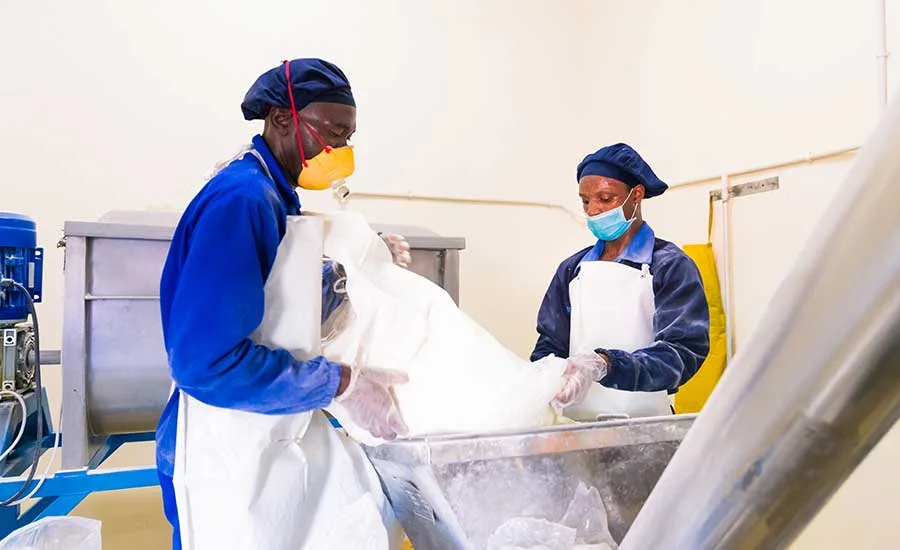
two men working in milk powder factory

Image credit: GCShutter/E+ via Getty Images

August 20, 2024

Dry sanitation is a pivotal practice in the food processing industry, particularly for facilities that produce low-moisture or low-water-activity foods. This method involves cleaning and sanitizing food processing equipment and facilities without the use of water, relying instead on dry methods such as vacuuming, brushing, and the use of chemical sanitizers.

Low-moisture and low-water-activity foods like flour, nuts, cereals, powdered milk, and spices are more prone to microbial growth when wet. Introducing water during cleaning can create an environment that is conducive to microbial proliferation, posing a significant contamination risk. Dry environments are less likely to support the growth of pathogens such as Salmonella and Escherichia coli, which can thrive in moist conditions. Dry sanitation helps maintain these environments, thereby enhancing the overall safety protocols for processing low-moisture foods.

The need to ensure the safety of dry foods has never been more important. In 2022, there was significant attention to infant formula—a low-moisture food—after the production facility was linked to Cronobacter infections that resulted in infant hospitalizations and deaths. Additionally, the U.S. Centers for Disease Control and Prevention reported from 2016–2019 that there were approximately 100 multistate E. coli cases linked to flour and related products.

However, with current non-aqueous-based sanitation protocols, there is still uncertainty regarding effectiveness, application, and occupational concerns surrounding these alternative strategies. This article explores some of the trending technologies and approaches being developed to ensure the microbial safety of low-moisture foods in dry food processing facilities. 

Sanitation Required, Not Optional

Comprehensive sanitation controls are a key component of a food processing facility's safety program and are a requirement under the 2011 Food Safety Modernization Act (FSMA).  The sanitation procedures must ensure that the facility remains in a sanitary condition to minimize or prevent hazards. FSMA also underscores the importance of sanitary design in food processing facilities. The equipment and facility structures must be designed to allow thorough cleaning and sanitation without the accumulation of residues that can harbor pathogens. This is crucial for preventing transient contaminants from turning into resident strains that persist in the production environment. 

Dry Sanitation Challenges

Looking for quick answers on food safety topics?
Try Ask FSM, our new smart AI search tool.
Ask FSM →

Pathogen control in the production of low-water-activity foods is difficult to accomplish with current dry sanitation products or techniques. Ethanol and isopropanol are commonly used sanitizers in low-water-activity food processing environments; however, they are highly flammable. The use of these alcohol-based sanitizers require that processing equipment be cooled prior to cleaning with these agents. This limits the frequency of cleaning, given the labor and time costs to processors to shut down the line. 

Additionally, alternatives to dry sanitation need to work as well as their water-based counterparts in terms of effectiveness against pathogens and removal of residues that can lead to biofilm formation. Biofilms are a community of microorganisms that adhere to surfaces via an extracellular polymeric substance matrix.1 Incomplete cleaning leaves organic residue on production surfaces, providing nutrients for microorganisms. This leads to microbial attachments and biofilm formation and, ultimately, food contamination as it comes in contact with the biofilm. 

Physical cleaning methods, such as brushing and scraping, can effectively remove residual organic matter without using water. However, these methods can also damage the equipment, creating scratches where bacteria can easily attach and colonize. Non-aqueous solutions are needed that are effective against pathogens, address residue removal, and protect worker safety without a significant time loss to food production. 

Alternative Dry Sanitation Approaches 

The IAFNS Food Microbiology Committee funds ongoing research that could potentially provide a different approach to dry sanitation. Dr. Lynne McLandsborough, Professor at the University of Massachusetts–Amherst, is utilizing organic acids in combination with non-polar liquids as a viable alternative to alcohol-based sanitizers. Organic acids are commonly employed as food additives or antimicrobial treatments to inhibit pathogen growth. By utilizing a hydrophobic environment, such as those found in non-polar liquids, the antimicrobial activity of the organic acids can be increased. Moreover, the non-polar liquids would have a higher flash point compared to ethanol or isopropanol-based compounds, thereby enhancing safety by preventing fires during use.  

Another approach is the use of superheated steam to sanitize the production environment. Dr. Abigail Snyder at Cornell University presented her findings utilizing this technology at the IAFNS Annual Summer Science Symposium in early June 2024 in Washington D.C. The dry steam is heated to more than 121 °C (250 °F) and is applied to production surfaces to kill any pathogens or microbes. It does not leave moisture or condensation to harbor residual pathogen growth. 

These methods provide alternative sanitizing tools that decrease the fire hazards associated with traditional alcohol-based sanitizers. They also can increase the frequency of sanitation work and, ultimately, improve the safety of foods processed in dry environments. 

Takeaway

Dry sanitation requires risk balancing. The risk posed by residual moisture needs to be addressed alongside the flammability of alcohol-based sanitizers. With careful approaches, new and existing dry sanitation techniques can be effective and safe, but require attention to detail and to their chemical properties. 

Reference

  1. Donlan, Rodney M. "Biofilms: Microbial Life on Surfaces." Emerging Infectious Diseases 9, no. 9 (September 2002): 881–890. https://www.ncbi.nlm.nih.gov/pmc/articles/PMC2732559/#:~:text=A%20biofilm%20is%20an%20assemblage,the%20discovery%20of%20microbial%20biofilms.
KEYWORDS: dry cleaning low-moisture foods

Share This Story

Caitlin karolenko

Caitlin Karolenko, Ph.D. is a Scientific Program Manager at the Institute for the Advancement of Food and Nutrition Sciences (IAFNS). In this role, Dr. Karolenko leads various food safety initiatives including the Food Microbiology Committee. Additionally, she manages organizational projects to promote and enhance scientific integrity in the food and nutrition research process. Dr. Karolenko received her Ph.D. in Food Science with a concentration in Food Microbiology from Oklahoma State University. She has direct experience with process validation, including pathogen inhibition and microbiome analysis.  

Recommended Content

JOIN TODAY
to unlock your recommendations.

Already have an account? Sign In

  • people holding baby chicks

    Serovar Differences Matter: Utility of Deep Serotyping in Broiler Production and Processing

    This article discusses the significance of Salmonella in...
    Contamination Control
    By: Nikki Shariat Ph.D.
  • woman washing hands

    Building a Culture of Hygiene in the Food Processing Plant

    Everyone entering a food processing facility needs to...
    Management
    By: Richard F. Stier, M.S.
  • graphical representation of earth over dirt

    Climate Change and Emerging Risks to Food Safety: Building Climate Resilience

    This article examines the multifaceted threats to food...
    Risk Assessment
    By: Maria Cristina Tirado Ph.D., D.V.M. and Shamini Albert Raj M.A.
Manage My Account
  • eMagazine Subscription
  • Subscribe to eNewsletter
  • Manage My Preferences
  • Website Registration
  • Subscription Customer Service

More Videos

Sponsored Content

Sponsored Content is a special paid section where industry companies provide high quality, objective, non-commercial content around topics of interest to the Food Safety Magazine audience. All Sponsored Content is supplied by the advertising company and any opinions expressed in this article are those of the author and not necessarily reflect the views of Food Safety Magazine or its parent company, BNP Media. Interested in participating in our Sponsored Content section? Contact your local rep!

close
  • Salmonella bacteria
    Sponsored byThermoFisher

    Food Microbiology Testing Methods: Salmonella species

  • a diagram explaining indicator organisms
    Sponsored byHygiena

    How Proactive Listeria Testing Helps Prevent Six- and Seven-Figure Recalls

  • woman grocery shopping
    Sponsored byCorbion

    Designing Safety Into Every Bite: Proactive Risk Mitigation for Refrigerated Foods

Popular Stories

NRTE breaded stuffed chicken

USDA Indefinitely Delays Enforcement of Salmonella as Adulterant in Raw Breaded, Stuffed Chicken

digital map of europe

EU Publishes Food Fraud Tool Mapping Thousands of Cases Since 2016

non-conforming product

How to Handle Non-Conforming Product

Events

December 11, 2025

How to Develop and Implement an Effective Food Defense Strategy

Live: December 11, 2025 at 2:00 pm EDT: From this webinar, attendees will learn common areas where companies encounter challenges in their food defense strategies and how to address them.

May 11, 2026

The Food Safety Summit

Stay informed on the latest food safety trends, innovations, emerging challenges, and expert analysis. Leave the Summit with actionable insights ready to drive measurable improvements in your organization. Do not miss this opportunity to learn from experts about contamination control, food safety culture, regulations, sanitation, supply chain traceability, and so much more.

View All

Products

Global Food Safety Microbial Interventions and Molecular Advancements

Global Food Safety Microbial Interventions and Molecular Advancements

See More Products

Related Articles

  • sourkraut

    Can the Food Microbiome Help Us Ensure Safety and Quality? An Exploration

    See More
  • salt shaker and raw chicken

    Sodium Intersections With Food Safety and Health

    See More
  • apple stethoscope

    Breaking Silos to Safeguard Our Plates: Why Food Safety, Nutrition, and Public Health Should Collaborate More

    See More

Related Products

See More Products
  • 9781498721776.jpg

    Handbook of Food Processing: Food Safety, Quality, and Manufacturing Processes

  • food-safety-making.jpg

    Food Safety: Making Foods Safe and Free From Pathogens

  • 1119053595.jpg

    Food Safety for the 21st Century: Managing HACCP and Food Safety throughout the Global Supply Chain, 2E

See More Products

Events

View AllSubmit An Event
  • November 18, 2025

    Dry Sanitation and Cleaning Techniques for Facilities and Equipment

    On Demand: From this webinar, attendees will learn best practices employed by dry/low-moisture food processors for dry sanitation and equipment cleaning.
View AllSubmit An Event

Related Directories

  • FoodReady

    FoodReady offers complete Traceability, Food Safety & Quality, and Supply Chain software to digitize everything related to quality, food safety, sanitation, and traceability. FoodReady also offers complete consulting services for GFSI audit-preparation, HACCP consulting and development, process authority, FDA consulting, USDA consulting, and master sanitation consulting services from a team of longtime auditors, former Directors of Quality at the largest food companies.
  • Saldesia "Goddess of Food Safety"

    Saldesia is a distributor of Food Safety products and solutions. We are focused on supplying the Quality, Production, Safety and Sanitation departments. Product lines include Color Coded, Metal Detectable, Antimicrobial Flooring & Mats, Workwear, Footwear, Spray Nozzles, and more!
×

Never miss the latest news and trends driving the food safety industry

eNewsletter | Website | eMagazine

JOIN TODAY!
  • RESOURCES
    • Advertise
    • Contact Us
    • Directories
    • Store
    • Want More
  • SIGN UP TODAY
    • Create Account
    • eMagazine
    • eNewsletter
    • Customer Service
    • Manage Preferences
  • SERVICES
    • Marketing Services
    • Reprints
    • Market Research
    • List Rental
    • Survey/Respondent Access
  • STAY CONNECTED
    • LinkedIn
    • Facebook
    • Instagram
    • X (Twitter)
  • PRIVACY
    • PRIVACY POLICY
    • TERMS & CONDITIONS
    • DO NOT SELL MY PERSONAL INFORMATION
    • PRIVACY REQUEST
    • ACCESSIBILITY

Copyright ©2025. All Rights Reserved BNP Media.

Design, CMS, Hosting & Web Development :: ePublishing