Food Safety
search
Ask Food Safety AI
cart
facebook twitter linkedin instagram youtube
  • Sign In
  • Create Account
  • Sign Out
  • My Account
Food Safety
  • NEWS
    • Latest News
    • Sponsored Insights
    • Sponsored White Papers
  • PRODUCTS
  • TOPICS
    • Contamination Control
    • Food Types
    • Management
    • Process Control
    • Regulatory
    • Sanitation
    • Supply Chain
    • Testing and Analysis
  • PODCAST
  • EXCLUSIVES
    • Food Safety Five Newsreel
    • eBooks
    • FSM Distinguished Service Award
    • Interactive Product Spotlights
    • Videos
  • BUYER'S GUIDE
  • MORE
    • NEWSLETTERS >
      • Archive Issues
      • Subscribe to eNews
    • Store
    • ASK FSM AI
  • WEBINARS
  • FOOD SAFETY SUMMIT
  • EMAG
    • eMagazine
    • Archive Issues
    • Editorial Advisory Board
    • Contact
    • Advertise
  • SIGN UP!
NewsContamination ControlSupply ChainMicrobiological ControlGrowers/GAPs

Study: Better Controls, Including Vaccines, Needed to Mitigate HPAI H5N1 Outbreak
By Food Safety Magazine Editorial Team
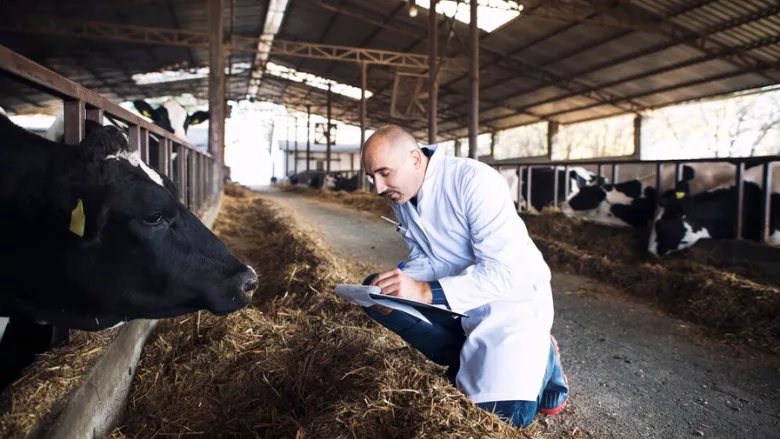
vet checking clipboard in cow barn

Image credit: aleksandarlittlewolf via Freepik

October 3, 2024

A recent study led by the Pirtbright Institute and conducted by researchers in both the U.S. and UK suggests that global control measures for Highly Pathogenic Avian Influenza (HPAI) H5N1 infection in poultry and dairy cattle are insufficient to prevent the worsening of the ongoing outbreak.

The researchers reviewed sustained mammal-to-mammal HPAI transmission in diverse species, including dairy cattle, considering the spread of the virus among herds in North America.

Gaps in control measures for HPAI H5N1 were highlighted, including a reluctance to administer current vaccinations and use modern surveillance technologies.

Additionally, the lack of data collection or sharing is hindering the work of researchers, veterinarians, and policymakers. For example, in the U.S., HPAI H5N1 is only a reportable disease in poultry—not mammals. At present, the U.S. Department of Agriculture (USDA) only requires testing for the virus in lactating cattle prior to interstate transport.

Most concerning to the researchers is the possibility of undetected pathways of transmission spreading through farm animals and staff and then mutating into a virus variant that spreads easily between humans, which could then lead to a human pandemic, complicated by inadequate testing criteria, mistrust in interventions, and/or a lack of resources.

The researchers call for new control strategies, including vaccination, pointing out that current HPAI vaccines for poultry have varying degrees of success, and that they merely reduce disease burden rather than preventing infection.

In August, USDA announced that it will begin testing dairy cows at slaughter for the presence of HPAI H5N1. In the same month, Secretary Tom Vilsack revealed that the agency is beginning field trials for HPAI H5N1 vaccines for cattle.

Looking for quick answers on food safety topics?
Try Ask FSM, our new smart AI search tool.
Ask FSM →


KEYWORDS: biosurveillance HPAI study vaccine

Share This Story

Fsm purple logo 200x200

The Food Safety Magazine editorial team comprises Bailee Henderson, Director of Content Strategy and news editor ✉, and Adrienne Blume, M.A., Director of Editorial and Industry Engagement.

Recommended Content

JOIN TODAY
to unlock your recommendations.

Already have an account? Sign In

  • people holding baby chicks

    Serovar Differences Matter: Utility of Deep Serotyping in Broiler Production and Processing

    This article discusses the significance of Salmonella in...
    Meat/Poultry
    By: Nikki Shariat Ph.D.
  • woman washing hands

    Building a Culture of Hygiene in the Food Processing Plant

    Everyone entering a food processing facility needs to...
    Management
    By: Richard F. Stier, M.S.
  • graphical representation of earth over dirt

    Climate Change and Emerging Risks to Food Safety: Building Climate Resilience

    This article examines the multifaceted threats to food...
    Contamination Control
    By: Maria Cristina Tirado Ph.D., D.V.M. and Shamini Albert Raj M.A.
Manage My Account
  • eMagazine Subscription
  • Subscribe to Newsletters
  • Manage My Preferences
  • Website Registration
  • Subscription Customer Service

More Videos

Sponsored Content

Sponsored Content is a special paid section where industry companies provide high quality, objective, non-commercial content around topics of interest to the Food Safety Magazine audience. All Sponsored Content is supplied by the advertising company and any opinions expressed in this article are those of the author and not necessarily reflect the views of Food Safety Magazine or its parent company, BNP Media. Interested in participating in our Sponsored Content section? Contact your local rep!

close
  • Man In Warehouse
    Sponsored byRentokil

    Mitigating Hidden Rodent Risks in Food Facilities

  • an industrial manufacturing or processing facility
    Sponsored bybioMérieux

    Get Ahead of Spoilage in Food Manufacturing with Metagenomics for Preventive Monitoring

  • an automated industrial production line used in a modern food factory
    Sponsored byIFC

    A Formula for Food Processing Pest Management

Popular Stories

lettuce leaves up close

Is Whole Head Lettuce Safer Than Bagged Salad?

Gummy supplements

FDA's Proposed Mandatory GRAS Rule: What Food Safety Professionals Need to Know

listeria

FDA’s Listeria Prevention Public Meeting: Experts Debate Zero Tolerance, Emphasize Environmental Monitoring and Fundamental Controls

allergens ebook

Events

August 25, 2026

Don’t Wing It: Bird Control for Food Processing Facilities

Live: August 25, 2026 at 2:00 pm EDT: This webinar will cover why managing bird activity should be a priority for your business, the complexities involved in effective bird control, and proactive strategies to help protect your facility.

September 1, 2026

Seafood Under the Microscope: FDA HACCP, Pathogen Risk, and Modern Testing Strategies

Live: September 1, 2026 at 2:00 pm EDT: Attend this webinar to learn how environmental monitoring, rapid pathogen detection, and risk-based testing strengthen seafood safety programs.

September 2, 2026

From Crisis to Control: A Listeria Elimination Journey in Food Manufacturing

Live: September 2, 2026 at 2:00 pm EDT: This webinar shares a real-world case study of a food processing facility that solved a persistent Listeria challenge after standard protocols fell short.

View All

Products

Global Food Safety Microbial Interventions and Molecular Advancements

Global Food Safety Microbial Interventions and Molecular Advancements

See More Products

Related Articles

  • dairy cattle in barn

    California Declares State of Emergency Over HPAI H5N1 Outbreak in Dairy Cows

    See More
  • Veterinarian at cattle farm holding syringe and bottle preparing for vaccination

    As Outbreak Rages On, USDA to Begin Field Trials for HPAI H5N1 Vaccine in Cattle

    See More
  • farmer walking with milk container next to dairy cows in stalls

    FAO Encourages All Countries to Monitor for HPAI H5N1 Spread to Cattle

    See More

Related Products

See More Products
  • 9781498721776.jpg

    Handbook of Food Processing: Food Safety, Quality, and Manufacturing Processes

  • 1119258073.jpg

    FSMA and Food Safety Systems: Understanding and Implementing the Rules

  • Food-Forensics-3D.jpg

    Food Forensics Handbook Practice, Instrumentation, Case Studies

See More Products

Events

View AllSubmit An Event
  • June 3, 2026

    How to Build a Better Food Safety Training Program

    On Demand: Join this webinar to learn how AI is impacting food safety training, and how you can leverage AI in your programs.
View AllSubmit An Event

Related Directories

  • CMX1

    CMX1 helps the world’s most trusted brands drive field compliance, deliver quality, safe products & experiences, mitigate risk, and achieve everyday excellence. We’re passionate about increasing quality & safety across the globe, and we rally in this mission alongside our clients every single day.
  • GS1 US

    GS1 US® helps companies power their supply chains to deliver safe, consistent, authentic, and trusted experiences. Best known as the recognized source for UPC barcodes, GS1 is a not-for-profit, global data standards organization that creates the common language that helps companies and their trading partners identify, capture, and share trusted data that links their physical and digital supply chains. Millions of businesses around the world power commerce with GS1 Standards.
×

Never miss the latest news and trends driving the food safety industry

Newsletters | Website | eMagazine

JOIN TODAY!
  • RESOURCES
    • Advertise
    • Contact Us
    • Directories
    • Store
    • Want More
  • SIGN UP TODAY
    • Create Account
    • eMagazine
    • Newsletters
    • Customer Service
    • Manage Preferences
  • SERVICES
    • Marketing Services
    • Reprints
    • Market Research
    • List Rental
    • Survey/Respondent Access
  • STAY CONNECTED
    • LinkedIn
    • Facebook
    • Instagram
    • X (Twitter)
  • PRIVACY
    • PRIVACY POLICY
    • TERMS & CONDITIONS
    • DO NOT SELL MY PERSONAL INFORMATION
    • PRIVACY REQUEST
    • ACCESSIBILITY

Copyright ©2026. All Rights Reserved BNP Media, Inc. and BNP Media II, LLC.

Design, CMS, Hosting & Web Development :: ePublishing