Food Safety
search
Ask Food Safety AI
cart
facebook twitter linkedin instagram youtube
  • Sign In
  • Create Account
  • Sign Out
  • My Account
Food Safety
  • NEWS
    • Latest News
    • White Papers
  • PRODUCTS
  • TOPICS
    • Contamination Control
    • Food Types
    • Management
    • Process Control
    • Regulatory
    • Sanitation
    • Supply Chain
    • Testing and Analysis
  • PODCAST
  • EXCLUSIVES
    • Food Safety Five Newsreel
    • eBooks
    • FSM Distinguished Service Award
    • Interactive Product Spotlights
    • Videos
  • BUYER'S GUIDE
  • MORE
    • NEWSLETTERS >
      • Archive Issues
      • Subscribe to eNews
    • Store
    • Sponsor Insights
    • ASK FSM AI
  • WEBINARS
  • FOOD SAFETY SUMMIT
  • EMAG
    • eMagazine
    • Archive Issues
    • Editorial Advisory Board
    • Contact
    • Advertise
  • SIGN UP!
NewsRegulatorySupply ChainFDAFSMATraceability/Recall

Public-Private, Sector-Neutral Partnership for Food Traceability Aims to Advance Industry Toward FSMA 204 Compliance

men's hands in suits shaking hands connected datapoints in background

Image credit: rawpixel.com via Freepik

September 4, 2024

A new public-private partnership, the Partnership for Food Traceability (PFT), has been launched to advance a shared vision for enhanced food traceability in alignment with the U.S. Food and Drug Administration’s (FDA’s) Food Traceability Final Rule, fulfilling section 204(d) of the Food Safety Modernization Act (FSMA 204). The rule, the compliance date for which is January 2026, requires coordination across sectors, industries, company sizes, and business models for traceability, but it does not specify how that coordination should be achieved.

As an independent, sector-neutral forum for industry, regulators, industry associations, technical experts, and technology vendors, PFT aims to facilitate the wide coordination required to comply with the Food Traceability Final Rule. At present, PFT is the only independent forum that brings all parts of the supply chain together to make critical implementation decisions and define a shared vision for food traceability. The partnership includes participation from FDA, state, and local officials, enabling industry and regulators to share knowledge while working to advance traceability.

With a focus on defining business consensus and functional requirements for traceability, PFT is a forum for the exchange, gathering, and use of traceability data among supply chain partners. Additionally, PFT serves as an arena for technical implementation discussions among food industry stakeholders. The group will work toward defining a consistent set of business and functional requirements for traceability, a decision-making mechanism on industry’s traceability implementation, and an organized plan for how the industry can successfully migrate to enhanced traceability.

Resources and materials created via the public-private partnership to implement and comply with traceability requirements will be open-source. The organization will also identify additional pilot needs and coordinate public-private engagement in future pilots.

Although the Food Traceability Rule’s requirements for enhanced traceability and recordkeeping for certain foods do not mandate electronic traceability, the rule aligns with and is supported by FDA’s New Era of Smarter Food Safety initiative, which aims to harness technology and data to advance food safety and traceability. With food companies increasingly employing electronic traceability, momentum toward electronic traceability has been created, which has simultaneously highlighted the complexities and cross-sector interdependencies needed to achieve that goal.

PFT has begun its initial member sign-on period and will hold Board Member elections in October 2024, with a goal of holding its first board meeting on October 23. For more information and membership application, visit www.PFTraceability.org.

Looking for quick answers on food safety topics?
Try Ask FSM, our new smart AI search tool.
Ask FSM →


KEYWORDS: Food Traceability Final Rule partnership

Share This Story

Recommended Content

JOIN TODAY
to unlock your recommendations.

Already have an account? Sign In

  • people holding baby chicks

    Serovar Differences Matter: Utility of Deep Serotyping in Broiler Production and Processing

    This article discusses the significance of Salmonella in...
    Microbiological Control
    By: Nikki Shariat Ph.D.
  • woman washing hands

    Building a Culture of Hygiene in the Food Processing Plant

    Everyone entering a food processing facility needs to...
    Personal Hygiene/Handwashing
    By: Richard F. Stier, M.S.
  • graphical representation of earth over dirt

    Climate Change and Emerging Risks to Food Safety: Building Climate Resilience

    This article examines the multifaceted threats to food...
    International
    By: Maria Cristina Tirado Ph.D., D.V.M. and Shamini Albert Raj M.A.
Manage My Account
  • eMagazine Subscription
  • Subscribe to Newsletters
  • Manage My Preferences
  • Website Registration
  • Subscription Customer Service

More Videos

Sponsored Content

Sponsored Content is a special paid section where industry companies provide high quality, objective, non-commercial content around topics of interest to the Food Safety Magazine audience. All Sponsored Content is supplied by the advertising company and any opinions expressed in this article are those of the author and not necessarily reflect the views of Food Safety Magazine or its parent company, BNP Media. Interested in participating in our Sponsored Content section? Contact your local rep!

close
  • the use of dual-energy X-ray food inspection technology to identify foreign contaminants.
    Sponsored byEagle by METTLER TOLEDO

    Precision Inspection Starts with the Right X-ray Detector

  • This image depicts a worker cleaning stainless steel machinery in a food processing plant
    Sponsored byCintas

    Employee Uniforms: A Frontline Defense Against Food Contamination

  • This image depicts a healthcare professional managing a large volume of paperwork and transitioning to a digital workflow.
    Sponsored bySafetyChain

    The Invisible Plant Tax Starts with Your Records

Popular Stories

packages of beef at retail

Scientists Tackle Food Waste with More Accurate ‘Sell By’ Dates Based on Meat Microbial Activity

This image is a promotional graphic for a resource focused on building a positive food safety culture within manufacturing environments.

eBook | Strengthening Company Culture to Drive Food Safety Performance

Don Prater at the 2026 Food Safety Summit

Donald Prater Becomes New Head of FDA Human Foods Program


Events

May 28, 2026

Advanced Sanitation Strategies for Allergen Risk Reduction in Food Processing

Live: May 28, 2026, at 2:00 pm EDT: From this webinar, attendees will learn why validation and verification are necessary for allergen control, and how analytical tools can support allergen management programs.

June 3, 2026

How to Build a Better Food Safety Training Program

Live: June 3, 2026 at 2:00 pm EDT: Join this webinar to learn how AI is impacting food safety training, and how you can leverage AI in your programs.

June 4, 2026

Building a Stronger Food Safety Program in a Changing GFSI Landscape

Live: June 4, 2026 at 11:00 am EDT: Attend this webinar to understand how GFSI requirements are evolving and what those changes signal for quality programs at food and beverage facilities.

View All

Products

Global Food Safety Microbial Interventions and Molecular Advancements

Global Food Safety Microbial Interventions and Molecular Advancements

See More Products

Related Articles

  • women working in warehouse

    Food Safety in Transition: Looking Toward FSMA 204 Compliance

    See More
  • assorted seafood on ice

    To Help Compliance With FSMA 204, Trace Register, ReposiTrak Enable Data Interoperability for Seafood Industry

    See More
  • repositrak

    ReposiTrak Traceability Network for FSMA 204 Compliance reaches 8 Percent of Retail Grocery Industry

    See More

Related Products

See More Products
  • 9781138198463.jpg

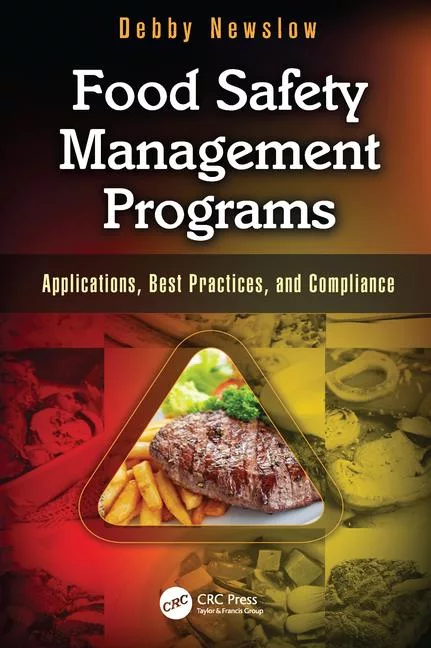
    Food Safety Management Programs: Applications, Best Practices, and Compliance

  • 1119258073.jpg

    FSMA and Food Safety Systems: Understanding and Implementing the Rules

  • 1119053595.jpg

    Food Safety for the 21st Century: Managing HACCP and Food Safety throughout the Global Supply Chain, 2E

See More Products

Related Directories

  • Smrtr

    SMRTR’s Supplier Compliance Portal helps food and beverage companies take control of compliance with smarter, faster processes. From automating supplier onboarding and managing supplier records to meeting FSMA 204 traceability requirements, our solution streamlines every step. Reduce costs, speed up approvals, and maintain the highest standards in food safety and regulatory compliance—with greater accuracy and total visibility.
  • ComplianceMate

    A patented combination of wireless temperature sensors and automated checklists that track and improve operational efficiencies and food safety compliance. Provides total control over workflows and data in all types of foodservice establishments. See rapid ROI from significant labor and food waste savings, as well as improved audit scores.
×

Never miss the latest news and trends driving the food safety industry

Newsletters | Website | eMagazine

JOIN TODAY!
  • RESOURCES
    • Advertise
    • Contact Us
    • Directories
    • Store
    • Want More
  • SIGN UP TODAY
    • Create Account
    • eMagazine
    • Newsletters
    • Customer Service
    • Manage Preferences
  • SERVICES
    • Marketing Services
    • Reprints
    • Market Research
    • List Rental
    • Survey/Respondent Access
  • STAY CONNECTED
    • LinkedIn
    • Facebook
    • Instagram
    • X (Twitter)
  • PRIVACY
    • PRIVACY POLICY
    • TERMS & CONDITIONS
    • DO NOT SELL MY PERSONAL INFORMATION
    • PRIVACY REQUEST
    • ACCESSIBILITY

Copyright ©2026. All Rights Reserved BNP Media, Inc. and BNP Media II, LLC.

Design, CMS, Hosting & Web Development :: ePublishing