Food Safety
search
Ask Food Safety AI
cart
facebook twitter linkedin
  • Sign In
  • Create Account
  • Sign Out
  • My Account
Food Safety
  • NEWS
    • Latest News
    • White Papers
  • PRODUCTS
  • TOPICS
    • Contamination Control
    • Food Types
    • Management
    • Process Control
    • Regulatory
    • Sanitation
    • Supply Chain
    • Testing and Analysis
  • PODCAST
  • EXCLUSIVES
    • Food Safety Five Newsreel
    • eBooks
    • FSM Distinguished Service Award
    • Interactive Product Spotlights
    • Videos
  • BUYER'S GUIDE
  • MORE
    • ENEWSLETTER >
      • Archive Issues
      • Subscribe to eNews
    • Store
    • Sponsor Insights
    • ASK FSM AI
  • WEBINARS
  • FOOD SAFETY SUMMIT
  • EMAG
    • eMagazine
    • Archive Issues
    • Editorial Advisory Board
    • Contact
    • Advertise
  • SIGN UP!
NewsFood TypeSupply ChainRefrigerated/FrozenTemperature Control/Cold ChainTransportation

Frozen Food Industry Group Strives to Reduce Storage Temperature Standards by 3 °C
By Food Safety Magazine Editorial Team
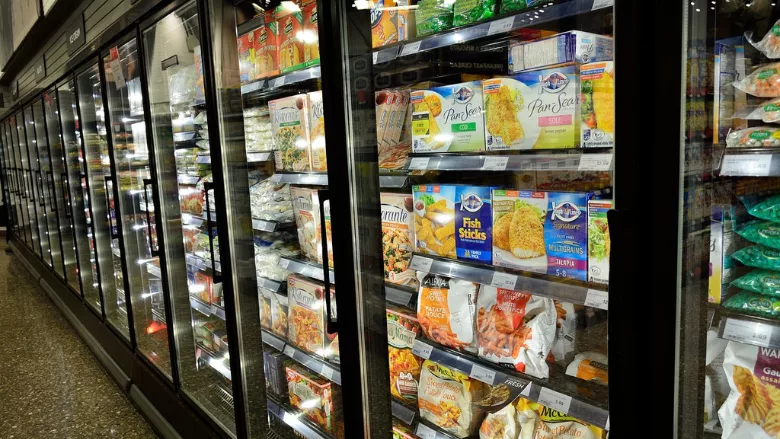
grocery store frozen food aisle

Image credit: ElasticComputeFarm via Pixabay

June 26, 2024

The Move to -15 °C—an industry effort to lower frozen food storage and transportation temperature standards—has more than doubled its membership since its launch in 2023, representing stakeholders at every stage of the frozen food supply chain. The group was founded following the release of the Three Degrees of Change report, an academic paper providing evidence that a move from -18 °C to -15 °C could make a significant environmental impact without compromising food safety.

The frozen food temperature set point of -18 °C was established as an industry standard a century ago—a decision supported by little evidence. Logistics technology has improved substantially since that time, and scientific literature shows that a 3 °C change in temperature could:

  • Save 17.7 million metric tons of carbon dioxide per year, the equivalent annual emissions of 3.8 million cars annually
  • Create energy savings of around 25 terawatt-hours (TW/h), equivalent to 8.63 percent of the UK’s annual energy consumption
  • Cut financial costs throughout the supply chain by at least 5 percent, and in some areas, by up to 12 percent.   

Recognizing that a shift in temperature set points from -18 °C to -15 °C requires a collaboration from the entire food cold chain, the Move to -15 °C recently secured support from Nomad Foods, Europe’s leading frozen food manufacturer and the company behind famous brands like Bird’s Eye, Findus, and Iglo. In February 2024, Nomad Foods released the 12-month results of its ongoing landmark study, which revealed that storing frozen food at -15 °C, instead of the industry standard -18 °C, can reduce freezer energy consumption by 10–11 percent without any noticeable impact on product food safety, texture, taste, or nutritional value.

Other key players within the food industry that have also shown their commitment to the Move to -15 °C include international Danish food company, Danish Crown; worldwide transport and logistics provider, Blue Water Shipping; Europe’s second-largest cold logistics operator, Constellation Cold Logistics; and Indicold, provider of reliable, cost-effective cold storage and logistics solutions in India. Moreover, one of the largest purchasers and lessors of refrigerated containers in the world, Seacube Container Leasing, in collaboration with internet of things (IoT) technology pioneers Orbcomm and Seafrigo, has developed a worldwide network within the refrigerated space, and has also recently joined the Coalition.  

Looking for quick answers on food safety topics?
Try Ask FSM, our new smart AI search tool.
Ask FSM →


KEYWORDS: Move to -15 °C sustainability

Share This Story

Fsm purple logo 200x200

The Food Safety Magazine editorial team comprises Bailee Henderson, Digital Editor ✉; Adrienne Blume, M.A., Editorial Director; and Stacy Atchison, Publisher.

Recommended Content

JOIN TODAY
to unlock your recommendations.

Already have an account? Sign In

  • people holding baby chicks

    Serovar Differences Matter: Utility of Deep Serotyping in Broiler Production and Processing

    This article discusses the significance of Salmonella in...
    Meat/Poultry
    By: Nikki Shariat Ph.D.
  • woman washing hands

    Building a Culture of Hygiene in the Food Processing Plant

    Everyone entering a food processing facility needs to...
    Facilities
    By: Richard F. Stier, M.S.
  • graphical representation of earth over dirt

    Climate Change and Emerging Risks to Food Safety: Building Climate Resilience

    This article examines the multifaceted threats to food...
    Risk Assessment
    By: Maria Cristina Tirado Ph.D., D.V.M. and Shamini Albert Raj M.A.
Manage My Account
  • eMagazine Subscription
  • Subscribe to eNewsletter
  • Manage My Preferences
  • Website Registration
  • Subscription Customer Service

More Videos

Sponsored Content

Sponsored Content is a special paid section where industry companies provide high quality, objective, non-commercial content around topics of interest to the Food Safety Magazine audience. All Sponsored Content is supplied by the advertising company and any opinions expressed in this article are those of the author and not necessarily reflect the views of Food Safety Magazine or its parent company, BNP Media. Interested in participating in our Sponsored Content section? Contact your local rep!

close
  • Salmonella bacteria
    Sponsored byThermoFisher

    Food Microbiology Testing Methods: Salmonella species

  • a diagram explaining indicator organisms
    Sponsored byHygiena

    How Proactive Listeria Testing Helps Prevent Six- and Seven-Figure Recalls

  • woman grocery shopping
    Sponsored byCorbion

    Designing Safety Into Every Bite: Proactive Risk Mitigation for Refrigerated Foods

Popular Stories

NRTE breaded stuffed chicken

USDA Indefinitely Delays Enforcement of Salmonella as Adulterant in Raw Breaded, Stuffed Chicken

digital map of europe

EU Publishes Food Fraud Tool Mapping Thousands of Cases Since 2016

non-conforming product

How to Handle Non-Conforming Product

Events

December 11, 2025

How to Develop and Implement an Effective Food Defense Strategy

Live: December 11, 2025 at 2:00 pm EDT: From this webinar, attendees will learn common areas where companies encounter challenges in their food defense strategies and how to address them.

May 11, 2026

The Food Safety Summit

Stay informed on the latest food safety trends, innovations, emerging challenges, and expert analysis. Leave the Summit with actionable insights ready to drive measurable improvements in your organization. Do not miss this opportunity to learn from experts about contamination control, food safety culture, regulations, sanitation, supply chain traceability, and so much more.

View All

Products

Global Food Safety Microbial Interventions and Molecular Advancements

Global Food Safety Microbial Interventions and Molecular Advancements

See More Products

Related Articles

  • grocery shopper reaching into frozen food cooler

    UK Grocery Chain Morrisons is First Retailer to Raise Freezer Temperatures by 3 °C

    See More
  • Two shoppers in the frozen food section of a supermarket

    Conagra Brands to Remove FD&C Colors from U.S. Frozen Product Portfolio by End-2025

    See More
  • Leafy Greens Marketing Group OKs Changes to Food Safety Standards

    See More

Related Products

See More Products
  • 1119053595.jpg

    Food Safety for the 21st Century: Managing HACCP and Food Safety throughout the Global Supply Chain, 2E

  • 9781498721776.jpg

    Handbook of Food Processing: Food Safety, Quality, and Manufacturing Processes

  • 9781032369990 (1).webp

    Food Safety Quality Control and Management

See More Products

Related Directories

  • EAS Consulting Group, a Certified Group Co.

    EAS Consulting Group is a global leader in regulatory solutions for industries regulated by FDA, USDA, and other federal and state agencies. Our network of 200+ independent consultants enables EAS to provide comprehensive consulting, training, and auditing services, ensuring proactive regulatory compliance for food, supplements, pharmaceuticals, medical devices, cosmetics, tobacco, hemp, and CBD.
  • Fayette Industrial

    At Fayette, we understand that cleanliness in your meat, poultry, pork, or ready-to-eat facility isn't just about passing inspections—it's about protecting your entire business. Our specialized contract sanitation services are tailored to your specific processing environment with rigorous pathogen prevention protocols and audit preparation that exceed regulatory standards.
×

Never miss the latest news and trends driving the food safety industry

eNewsletter | Website | eMagazine

JOIN TODAY!
  • RESOURCES
    • Advertise
    • Contact Us
    • Directories
    • Store
    • Want More
  • SIGN UP TODAY
    • Create Account
    • eMagazine
    • eNewsletter
    • Customer Service
    • Manage Preferences
  • SERVICES
    • Marketing Services
    • Reprints
    • Market Research
    • List Rental
    • Survey/Respondent Access
  • STAY CONNECTED
    • LinkedIn
    • Facebook
    • Instagram
    • X (Twitter)
  • PRIVACY
    • PRIVACY POLICY
    • TERMS & CONDITIONS
    • DO NOT SELL MY PERSONAL INFORMATION
    • PRIVACY REQUEST
    • ACCESSIBILITY

Copyright ©2025. All Rights Reserved BNP Media.

Design, CMS, Hosting & Web Development :: ePublishing