Food Safety
search
Ask Food Safety AI
cart
facebook twitter linkedin instagram youtube
  • Sign In
  • Create Account
  • Sign Out
  • My Account
Food Safety
  • NEWS
    • Latest News
    • White Papers
  • PRODUCTS
  • TOPICS
    • Contamination Control
    • Food Types
    • Management
    • Process Control
    • Regulatory
    • Sanitation
    • Supply Chain
    • Testing and Analysis
  • PODCAST
  • EXCLUSIVES
    • Food Safety Five Newsreel
    • eBooks
    • FSM Distinguished Service Award
    • Interactive Product Spotlights
    • Videos
  • BUYER'S GUIDE
  • MORE
    • NEWSLETTERS >
      • Archive Issues
      • Subscribe to eNews
    • Store
    • Sponsor Insights
    • ASK FSM AI
  • WEBINARS
  • FOOD SAFETY SUMMIT
  • EMAG
    • eMagazine
    • Archive Issues
    • Editorial Advisory Board
    • Contact
    • Advertise
  • SIGN UP!
NewsManagementInternational

WHO Calls for Experts to Assist Estimation of Global Economic Burden of Foodborne Disease

By Food Safety Magazine Editorial Team
abstract world map

Image credit: Marjan Blan via Unsplash

December 7, 2023

The World Health Organization (WHO) has put out a call for experts to inform an updated estimate of the economic impact of foodborne illness at the global, regional, and national levels. The deadline to apply is January 7, 2024.

Specifically, WHO is seeking advice on current economic health valuation practices and their use in low- and middle-income countries (LMICs), and on the availability and representativeness of medical treatment cost data in all countries.

WHO is actively working to update the global estimates of the public health burden of foodborne diseases, considering cases of illness, deaths, and disability-adjusted life year (DALY) loss from foodborne disease globally and at regional and national levels. The WHO technical advisory group, Foodborne Disease Burden Epidemiology Reference Group (FERG) for 2021–2025 is assisting WHO in its estimation process.

Following the first WHO estimates of the global burden of foodborne diseases in 2015, the World Bank published a report in 2019, titled, The Safe Food Imperative: Accelerating Progress in Low- and Middle-Income Countries, which included estimates of the economic impact of foodborne diseases globally and regionally. In response to FERG recommendations, the World Bank and WHO agreed to work together to develop estimates of the economic impact of foodborne diseases based on the updated WHO global burden of foodborne disease estimates. The new economic estimates will be national, regional, and global.

The 2019 World Bank publication only included lost productivity in its estimate of the economic impact of foodborne diseases. The World Bank and WHO are interested in exploring the feasibility of using a more comprehensive measure of the economic impact of foodborne illnesses. The World Bank and WHO will hold a meeting of experts in early 2024 on the feasibility of alternative economic measures. Any measure must be consistent with sound economic theory and feasible to implement globally, regionally, and nationally. The meeting will be held virtually.

The objective of the meeting is to discuss possible methodologies to quantify the economic burden of foodborne diseases based on the updated global burden estimates that are planned to be made available in 2025.

WHO is seeking experts to participate in an online call to advise the World Bank and WHO on feasible and appropriate methodology to estimate the economic burden of foodborne diseases globally, regionally, and nationally. WHO is seeking experts with expertise in health economics, particularly in economic valuation of health outcomes. WHO is interested both in experts with knowledge of theory and practice of monetary health valuation, and experts with practical knowledge of the availability of cost of health treatment data in LMICs.


Update, October 15, 2025: WHO told Food Safety News that the release of the new foodborne disease estimates will be delayed until 2026. “The official consultation with WHO member states, during which each country had the opportunity to review and comment on its national estimates, was completed this summer, and we are now including additional national input to refine the estimates further. So, the process to finalize the estimates is already well underway,” a WHO spokesperson said. The organization is undergoing a major restructuring, including budget cuts, which may have affected the disease burden estimates timeline.

Looking for quick answers on food safety topics?
Try Ask FSM, our new smart AI search tool.
Ask FSM →


KEYWORDS: call for experts economic impact foodborne diseases foodborne illness WHO

Share This Story

Fsm purple logo 200x200

The Food Safety Magazine editorial team comprises Bailee Henderson, Digital Editor ✉ and Adrienne Blume, M.A., Editorial Director.

Recommended Content

JOIN TODAY
to unlock your recommendations.

Already have an account? Sign In

  • people holding baby chicks

    Serovar Differences Matter: Utility of Deep Serotyping in Broiler Production and Processing

    This article discusses the significance of Salmonella in...
    Food Type
    By: Nikki Shariat Ph.D.
  • woman washing hands

    Building a Culture of Hygiene in the Food Processing Plant

    Everyone entering a food processing facility needs to...
    Training
    By: Richard F. Stier, M.S.
  • graphical representation of earth over dirt

    Climate Change and Emerging Risks to Food Safety: Building Climate Resilience

    This article examines the multifaceted threats to food...
    Management
    By: Maria Cristina Tirado Ph.D., D.V.M. and Shamini Albert Raj M.A.
Manage My Account
  • eMagazine Subscription
  • Subscribe to Newsletters
  • Manage My Preferences
  • Website Registration
  • Subscription Customer Service

More Videos

Sponsored Content

Sponsored Content is a special paid section where industry companies provide high quality, objective, non-commercial content around topics of interest to the Food Safety Magazine audience. All Sponsored Content is supplied by the advertising company and any opinions expressed in this article are those of the author and not necessarily reflect the views of Food Safety Magazine or its parent company, BNP Media. Interested in participating in our Sponsored Content section? Contact your local rep!

close
  • NEVIFIT 3 Compartment BPA-FREE
    Sponsored byCorbion

    The Risks of Ready-to-Eat: Five Ways to Protect Today's Prepared Meals

  • a group of workers in a food production facility
    Sponsored bySkillUp by Registrar Corp

    How to Build a Better Training Program: Data and Insights from the Global Food Safety Training Survey

  • the use of dual-energy X-ray food inspection technology to identify foreign contaminants.
    Sponsored byEagle by METTLER TOLEDO

    Precision Inspection Starts with the Right X-ray Detector

Popular Stories

green powder/moringa in wooden mortar

FDA Opens Third Salmonella–Moringa Outbreak Investigation of the Year

fermented meat

Study is First to Analyze Trends in Foodborne Illness Outbreaks Linked to Non-Dairy Fermented Products

lab scientist investigating a strawberry

FDA Modernizes Oversight of Pesticides in Food

a practical guide to spoilage investigation webinar

Events

June 10, 2026

A Practical Guide to Spoilage Investigation and Prevention

Live: June 10, 2026 at 11:00 am EDT: Join this webinar to learn how to identify spoilage root causes, reduce risk, and apply data-driven strategies for prevention.

June 16, 2026

Sustainable Food Contact Materials: Where Regulation Meets Analytical Testing

Live: June 16, 2026 at 11:00 am EDT: This webinar explores how sustainability regulations are changing food contact material requirements, including packaging compliance, unintended substances, and per- and polyfluoroalkyl substances.

June 17, 2026

Living HACCP: Practical Steps for Implementation

Live: June 17, 2026, at 12:00 pm EDT: From this webinar, attendees will understand how social norms shape the way hazards are understood, how decisions are made, and how well risks are understood and acted on across companies.

View All

Products

Global Food Safety Microbial Interventions and Molecular Advancements

Global Food Safety Microbial Interventions and Molecular Advancements

See More Products

Related Articles

  • WHO logo artistic

    WHO Calls for Experts to Estimate Global Burden of Foodborne Disease

    See More
  • person eating apple

    WHO Calls for Experts to Estimate 2025 Disease Burden for Four Toxic Heavy Metals

    See More
  • WHO logo artistic

    WHO Calls for Elicitors to Help Develop Estimates for Global Burden of Foodborne Illness

    See More

Related Products

See More Products
  • 1119053595.jpg

    Food Safety for the 21st Century: Managing HACCP and Food Safety throughout the Global Supply Chain, 2E

  • global food.jpg

    Global Food Safety Microbial Interventions and Molecular Advancements

  • 1444333348.jpg

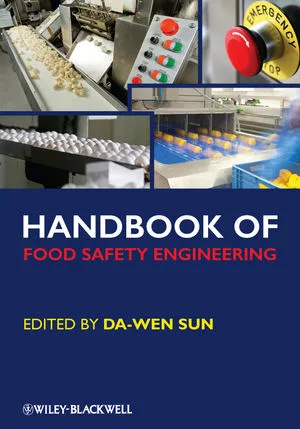
    Handbook of Food Safety Engineering

See More Products

Related Directories

  • Institute of Food Technologists

    Since 1939, the Institute of Food Technologists (IFT) has served as the voice of the global food science community. IFT advocates for science, technology, and research to address the world’s greatest food challenges, guiding our community of more than 200,000. IFT convenes professionals from around the world – from producers and product developers to innovators and researchers across food, nutrition, and public health – with a shared mission to help create a global food supply that is sustainable, safe, nutritious, and accessible to all. IFT provides its growing community spanning academia, industry, and government with the resources, connections, and opportunities necessary to stay ahead of a rapidly evolving food system as IFT helps feed the minds that feed the world. For more information, please visit ift.org.
  • Global Savors

    Global Savors is an importer, distributor, and wholesale supplier of high-quality bulk ingredients and industrial raw materials. We focus on delivering consistent, reliable products that support food manufacturers, bakeries, and large-scale production facilities. With a commitment to quality and efficiency, we source premium ingredients from trusted global partners to ensure our clients receive the best materials for their operations. – Flour & Starch A diverse selection of refined, specialty, and functional flours and starches suited for baking, processing, and industrial formulation. – Blanched Almond Flour Ultra-fine, smooth, and ideal for gluten-free, confectionery, and high-end food applications. – Natural Almond Flour Nutrient-dense, minimally processed, and perfect for clean-label, wholesome product development.
×

Never miss the latest news and trends driving the food safety industry

Newsletters | Website | eMagazine

JOIN TODAY!
  • RESOURCES
    • Advertise
    • Contact Us
    • Directories
    • Store
    • Want More
  • SIGN UP TODAY
    • Create Account
    • eMagazine
    • Newsletters
    • Customer Service
    • Manage Preferences
  • SERVICES
    • Marketing Services
    • Reprints
    • Market Research
    • List Rental
    • Survey/Respondent Access
  • STAY CONNECTED
    • LinkedIn
    • Facebook
    • Instagram
    • X (Twitter)
  • PRIVACY
    • PRIVACY POLICY
    • TERMS & CONDITIONS
    • DO NOT SELL MY PERSONAL INFORMATION
    • PRIVACY REQUEST
    • ACCESSIBILITY

Copyright ©2026. All Rights Reserved BNP Media, Inc. and BNP Media II, LLC.

Design, CMS, Hosting & Web Development :: ePublishing