Food Safety
search
Ask Food Safety AI
cart
facebook twitter linkedin
  • Sign In
  • Create Account
  • Sign Out
  • My Account
Food Safety
  • NEWS
    • Latest News
    • White Papers
  • PRODUCTS
  • TOPICS
    • Contamination Control
    • Food Types
    • Management
    • Process Control
    • Regulatory
    • Sanitation
    • Supply Chain
    • Testing and Analysis
  • PODCAST
  • EXCLUSIVES
    • Food Safety Five Newsreel
    • eBooks
    • FSM Distinguished Service Award
    • Interactive Product Spotlights
    • Videos
  • BUYER'S GUIDE
  • MORE
    • ENEWSLETTER >
      • Archive Issues
      • Subscribe to eNews
    • Store
    • Sponsor Insights
    • ASK FSM AI
  • WEBINARS
  • FOOD SAFETY SUMMIT
  • EMAG
    • eMagazine
    • Archive Issues
    • Editorial Advisory Board
    • Contact
    • Advertise
  • SIGN UP!
NewsFood TypeRegulatoryAlternative ProteinsInternational Standards/Harmonization

FAO, WHO Publish First Global Report on Cell-Based Food Safety

steak on a skewer

Credit: Leonardo Luz via Pexels

April 5, 2023

The first global report on the food safety aspects of cell-based foods has been published by the Food and Agriculture Organization of the United Nations (FAO) and the World Health Organization (WHO). The report is intended to provide a solid scientific basis to begin establishing regulatory frameworks and effective systems to ensure the safety of these alternative proteins.

According to FAO, at present, more than 100 companies around the world are already developing cell-based food products that are ready for commercialization and awaiting approval. Some countries, such as Singapore and the U.S., have already made steps toward introducing cell-based foods to the market. With its publication, FAO/WHO sought to identify the potential food safety implications before products become widely available to consumers.

The report, titled, Food Safety Aspects of Cell-Based Food, includes a synthesis of information on terminology; the principles of production processes; an overview of the global regulatory landscape; and case studies from Israel, Qatar, and Singapore. The results of an FAO-led expert consultation where food safety hazard identification was conducted are also included.

Although FAO refers to “cell-based” foods as such, the report acknowledges that “cultivated” and “cultured” are also commonly used descriptor terms by consumers, industry, and authorities. Regardless of the term used to describe cell-based foods, FAO urges national regulatory bodies to establish clear and consistent language to mitigate future miscommunication, which is especially crucial for proper labeling.

The scope of the hazard identification covered four stages of the cell-based food production process: cell sourcing, cell growth and production, cell harvesting, and food processing. The experts agreed that, while many hazards are already known and exist in conventionally produced food, specific consideration should be given to the unique materials, inputs, ingredients (including potential allergens), and equipment inherent to cell-based food production, which may necessitate a food safety assessment that differs from assessments for traditional foods.

Additionally, while generalizations can be made about the cell-based foods production process, it may be appropriate to conduct food safety assessments on a case-by-case basis, as each product may use different cell sources, scaffolds/microcarriers, culture media compositions, cultivation conditions, and reactor designs.

The report also notes that, in most countries, cell-based foods can be regulated within existing novel food frameworks. For example, Singapore has already made amendments to its novel food regulations to specifically include cultured meat, while the U.S. has addressed labeling and safety requirements for food made from the cultured cells of livestock and poultry through a formal agreement between the U.S. Food and Drug Administration (FDA) and the U.S. Department of Agriculture (USDA). Moreover, USDA has stated its intent to draw up regulations on the labelling of meat and poultry products derived from animal cells.

Looking for quick answers on food safety topics?
Try Ask FSM, our new smart AI search tool.
Ask FSM →

Although the list of hazards forms a basis for next steps, more data generation and sharing at the global level must occur, because there is “currently a limited amount of information and data on the food safety aspects of cell-based foods to support regulators in making informed decisions,” according to FAO. International collaborative efforts would benefit various food safety regulatory authorities, particularly those in low- and middle-income countries, in developing an evidence-based approach to ensuring the food safety of cell-based foods.

The present report follows three background documents published by FAO and WHO in October 2022 on the terminologies, generic production process, and existing regulatory frameworks of cell-based foods.


KEYWORDS: cell-based meat FAO hazard analysis lab-cultivated protein report WHO

Share This Story

Recommended Content

JOIN TODAY
to unlock your recommendations.

Already have an account? Sign In

  • people holding baby chicks

    Serovar Differences Matter: Utility of Deep Serotyping in Broiler Production and Processing

    This article discusses the significance of Salmonella in...
    Contamination Control
    By: Nikki Shariat Ph.D.
  • woman washing hands

    Building a Culture of Hygiene in the Food Processing Plant

    Everyone entering a food processing facility needs to...
    Personal Hygiene/Handwashing
    By: Richard F. Stier, M.S.
  • graphical representation of earth over dirt

    Climate Change and Emerging Risks to Food Safety: Building Climate Resilience

    This article examines the multifaceted threats to food...
    Risk Assessment
    By: Maria Cristina Tirado Ph.D., D.V.M. and Shamini Albert Raj M.A.
Manage My Account
  • eMagazine Subscription
  • Subscribe to eNewsletter
  • Manage My Preferences
  • Website Registration
  • Subscription Customer Service

More Videos

Sponsored Content

Sponsored Content is a special paid section where industry companies provide high quality, objective, non-commercial content around topics of interest to the Food Safety Magazine audience. All Sponsored Content is supplied by the advertising company and any opinions expressed in this article are those of the author and not necessarily reflect the views of Food Safety Magazine or its parent company, BNP Media. Interested in participating in our Sponsored Content section? Contact your local rep!

close
  • Salmonella bacteria
    Sponsored byThermoFisher

    Food Microbiology Testing Methods: Salmonella species

  • a diagram explaining indicator organisms
    Sponsored byHygiena

    How Proactive Listeria Testing Helps Prevent Six- and Seven-Figure Recalls

  • woman grocery shopping
    Sponsored byCorbion

    Designing Safety Into Every Bite: Proactive Risk Mitigation for Refrigerated Foods

Popular Stories

NRTE breaded stuffed chicken

USDA Indefinitely Delays Enforcement of Salmonella as Adulterant in Raw Breaded, Stuffed Chicken

non-conforming product

How to Handle Non-Conforming Product

spoonfuls of food ingredients

FDA’s Developing Rule to Tighten GRAS Oversight Moves to White House

Events

December 11, 2025

How to Develop and Implement an Effective Food Defense Strategy

Live: December 11, 2025 at 2:00 pm EDT: From this webinar, attendees will learn common areas where companies encounter challenges in their food defense strategies and how to address them.

May 11, 2026

The Food Safety Summit

Stay informed on the latest food safety trends, innovations, emerging challenges, and expert analysis. Leave the Summit with actionable insights ready to drive measurable improvements in your organization. Do not miss this opportunity to learn from experts about contamination control, food safety culture, regulations, sanitation, supply chain traceability, and so much more.

View All

Products

Global Food Safety Microbial Interventions and Molecular Advancements

Global Food Safety Microbial Interventions and Molecular Advancements

See More Products

Related Articles

  • bowl of ground beef

    Global Experts Meet to Discuss Cell-Based Food Safety for the First Time; Hosted by FAO, WHO

    See More
  • chicken breast up close

    FAO, WHO to Release Publication, Host Webinar on Cell-Based Food Safety

    See More
  • two loaves of bread

    FAO Hosts Global Meeting of Cell-Based, Precision-Fermented Food Stakeholders to Discuss Food Safety Aspects

    See More

Related Products

See More Products
  • 1119053595.jpg

    Food Safety for the 21st Century: Managing HACCP and Food Safety throughout the Global Supply Chain, 2E

  • global food.jpg

    Global Food Safety Microbial Interventions and Molecular Advancements

  • 1119160553.jpg

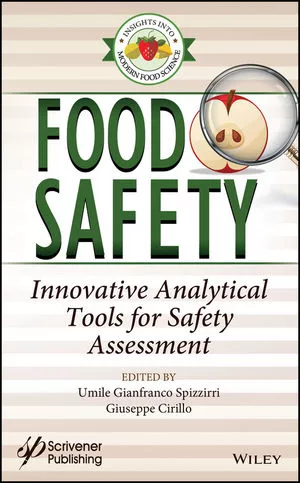
    Food Safety: Innovative Analytical Tools for Safety Assessment

See More Products

Related Directories

  • Global Savors

    Global Savors is an importer, distributor, and wholesale supplier of high-quality bulk ingredients and industrial raw materials. We focus on delivering consistent, reliable products that support food manufacturers, bakeries, and large-scale production facilities. With a commitment to quality and efficiency, we source premium ingredients from trusted global partners to ensure our clients receive the best materials for their operations. – Flour & Starch A diverse selection of refined, specialty, and functional flours and starches suited for baking, processing, and industrial formulation. – Blanched Almond Flour Ultra-fine, smooth, and ideal for gluten-free, confectionery, and high-end food applications. – Natural Almond Flour Nutrient-dense, minimally processed, and perfect for clean-label, wholesome product development.
  • We R Food Safety Inc.

    Scalable, affordable and fully customizable software designed by industry experts and backed by a world-class team of consultants and support personnel. Our proprietary software modernizes your food safety systems, provides your staff real-time data and visibility. We have the ability to construct custom reporting providing you information that is important to your business.
  • Michigan State University Online Food Safety Program

    MSU's Online Food Safety program strives to educate professionals on how to make global food systems safe. The program consists of a master’s degree and graduate certificate, both entirely online. Each program will provide students with applicable knowledge to navigate the ever-changing concerns surrounding food safety, food protection, and public health.
×

Never miss the latest news and trends driving the food safety industry

eNewsletter | Website | eMagazine

JOIN TODAY!
  • RESOURCES
    • Advertise
    • Contact Us
    • Directories
    • Store
    • Want More
  • SIGN UP TODAY
    • Create Account
    • eMagazine
    • eNewsletter
    • Customer Service
    • Manage Preferences
  • SERVICES
    • Marketing Services
    • Reprints
    • Market Research
    • List Rental
    • Survey/Respondent Access
  • STAY CONNECTED
    • LinkedIn
    • Facebook
    • Instagram
    • X (Twitter)
  • PRIVACY
    • PRIVACY POLICY
    • TERMS & CONDITIONS
    • DO NOT SELL MY PERSONAL INFORMATION
    • PRIVACY REQUEST
    • ACCESSIBILITY

Copyright ©2025. All Rights Reserved BNP Media.

Design, CMS, Hosting & Web Development :: ePublishing