Food Safety
search
Ask Food Safety AI
cart
facebook twitter linkedin
  • Sign In
  • Create Account
  • Sign Out
  • My Account
Food Safety
  • NEWS
    • Latest News
    • White Papers
  • PRODUCTS
  • TOPICS
    • Contamination Control
    • Food Types
    • Management
    • Process Control
    • Regulatory
    • Sanitation
    • Supply Chain
    • Testing and Analysis
  • PODCAST
  • EXCLUSIVES
    • Food Safety Five Newsreel
    • eBooks
    • FSM Distinguished Service Award
    • Interactive Product Spotlights
    • Videos
  • BUYER'S GUIDE
  • MORE
    • ENEWSLETTER >
      • Archive Issues
      • Subscribe to eNews
    • Store
    • Sponsor Insights
    • ASK FSM AI
  • WEBINARS
  • FOOD SAFETY SUMMIT
  • EMAG
    • eMagazine
    • Archive Issues
    • Editorial Advisory Board
    • Contact
    • Advertise
  • SIGN UP!

Risk Analysis study: Even properly cooked pork chops pose Listeria, Salmonella threat

Leftovers, which could feature just a few pathogens that then had the chance to multiply, where the real concern, according to the research.
By Crystal Lindell
pork
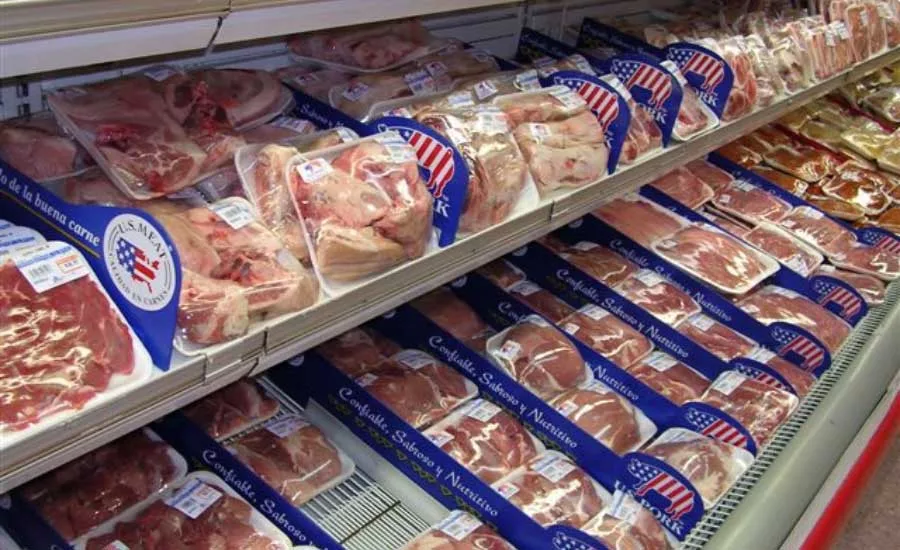
New research from Risk Analysis: An International Journal, shows that leftover pork chops that weren’t cooked to well-done pose a risk of Listeria and Salmonella. Source: National Pork Board.
September 28, 2017
It turns out that people eating leftover pork chops that have not been cooked well-done are likely putting themselves at risk for Salmonella and Listeria exposure. 
 
While many individuals prefer to consume their pork medium, a new study published in “Risk Analysis: An International Journal” revealed that cooking pork chops to an acceptable temperature does not completely eliminate pathogens, providing these cells with the opportunity to multiply during storage and harm consumers.
 
The study, "Impact of cooking procedures and storage practices at home on consumer exposure to Listeria monocytogenes and Salmonella due to the consumption of pork meat," found that only pork loin chops cooked well-done in a static oven (the researchers also tested cooking on a gas stove top) completely eliminated the Listeria and Salmonella pathogens.
 
Other levels of cooking, i.e. rare and medium, left behind a few pathogen surviving cells, which were then given the opportunity to multiply during food storage before being consumed. That’s even despite the fact that cooking the meat rare and medium rare satisfied the requirements of the product temperature being greater than or equal to 73.6 degrees Celsius and decreasing the pathogen levels.
It is generally believed that when meat is heat treated to 70 degrees Celsius for two minutes, a one million cell reduction of E. coli, Salmonella and Listeria is achieved and thus the meat is free of pathogens and safe to eat.
 
However, a report by the European Food Safety Authority revealed that more than 57 percent of Salmonella outbreaks in 2014 were in the household/kitchen, and 13 percent were associated with inadequate heat treatment.
 
"The results of this study can be combined with dose response models and included in guidelines for consumers on practices to be followed to manage cooking of pork meat at home," says Alessandra De Cesare, PhD, lead author and professor at the University of Bologna.
 

How the research was conducted

 
In order to assess the pathogen levels in cooked pork, the researchers, from the University of Bologna, the Institute of Food Engineering for Development and the Istituto Zooprofilattico delle Venezie, tested 160 packs of loin chop.
The samples were experimentally contaminated with 10 million cells of L. monocytogenes and Salmonella to assess the reduction in pathogens after cooking, in accordance with the Food Safety and Inspection Service (FSIS) and British Retail Consortium (BRC) specifications (ensuring a reduction of at least 100,000 and 1,000,000 cells, respectively).
 
The samples were contaminated on the surface, to mimic contamination via slaughter and cutting.
 
The samples were divided into groups to be cooked either on gas with a non-stick pan or in a static oven. In each setting, the pork chops were cooked to rare, medium and well-done. For each cooking combination, 40 repetitions were performed for a total of 240 cooking tests.
 
The researchers also interviewed 40 individuals between the ages of 20 and 60 to determine household consumer habits regarding doneness preferences. Prior published research was referenced to define meat storage practices and the probability that consumers store their leftovers at room temperature, in the refrigerator or discard them immediately. Growth rate data for the pathogens at each temperature were obtained using the software tool ComBase.
 
The only cooking treatment able to completely inactivate the pathogens was oven well-done, which achieved a reduction between one and 10 million cells.
 
Statistical analyses of the data showed significant differences related to level of cooking and cooking procedure. However, the researchers explained that factors such as moisture, water activity, fat levels, salts, carbohydrates, pH and proteins can impact the cooking treatment and effectiveness and, as a consequence, on bacteria survival. These results emphasize the needs to consider the form of pork (such as whole muscle versus ground) being cooked, in addition to the final temperature necessary to inactivate pathogens.
 
The results show that a reduction between one and 10 million of pathogen cells was reached when applying all of the tested cooking treatments, with product temperatures always reaching 73.6 degrees Celsius or greater. However, according to the simulation results using the obtained cell growth rates, the few surviving cells can multiply during storage in both the refrigerator and at room temperature, reaching concentrations dangerous for both vulnerable and regular consumers.
 
After storing leftovers, there was a probability for the concentration of pathogens to reach 10 cells ranging between 0.031 and 0.059 for all combinations except oven well-done. Overall, the mean level of exposure to Listeria and Salmonella at the time of consumption was one cell for each gram of meat. The results obtained from this study can be implemented in guidelines for consumers on practices to follow in order to manage cooking pork meat at home.
 
This research was funded by the European Union Seventh Framework Programme, grant no. KBBE 222738 BASELINE.
 
Risk Analysis: An International Journal is published by the nonprofit Society for Risk Analysis (SRA), an interdisciplinary, scholarly, international society that provides an open forum for all who are interested in risk analysis, a critical function in complex modern societies. Risk analysis includes risk assessment, risk characterization, risk communication, risk management, and risk policy affecting individuals, public- and private-sector organizations, and societies at a local, regional, national, or global level.
 
To learn more, visit www.sra.org.

This article was originally posted on www.foodengineeringmag.com.

Looking for quick answers on food safety topics?
Try Ask FSM, our new smart AI search tool.
Ask FSM →

This article was originally posted on www.foodengineeringmag.com.
KEYWORDS: cooking systems foodborne illness prevention pork

Share This Story

Crystal lindell author photo
Crystal Lindell worked primarily at daily newspapers before joining BNP Media in 2010. While here she has worked on Candy Industry Magazine, Food Engineering Magazine and Food Safety Strategies. She holds a master’s degree in public affairs reporting from the University of Illinois – Springfield and a bachelor’s degree in political science from Western Illinois University. And her favorite breakfast is a cup of espresso and Twix bar.

Recommended Content

JOIN TODAY
to unlock your recommendations.

Already have an account? Sign In

  • people holding baby chicks

    Serovar Differences Matter: Utility of Deep Serotyping in Broiler Production and Processing

    This article discusses the significance of Salmonella in...
    Methods
    By: Nikki Shariat Ph.D.
  • woman washing hands

    Building a Culture of Hygiene in the Food Processing Plant

    Everyone entering a food processing facility needs to...
    Sanitation
    By: Richard F. Stier, M.S.
  • graphical representation of earth over dirt

    Climate Change and Emerging Risks to Food Safety: Building Climate Resilience

    This article examines the multifaceted threats to food...
    Contamination Control
    By: Maria Cristina Tirado Ph.D., D.V.M. and Shamini Albert Raj M.A.
Manage My Account
  • eMagazine Subscription
  • Subscribe to eNewsletter
  • Manage My Preferences
  • Website Registration
  • Subscription Customer Service

More Videos

Sponsored Content

Sponsored Content is a special paid section where industry companies provide high quality, objective, non-commercial content around topics of interest to the Food Safety Magazine audience. All Sponsored Content is supplied by the advertising company and any opinions expressed in this article are those of the author and not necessarily reflect the views of Food Safety Magazine or its parent company, BNP Media. Interested in participating in our Sponsored Content section? Contact your local rep!

close
  • Salmonella bacteria
    Sponsored byThermoFisher

    Food Microbiology Testing Methods: Salmonella species

  • a diagram explaining indicator organisms
    Sponsored byHygiena

    How Proactive Listeria Testing Helps Prevent Six- and Seven-Figure Recalls

  • woman grocery shopping
    Sponsored byCorbion

    Designing Safety Into Every Bite: Proactive Risk Mitigation for Refrigerated Foods

Popular Stories

baby eating bottle

Infant Botulism Spike Exceeds 100 Cases, Extent of ByHeart's Involvement Unclear

NRTE breaded stuffed chicken

USDA Indefinitely Delays Enforcement of Salmonella as Adulterant in Raw Breaded, Stuffed Chicken

digital map of europe

EU Publishes Food Fraud Tool Mapping Thousands of Cases Since 2016

Events

December 11, 2025

How to Develop and Implement an Effective Food Defense Strategy

Live: December 11, 2025 at 2:00 pm EDT: From this webinar, attendees will learn common areas where companies encounter challenges in their food defense strategies and how to address them.

May 11, 2026

The Food Safety Summit

Stay informed on the latest food safety trends, innovations, emerging challenges, and expert analysis. Leave the Summit with actionable insights ready to drive measurable improvements in your organization. Do not miss this opportunity to learn from experts about contamination control, food safety culture, regulations, sanitation, supply chain traceability, and so much more.

View All

Products

Global Food Safety Microbial Interventions and Molecular Advancements

Global Food Safety Microbial Interventions and Molecular Advancements

See More Products

Related Articles

  • salad recall

    Listeria risk leads to Greenbelt Microgreen recall

    See More
  • Extreme Duck Ultra motor

    Good cleaning practices start before a plant is even built

    See More
  • Lox

    Seabear recalls lox because of Clostridium botulinum risk

    See More

Related Products

See More Products
  • 1118396308.jpg

    High Throughput Analysis for Food Safety

  • food safety.jpg

    Food Safety Contaminants and Risk Assessment

  • 1119071127.jpg

    Food Safety, Risk Intelligence and Benchmarking

See More Products

Related Directories

  • Integrated Chemistry Services LLC

    Integrated Chemistry Services (ICS) is a contract development and manufacturing partner based in Moorestown, New Jersey. In 2025, ICS acquired the PDX product line from Paradigm Diagnostics. These trusted, high-speed microbiological tests detect foodborne pathogens (Listeria, Salmonella, and STEC) quickly and affordably, minimizing downtime and protecting your bottom line.
  • AEMTEK Laboratories

    ISO 17025 accredited third-party laboratory focused on accuracy, turnaround times, customer service, and knowledgeable staff. AEMTEK specializes in product testing, environmental monitoring, shelf-life studies, process validation, research, training, and consulting services. For over 20 years, AEMTEK has provided clients with holistic solutions to ensure food safety.
×

Never miss the latest news and trends driving the food safety industry

eNewsletter | Website | eMagazine

JOIN TODAY!
  • RESOURCES
    • Advertise
    • Contact Us
    • Directories
    • Store
    • Want More
  • SIGN UP TODAY
    • Create Account
    • eMagazine
    • eNewsletter
    • Customer Service
    • Manage Preferences
  • SERVICES
    • Marketing Services
    • Reprints
    • Market Research
    • List Rental
    • Survey/Respondent Access
  • STAY CONNECTED
    • LinkedIn
    • Facebook
    • Instagram
    • X (Twitter)
  • PRIVACY
    • PRIVACY POLICY
    • TERMS & CONDITIONS
    • DO NOT SELL MY PERSONAL INFORMATION
    • PRIVACY REQUEST
    • ACCESSIBILITY

Copyright ©2025. All Rights Reserved BNP Media.

Design, CMS, Hosting & Web Development :: ePublishing