EU Recommends Monitoring Chlorinated Paraffins in Food Through 2029
The European Commission has issued Recommendation (EU) 2026/2335 calling on EU Member States and food business operators to monitor the presence of chlorinated paraffins (CPs) in food through 2029. The recommendation specified analytical methods, food categories, and threshold values for additional testing.
Also known as polychlorinated alkanes (PCAs), CPs are categorized by carbon chain length into short-chain (C10–C13), medium-chain (C14–C17), and long-chain (C18–C30) chlorinated paraffins.
The recommendation followed a 2020 scientific opinion from the European Food Safety Authority (EFSA), which concluded that insufficient data prevented a robust dietary exposure assessment and complete risk characterization for CPs. Consequently, EFSA determined that establishing a health-based guidance value was not appropriate at the time. EFSA recommended developing validated analytical methods, suitable standards and reference materials, and collecting additional occurrence data for CPs in food.
The monitoring initiative is intended to improve data availability on the occurrence and distribution of CPs in food, supporting more robust assessments of human dietary exposure.
What Are Chlorinated Paraffins?
According to EFSA, CPs are industrial chemicals that have been produced since the 1930s for a variety of applications including lubricants, plastics, rubber, sealants, and textiles. CPs can enter the environment during industrial production, product use, and disposal, potentially contaminating the food chain. The chemicals can accumulate in aquatic organisms and animal tissues, while contaminated feed and the transfer of CPs from kitchen equipment during food preparation have also been identified as potential sources of food contamination.
The 2020 EFSA scientific opinion found that CPs have been associated with adverse effects on the liver, kidneys, thyroid, and developing offspring in animal experiments, and that certain CP mixtures have also caused tumors in rodents. However, EFSA emphasized that insufficient toxicological and dietary exposure data prevented a complete assessment of their risks to human health.
Analytical Methods for Chlorinated Paraffins in Food
According to the European Commission, analytical methods capable of detecting all CPs, including long-chain compounds, are currently available at only a few expert laboratories. Therefore, the recommendation outlined a tiered testing approach that prioritizes the measurement of C10–C17 PCAs, which represent the predominant group found in food.
Looking for quick answers on food safety topics?
Try Ask FSM, our new smart AI search tool.
Ask FSM →
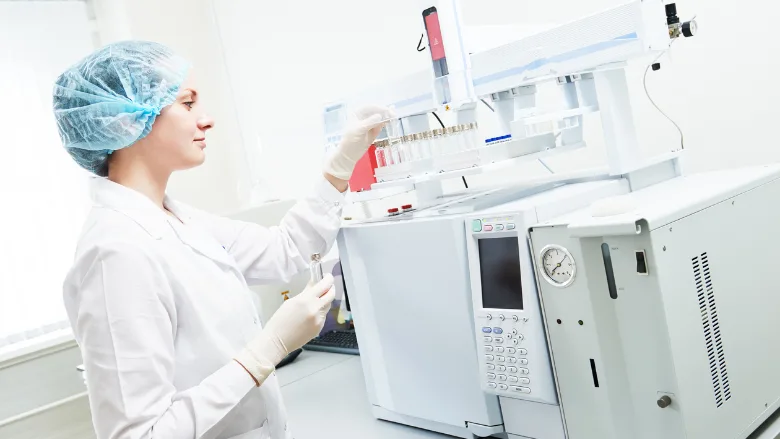
Under the recommendation, initial testing for the sum of C10–C17 PCAs should be conducted using gas chromatography-tandem mass spectrometry (GC-MS/MS) or gas chromatography coupled with low-resolution mass spectrometry (GC-LRMS). Alternative techniques may be used if evidence demonstrates their suitability for measuring the sum of C10–C17 PCAs.
Samples exceeding specified thresholds should undergo additional analysis for all PCAs, including long-chain C18–C30 compounds, using liquid chromatography or gas chromatography coupled with high-resolution mass spectrometry (HRMS).
Thresholds for Additional Testing
The Commission established the following thresholds for additional testing, which are intended to trigger more comprehensive analysis, rather than serve as maximum permissible contaminant levels:
- Fish: 100 nanograms per gram (ng/g) wet weight
- Milk and dairy products: 20 ng/g wet weight
- Vegetable and animal oils and fats: 1,000 ng/g fat
- Other animal-derived products, including meat and eggs: 300 ng/g fat
- Processed foods (whole meals): 50 ng/g wet weight
- Baby food: 20 ng/g wet weight.
The Commission also recommended that Member States and food business operators submit monitoring data to EFSA for compilation into a centralized database, in accordance with EFSA guidance and additional reporting requirements.